What are the precautions for using plant growth regulators?
What should be noted when using plant growth regulators? Please give guidance. Plant growth regulators have already been widely used on a variety of crops such as grain, cotton, fruit and vegetables, and poor results or disease outbreaks often occur due to improper use. Therefore, when using plant growth regulators, the following points should be noted: ...
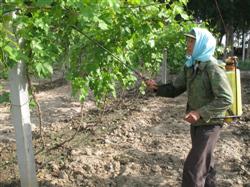
What should be noted when using plant growth regulators? Please give guidance
Plant growth regulators have already been widely used on a variety of crops such as grain, cotton, fruit and vegetables, and poor results or disease outbreaks often occur due to improper use. Therefore, when using plant growth regulators, the following points should be noted:
1. Targeted formulation type: There are many kinds of plant growth regulators currently sold on the market, mainly two types: broad-spectrum and special-purpose. Broad-spectrum types can be applied to many kinds of plants, while special-purpose types are limited to one or several kinds of plants, so they must be selected in a targeted way when used.
2. Do not use them as a substitute for fertilizer: Plant growth regulators are regulatory substances within living organisms and cannot replace fertilizer, water or other agricultural measures. Even promoting-type plant growth regulators can only play their proper role under conditions of sufficient fertilizer and water. Although some plant growth regulators have added some concentrated nitrogen, phosphorus, potassium and trace elements, the content is very small and the effect is also minor, so do not assume that a crop is not lacking fertilizer just because it looks green and strong.
3. Master the use concentration and frequency well: Crops have relatively strict requirements for the effective concentration of plant growth regulators. Too high a concentration will cause leaves to thicken and become brittle, appear deformed, or dry up and fall off, and can even kill the whole plant; too low a concentration will fail to achieve the desired effect. Therefore, it is necessary to flexibly master it according to factors such as the variety and type of plant growth regulator, the purpose of application, the growth stage and performance of the crop, and weather conditions. For broad-spectrum plant growth regulators, generally spray 2-3 times; for plant growth retardants, it is better to spray with small doses multiple times.
4. Do not use them on seed-production fields: When plant growth regulators such as ethephon and gibberellin are used on seed-propagated crops such as vegetables, cotton and wheat, although they play a role in early maturity and yield increase, they will cause an increase in sterile spikes and a serious decrease in seed germination rate, so the seed cannot be kept for planting. Therefore, for any crop used for seed production, plant growth regulators should be used with caution.
The phytotoxicity of plant growth regulators on crops mainly refers to abnormal reactions inconsistent with the purpose of using plant growth regulators, caused by improper use of plant growth regulators leading to hormonal imbalance in the plant and resulting in physiological changes and changes in plant form. Under normal circumstances, it manifests as: using flower-preserving and fruit-preserving agents leading to flower and fruit drop; using auxin-type regulators causing plant deformation, leaf spots, scorching, yellowing, as well as a series of symptoms such as leaf drop, small fruit and fruit cracking; using growth inhibitors and retardants causing excessively short plants, small fruit, fruit cracking, leaf deformation, plant deformation, as well as atrophy and fragile stems, all of which fall within the scope of phytotoxicity. Phytotoxicity caused by plant growth regulators can be acute or chronic. Acute phytotoxicity generally appears within a few hours or 10 days after application; chronic phytotoxicity generally occurs after 10 days, and some can only be detected at the crop harvest stage. Therefore, sufficient attention must be paid to the symptoms, causes and timely prevention of phytotoxicity from plant growth regulators.
Click to get more regulator application techniques
Click to get more pesticide application techniques