What are the precautions for cultivating white ling mushroom (Pleurotus nebrodensis)?
What should be noted when cultivating white ling mushroom (Pleurotus nebrodensis)? Please give an introduction. The following key points should be noted when cultivating white ling mushroom (Pleurotus nebrodensis): 1. Post-ripening culture. After the mycelium of white ling mushroom (Pleurotus nebrodensis) fully colonizes the bag, it cannot be induced to fruit immediately; it needs 50-60 days of physiological maturation before fruiting. During this stage, the temperature should be controlled at 20-25°C. If the temperature is low, the time required will be even longer...
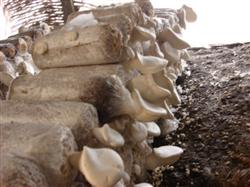
What should be noted when cultivating white ling mushroom (Pleurotus nebrodensis)? Please give an introduction.
The following key points should be noted when cultivating white ling mushroom (Pleurotus nebrodensis):
1. Post-ripening culture After the mycelium of white ling mushroom (Pleurotus nebrodensis) fully colonizes the bag, it cannot be induced to fruit immediately; it needs 50-60 days of physiological maturation before fruiting. During this stage, the temperature should be controlled at 20-25°C. If the temperature is low, the time required will be even longer. The relative air humidity should be raised to 75%, and a certain amount of light should be increased.
2. Scratch-fruiting (mycelium scratching) When the mycelium of white ling mushroom (Pleurotus nebrodensis) is about to reach physiological maturity (around 40 days after the post-ripening period), begin scratch-fruiting. This practice can localize fruiting, reduce the occurrence of mushrooms fruiting inside the bag and deformed mushrooms, thereby increasing the yield of high-quality mushrooms. Specific method: open the end of the bag prepared for fruiting (it is best to use the one-end fruiting method), use sterilized tweezers to remove the central inoculation block, then re-tie the bag opening. A certain space should be left between the bag opening and the substrate surface, and the tie should not be too tight.
3. Primordia induction Place the scratch-fruited bags in double rows inside a plastic greenhouse. Concentrate the bags entering the greenhouse and concentrate primordia induction. The scratched end should face outward. Cover the top of the bags with light-blocking woven bags (to reduce fruiting inside the bag). Raise the relative air humidity to 80%, increase light, strengthen ventilation, and control the temperature at 0-20°C. At night, if the outside temperature is very low, simply pulling and placing the straw mats in the morning and evening is enough to increase the low-temperature and temperature-difference stimulation; there is no need to pull open the plastic film. After 10-15 days of primordia induction, rice-grain-like primordia will appear at the scratched areas.
4. Fruiting When primordia just appear, remove the bag string, but do not completely open the bag opening. Control the greenhouse temperature at 12-18°C (it must not be lower than 5°C or higher than 20°C), keep the relative air humidity at 85-95%, and adjust light and ventilation according to the greenhouse temperature. When the mushroom buds grow to the size of soybeans, prop open the bag opening. When the mushroom buds grow to the size of peanuts, thin the buds, keeping only 1 robust bud with good mushroom shape per bag. After thinning, manage with alternating dry and wet conditions. As the cap and stipe differentiate, the bag opening can be completely opened. After opening, place on fruiting racks. It is best to use single-row wall-style arrangement to ensure sufficient scattered light and appropriately extend ventilation time. They can be harvested after 10 days.
After harvesting the first flush, remove the outer bag, turn the end that has not fruited upward, and conduct fruiting with soil casing. This can produce one more high-quality mushroom, and the total biological conversion rate can reach 80%.
Click to get more white ling mushroom (Pleurotus nebrodensis) cultivation techniques
Click to get more edible mushroom cultivation techniques