What causes deformities in king oyster mushrooms (Pleurotus eryngii var. nebrodensis)?
Why do king oyster mushrooms (Pleurotus eryngii var. nebrodensis) become deformed? Please explain the causes and control methods. King oyster mushroom products generally come to market around New Year's Day to the Spring Festival period, when their quality is at its best and prices are highest. Growers everywhere read the market pulse to strive for higher yields and better-quality mushrooms. But the commonly occurring problems of delayed fruiting, no fruiting, or deformed mushrooms all become...
Why do king oyster mushrooms (Pleurotus eryngii var. nebrodensis) become deformed? Please explain the causes and control methods.
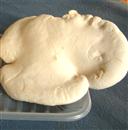
King oyster mushroom products generally come to market around New Year's Day to the Spring Festival period, when their quality is at its best and prices are highest. Growers everywhere read the market pulse to strive for higher yields and better-quality mushrooms. But the commonly occurring problems of delayed fruiting, no fruiting, or deformed mushrooms have all become issues of common concern among growers. Deformed mushrooms lower product grade and may even lose their commercial value, affecting growers' economic returns, and this problem is widespread. Common deformities include: caps tightly clasped and not opening, in a "fist shape"; long, thick, fat stipes with small caps, in a "vase shape"; sunken caps with cracked, outward-curling margins, in a "broken bowl shape"; narrow, elongated caps, in an "ox-tongue shape"; speckled cap surfaces, in a "pockmarked face shape"; swollen, protruding tumors in the center of the cap, in a "bulging belly shape"; two caps spreading side by side with stipes tightly joined, in a "butterfly shape"; curved and uneven caps, in a "wavy-edge shape"; round caps wrapping the gills and contracting, in a "bald head shape"; longitudinal cracks and fissures on the cap surface, in a "flower mushroom shape"; and several mushrooms growing together, in a "lotus shape." In addition, there are also shrinking mushroom forms, yellowish discolored mushroom forms, and so on. The development of deformed mushrooms, tracing the causes, comes down to the fact that the cultivation environmental conditions are incompatible with the physiological and biochemical requirements of king oyster mushrooms. The key lies in poor coordination of temperature, humidity, light, and air during the fruiting period, and operational errors in management techniques, and so on. A detailed analysis follows, along with corresponding measures to avoid the occurrence of deformed mushrooms.
1. Unreasonable room and shed structure. Existing king oyster mushroom cultivation sites include indoor mushroom rooms and outdoor mushroom sheds. They are crudely built with unreasonable structures. Some mushroom rooms have doors and windows on only one side, and some have vents opened in the upper half of the wall, resulting in no air circulation indoors; some plastic greenhouses, although having vents on both sides, have all the vents facing the two ends of the mushroom walls; and some, although having vents, never open them in order to keep warm. Because the air in the shed does not circulate, severe oxygen deficiency occurs, causing the aerobic king oyster mushroom to become deformed.
2. Improper stacking of mushroom walls. This is shown by stacking mushroom bags too high when building walls in the shed, 10 bags to a stack, exceeding 1 m; some mushroom walls are filled with clay soil between them, which is impermeable to air; some are watered insufficiently after soil filling and are on the dry side; some mushroom walls are stacked too densely with no soil filled in between; and some, when building walls, do not cut the film at the bag ends properly, cutting only 1/3 of the part entering the wall, which is too little, while instead cutting the film at the exposed end, leaving the mycelium exposed to the air without moisture retention. The growth and development of these fruiting bodies will inevitably be inhibited. For example, when mushroom bags are stacked into walls in the north and the soil between bags has insufficient water, the moisture becomes too dry when heating to induce budding in deep winter, and the water content inside the bags is low, causing the mycelium to dehydrate and producing deformed mushrooms with unopened or shrunken caps. Clay soil, however, becomes compacted and has poor air permeability, so it cannot regulate the mycelium and instead hinders normal physiological and reproductive processes.
3. Congenital nutritional deficiencies. There are 4 manifestations: (1) The raw and auxiliary materials in the formula, such as cottonseed hulls and wheat bran, are aged, damp, and moldy, with nutrients degraded, and the amount of the nitrogen-containing material wheat bran in the formula is too small; there is no adverse reaction in the early stage of mycelial growth, but by the mushroom-growing stage it cannot meet requirements; (2) the culture medium turns sour and spoils; (3) the water in the mushroom bags evaporates and the mycelium dehydrates. These belong to congenital malnutrition, so the mushrooms produced are variant mushrooms with wavy-edged or unopened caps and a yellowish rather than white color.
4. Inaccurate grasp of the expected production period. Often because growers are eager for mushrooms, they enter artificial budding induction before the mycelium is physiologically mature, causing premature deformity.
5. Budding induction techniques not up to standard. After the mycelium is physiologically mature, it still needs low-temperature stimulation at 0-13°C for 10-15 days, and during this period it also needs 5-7 days of temperature-difference stimulation above 10°C, before the primordia can be forced to differentiate into mushroom buds. This is a characteristic peculiar to king oyster mushrooms. Growers often fail to grasp this unique species trait, with insufficient low-temperature mycelium resting period and insufficient temperature-difference stimulation, out of harmony with the physicochemical requirements of the reproductive period, causing fruiting body development to be suppressed and deformed. Some, when entering the shed in early December to induce budding, neglect ventilation in order to keep warm, resulting in severe oxygen deficiency in the shed, and the mushrooms induced are all "fist mushrooms" with stipes up to 20 cm long and caps tightly clasped and not opening.
6. Bud thinning not taken seriously. Some people are overjoyed to see mushroom buds sprouting in clusters and, knowing full well the buds are too dense, cannot bear to pick them off. Some worry that picking one bud will harm the others; and some leave too many buds. Because bud thinning is neglected, the fruiting mushrooms crowd each other, thus producing variant body forms such as twin butterfly shapes, laterally inclined ox-tongue shapes, and hunchbacked mushrooms.
7. Poor management during the mushroom-growing period. After mushroom buds appear, they gradually differentiate into fruiting bodies, and during this mushroom-growing period, poor regulation of temperature, light, and air often causes the mushroom bodies to develop leaning and growing sideways, or to be hunchbacked, or to have sunken cap surfaces, or speckled pockmarked faces, discoloration, and harvesting past the proper time, with oversized mushroom bodies that do not meet grade standards.
Click to get more king oyster mushroom cultivation techniques
Click to get more edible mushroom cultivation techniques