What causes deformed white lingzhi mushrooms?
Why are white lingzhi mushrooms deformed? Please explain the causes. Deformed white lingzhi mushrooms lower the grade of the product, and some even lose their commercial value, seriously affecting the economic returns of growers. The main cause of deformed mushrooms is that the external cultivation environment conditions do not match the growth requirements of the white lingzhi mushroom itself....
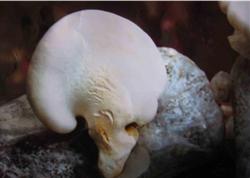
Why are white lingzhi mushrooms deformed? Please explain the causes
Deformed white lingzhi mushrooms lower the grade of the product, and some even lose their commercial value, seriously affecting the economic returns of growers. The main cause of deformed mushrooms is that the external cultivation environment conditions do not match the growth requirements of the white lingzhi mushroom itself. This is shown when temperature, humidity, light and air are not well coordinated during fruiting, or when there are mistakes in management.
1. Unreasonable mushroom shed design. The cultivation sites for white lingzhi mushrooms are mainly divided into indoor and outdoor mushroom sheds, most of which are crudely built and have defects. In some, the doors, windows or vents are unreasonably designed, causing the indoor air to be stagnant or poorly circulated. Although some mushroom sheds have vents, the vents all face the two ends of the mushroom wall. In others, although vents are present, they are kept closed solely for heat preservation. Because the air in the shed does not circulate, severe oxygen deficiency occurs, causing the aerobic white lingzhi mushroom to become deformed.
2. Unscientific arrangement of the mushroom wall. When some mushroom bags are brought into the shed, they are stacked too high, even exceeding 1 m; the soil filled between some mushroom walls is too clayey, making the soil impermeable or poorly permeable to air and affecting respiration; some mushroom walls are arranged too densely, with no soil filled in between. In addition, when the water in the soil filled between bags is insufficient, the water inside the bags is instead absorbed by the fill soil when buds are stimulated in winter, dehydrating the mycelium and producing deformed mushrooms.
3. Lack of nutrients. For example, cottonseed hulls and wheat bran that are old, damp and moldy lose nutrients. When the amount of wheat bran used is low, nutrient deficiency occurs during the mushroom-growing period and cannot meet normal needs. Furthermore, water evaporation from the mushroom bags leads to dehydration of the mycelium, and so on. All of these can cause deformed fruiting in white lingzhi mushrooms.
4. Inadequate bud-stimulation techniques. After the mycelium reaches physiological maturity, it still needs low-temperature stimulation at 0-13°C for 10-15 days, and during this period there must also be 5-7 days of temperature-difference stimulation above 10°C, in order to force the primordia to differentiate into mushroom buds. This is a distinctive characteristic of the white lingzhi mushroom. Growers often fail to grasp this unique varietal trait, so the low-temperature mycelium conditioning period is insufficient and the temperature-difference stimulation is not enough, causing the fruiting body development to be inhibited and deformed.
5. Mistakes in bud thinning. Some growers are very happy to see many mushroom buds and are unwilling to pick them off even when they know the buds are too dense. Others do thin the buds but leave too many. In short, improper bud thinning ultimately causes the deformed body shape of the white lingzhi mushroom.
6. Improper management during the fruiting period. During fruiting, poor regulation of temperature, light, air and so on often leads to deformed development of the mushroom body, or harvesting too late results in an oversized mushroom body, causing deformation of the white lingzhi mushroom.
Click to get more white lingzhi mushroom cultivation techniques
Click to get more edible mushroom cultivation techniques