Detailed Explanation of the Key Technical Points for White Tremella (Silver Ear Mushroom) Cultivation and Management
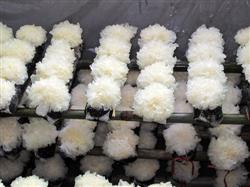
How is white tremella cultivated and managed? Please provide a detailed introduction.
The following methods can be referenced for cultivating and managing white tremella:
1. Equipment needed for white tremella cultivation
White tremella cultivation basically uses locally available materials and makeshift methods, so the equipment is relatively simple, including a culture room, a sterilization and disinfection stove (i.e., an earthen steaming stove), an inoculation box, and small tools.
(1) Culture room
It is a room of about 12 sq m. Generally, thatched houses, tile-roofed houses, brick walls, earthen walls, earthen floors, and paved floors can all be used. The walls and floor of the room are required to be sturdy and tightly sealed, with no holes or cracks, so as to prevent the breeding of contaminant fungi and pests. The room should be bright and have sufficient scattered light. The room must not only be easy to keep warm (especially in winter), but also be easy to ventilate and exchange air (preferably forming air convection). According to the actual current housing conditions, the spawn-running work is also carried out in the culture room, so it is best for the culture room to have a buffer room, which is beneficial for management work such as shelving and ventilation.
In the culture room, place two rows of shelves against the walls. The shelf legs are 5 to 6 layers high, with each layer 35 cm high. The shelf width (inner diameter, excluding the shelf legs) is 75 cm. On each layer, several bamboo poles or straight wooden sticks are tied horizontally to hold the culture medium bags. The shelves are required to be sturdy, stable, and not loose.
The culture room should be equipped with 1 agricultural sprayer. One that has been used for highly toxic pesticides should not be used.
(2) Sterilization and disinfection equipment
White tremella culture medium is sterilized using the normal-pressure sterilization method. That is, an earthen steaming stove is used. Its structure is as follows: on a stove surface of 1.5 m X 1.3 m, build a cabinet-shaped steaming box 1.5 m high with bricks. One side has a material inlet door, and above the door leaf there is a small hole for inserting a thermometer. Inside the stove there are shelves for holding materials. The shelves must be at a certain distance from the water surface. The inner walls are smoothed with cement to prevent air leakage. Below the material inlet door there is a small hole for observing the water level, and at the rear on one side of the flue there is a water filling port. On the flue there is a connected stove with a small pot, using residual heat to boil water and add it into the stove, so as to avoid a temperature drop when adding cold water. One sterilization stove can be used by more than 10 households.
(3) Inoculation box
The accessories of the inoculation box include an inoculation spoon, an inoculation needle, and an alcohol lamp. Inoculation boxes can also be borrowed from one another.
2. Substitute materials and other materials for white tremella cultivation
The substitute materials for white tremella cultivation are very abundant. Materials reported for cultivation include: sawdust and sugarcane bagasse. The Agricultural Science Research Institute of Dongfeng Comprehensive Reclamation Farm in Fengxin County, Jiangxi Province, also used rice straw treated by a two-step process to produce white tremella.
In order to use local resources, we conducted comparative cultivation experiments with cottonseed hulls, sawdust, corn stalks, and cotton stalks, and all successfully produced white tremella. It appears that using corn stalks, corncobs, and cotton stalks to produce white tremella requires adding multiple elements, and the yield is low and the quality is also relatively poor. To put them into large-scale production, further experiments are still needed. White tremella produced with cottonseed hulls and sawdust has good quality and high yield. In particular, cottonseed hulls increase the yield by 50% compared with sawdust.
(1) Collection of sawdust
When collecting sawdust, except for woods such as pine, cypress, and camphor that have bactericidal effects, the branches, trunks, roots, and fragments of general broadleaf trees can all be used. Specifically, woods such as oak types (maple, etc.), birch, and London plane have the best yields. Peach, pear, apple, poplar, and similar woods are inferior. Various mountain mixed woods and trees grown on plains such as toon, black locust, and willow can also all be used. The collection time should be after leaf fall and before sprouting, when the wood contains the richest nutrients. The processing method is to split the branches, trunks, roots, etc. of the same kind of tree, dry them in the sun, and be careful not to let them become moldy. Then crush them with an ordinary feed grinder. Prevent mold and moisture, and store for later use. The amount used each cultivation is about 480 jin. With other added materials, it can fill 5 bags.
(2) Cottonseed hulls
For cottonseed hulls, choose machine-processed cottonseed hulls that are not moldy, free of impurities, and have few lint clumps (to facilitate mechanical bagging), and store them dry for cultivation. About 500 jin is needed for each cultivation.
(3) Other raw materials
In order for white tremella to grow with sufficient minerals and a suitable carbon-to-nitrogen ratio, magnesium sulfate, wheat bran, sucrose, raw gypsum powder, and soybean powder must also be added to meet the growth needs of white tremella.
(4) Auxiliary materials
① Plastic bags and their production method: The plastic bag is in the shape of a long tube, made from agricultural plastic film (polyethylene) cut to 50 cm long and 27 cm wide, and heat-sealed. The sealing method can use an electric iron on a "⊥"-shaped template. After sealing, tie one end tightly with thread and heat-seal the opening in advance for later use. You can also contact a plastic factory directly and make plastic tubes 13 cm wide, which saves labor. After filling with material, the bag is about 40 cm long and 26 cm in circumference.
② Mold-eliminating and sterilization chemicals
The following introduces the properties, uses, and precautions of several commonly used chemicals.
a. Alcohol: It can dehydrate and denature bacterial proteins, causing bacterial death. 75% alcohol has the strongest bactericidal effect.
Uses and method of use: commonly used for disinfection of skin, utensils, and strain isolation materials.
Precautions: This product is flammable and volatile, and should be stored sealed. Except for use in lighting lamps, high concentrations should be diluted when used for sterilization for better effect.
b. Cresol (saponated cresol solution): It is a 50% saponated cresol solution. Its mold-eliminating ability is 4 times stronger than that of phenol.
Its uses and method of use are: a 1%-2% solution is used for disinfecting both hands (soaking for 2 minutes is sufficient). A 3%-4% solution is used for indoor spraying and utensil disinfection. When using, note that the concentration should not be too high, otherwise it will make the skin hard and cause peeling.
c. Formaldehyde solution (formalin): It is a 40% aqueous formaldehyde solution. It has a strong irritating odor. It has a very strong killing effect on bacteria and viruses, and has an irritating and damaging effect on human skin tissue. Its function is to fumigate and disinfect inoculation rooms, strain introduction boxes, and culture rooms. The dosage per cubic meter of space is 1.5-2 ml. The method of use is to put the formaldehyde solution into a porcelain bowl and heat it to volatilize, or mix two parts formaldehyde solution with one part potassium permanganate and let it volatilize. A 10% solution (containing 4% formaldehyde) can be used to preserve specimens. When using formaldehyde solution, pay attention to safety, because it is highly toxic to humans and livestock and irritates mucous membranes and nerves. d. Benzalkonium bromide solution: It is a surface-active disinfectant. Its main use is to dilute the 5% stock solution to 25% for skin or utensil disinfection.
e. Potassium permanganate: It is purple needle-shaped crystals, soluble in water, and is a strong oxidant. A 1:1000 aqueous solution can be used for disinfecting utensils and hands. It should be prepared and used immediately; after preparation, the solution should not be left standing for long.
f. Phenol (carbolic acid): It is white crystals, oxidizes to pink in air, and turns dark red when exposed to light. It can damage the cell membranes of microorganisms and cause protein denaturation and precipitation. Use a 3%-5% concentration medicinal solution for spray disinfection and utensil disinfection. Phenol is highly irritating and corrosive to the skin; pay attention when using it. g. Mercuric chloride: It is a white crystalline powder, easily soluble in water, with a very strong bactericidal effect and very high toxicity to organisms; it is easily absorbed by skin and mucous membranes. A 0.1% solution is used for surface disinfection of strain isolation materials. Mercuric chloride is highly toxic, and long-term contact should be avoided.
h. Sulfur: It is light yellow crystals or powder, and is flammable. The smoke it releases has a strong killing ability against contaminant fungi. Sulfur is mainly used to fumigate inoculation rooms and culture rooms. The dosage per cubic meter of space is 15 grams. Before fumigation, first spray the room with water to increase the sterilization effect. Sulfur smoke is harmful to humans and livestock, and attention should be paid to cumulative poisoning.
Finally, let us introduce bleaching powder. Bleaching powder is a grayish-white powder with a chlorine odor, partially soluble in water, and decomposes in water into hypochlorous acid, which penetrates into bacterial cells and denatures proteins; it has a strong and rapid bactericidal effect. Use a 2%-5% aqueous solution to scrub the walls, shelf utensils, etc. of inoculation rooms and culture rooms. Its bactericidal effect lasts for a short time, so it should be prepared and used immediately.
③ Other materials
For white tremella cultivation, adhesive tape is also needed for large tubes. About 2.5 grams per tube each time. In addition, a small amount of fine cotton thread (for tying openings) and candles (for sealing bag openings) are needed.
3. Synthesis and sterilization of culture medium
Each cultivation production is preferably 500 bags, but it can also be appropriately increased or decreased according to actual conditions and cultivation scale.
(1) Sawdust culture medium
| Sawdust | 480 jin |
| Wheat bran | 144 jin |
| Soybean powder | 9.6 jin |
| Raw gypsum | 9.6 jin |
| White sugar | 9.6 jin |
| Magnesium sulfate | 4.8 jin |
| Water | 1:1 to 1:3 of total amount |
Natural pH of the material |
|
Related Articles
- Four key points to note in the prevention and control of edible mushroom pests and diseases
- A Detailed Guide to Methods for Adding Nutrient Solutions to Edible Fungi
- What are some good methods for controlling mushroom mites?
- Detailed Explanation of Key Points of Open Inoculation Technology for Edible Fungi
- What are the tips for fertilizing edible mushrooms in winter?
- What chemicals are used to kill edible mushroom pathogens in mushroom sheds?
- What are the quick drying methods for edible mushrooms?
- Four "Do Not Spray" Rules to Remember When Applying Fertilizer to Edible Fungi