Key Management Techniques for the Incubation Period and Fruiting Period of Tea Tree Mushroom
How should the incubation period and fruiting period of Tea Tree Mushroom be managed? Please provide an introduction. For the management of the incubation period and fruiting period of Tea Tree Mushroom, the following methods can be referenced: 1. Incubation period management. After inoculation, the cultivation bags should be promptly moved into the incubation room for mycelial colonization management. The incubation room should be ventilated, dry, and light-proof. Before placing the cultivation bags, the space should be disinfected once...
How should the incubation period and fruiting period of Tea Tree Mushroom be managed? Please provide an introduction.
For the management of the incubation period and fruiting period of Tea Tree Mushroom, the following methods can be referenced:
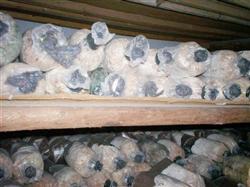
1. Incubation Period Management After inoculation, the cultivation bags should be promptly moved into the incubation room for mycelial colonization management. The incubation room should be ventilated, dry, and light-proof. Before placing the cultivation bags, the space should be disinfected once, the room temperature should be controlled at 21°C to 27°C, and the spatial humidity should be controlled at around 70%. During the incubation process, due to the metabolism of the mycelium, the temperature in the incubation room will gradually rise, and the oxygen in the room will be heavily consumed. At this time, special attention should be paid to ventilation and air exchange to avoid "mycelium burning." After 40 to 50 days of incubation, the mycelium will have fully colonized the entire bag.
2. Fruiting Period Management Generally, a single-layer upright arrangement is adopted. When mushroom buds appear and the primordia form a coral-like shape, remove the cotton and collar ring, fold the plastic bag outward and downward by 3 to 5 cm, cover with newspaper, and spray water to maintain moisture, so as to promote the formation of the fruiting bodies of the Tea Tree Mushroom. If conditions permit, it is best to move mushroom buds of similar size together for easier management. As the fruiting bodies elongate upward, gradually straighten the bag opening until harvest. Since the Tea Tree Mushroom has phototropism and the characteristic that carbon dioxide promotes stipe elongation, straightening the bag opening and creating a small environment with a relatively high concentration of carbon dioxide inside the bag helps improve the commercial value of the Tea Tree Mushroom. After the first flush is harvested, the second flush will begin to appear after some time. At this point, the mushroom buds may not necessarily emerge on the top surface, so the bag can be cut at the location where the buds appear, allowing the growing buds to develop smoothly. In the later stage, methods such as scratching the surface or inverted fruiting can also be used for management. Since the Tea Tree Mushroom tends to produce conjoined mushrooms and the sizes of the fruiting bodies are uneven, bud thinning can be done appropriately at this time, and some small buds should be cut off in a timely manner.
Click to get more Tea Tree Mushroom cultivation techniques
Click to get more edible mushroom cultivation techniques