How to Grow Agaricus blazei? A Detailed Guide to Cultivation Techniques
How to grow Agaricus blazei? Here is an introduction. Agaricus blazei can be grown using the following methods: 1. Raw material preparation. Calculated on the basis of producing 100-150 kg of dried mushrooms per 200 sq m, you need 2500 kg of rice straw or wheat straw, 500 kg of miscellaneous wood sawdust, 1500 kg of dried cow dung powder, 40 kg of gypsum powder, 40 kg of calcium carbonate...
How to grow Agaricus blazei? Here is an introduction
Agaricus blazei can be grown using the following methods:
1. Raw material preparation. Calculated on the basis of producing 100-150 kg of dried mushrooms per 200 sq m, you need 2500 kg of rice straw or wheat straw, 500 kg of miscellaneous wood sawdust, 1500 kg of dried cow dung powder, 40 kg of gypsum powder, 40 kg of calcium carbonate, 20 kg of superphosphate, 20 kg of urea, 40 kg of lime, and 7 tubes of spawn (20 bottles of stock spawn, 800 bags of commercial spawn).
2. Raw material processing. Mix the cow dung and sawdust, pre-wet with clean water, soak the rice and wheat straw in water for 24 hours, then take them out, drain off excess water, and build a pile for fermentation. When building the pile, first spread a layer of straw 20 cm thick, 1.5 m wide and 5-7 m long, then cover with a layer of cow dung powder 3-4 cm thick, evenly sprinkle a layer of lime powder over the straw in equal portions, sprinkle a layer of urea over the cow dung, and build up the pile in this way until it reaches a height of 1.5 m. Cover the top layer with cow dung, keep the sides of the pile vertical, make the top rounded like a turtle shell, and cover with plastic film on rainy days. After 2 days the pile temperature can rise above 65°C, so turn the pile promptly. At the first turning, add gypsum powder and superphosphate in layers; at the second turning, add calcium carbonate; turn the pile 4 times in total. Pay attention to replenishing water at each turning to adjust the moisture content of the material. The intervals between turnings are roughly 7, 6, 4 and 3 days, with a total fermentation period of 20-21 days.
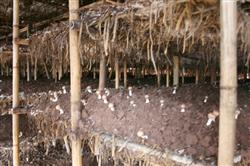
3. Mushroom bed setup. Agaricus blazei is generally cultivated in single-layer beds in open fields. A shade shed with four parts sun and six parts shade should be built above the cultivation site, about 2 m high, similar to a shiitake shade shed. If cultivated in citrus, grape or other orchard areas, no shade shed is needed. The mushroom bed surface is 1 m wide, 15 cm high, and of unlimited length.
4. Sowing and casing soil. After pile fermentation, the compost is dark coffee-colored, has no off odor, and has a moisture content of 60%. When the material temperature drops to 28°C, feed and sow promptly. The material is 20 cm thick, use 4 bags of spawn per sq m, sow in holes at 10 x 10 cm spacing, with holes 3 cm deep, leave a small amount of spawn to scatter on the surface of the material, then press the material firm so that the material and spawn are in close contact, which helps the mycelium germinate and colonize and grow through the material. Cover the material surface with film to retain moisture for mycelial growth. 15-18 days after sowing, when the mycelium between the surface holes has connected and the mycelium inside the material has grown to 2/3, begin casing with soil. Large soil particles are 2 cm in diameter, and small ones about 0.5 cm in diameter. 3 days before casing, pre-wet the large soil with lime water until there is no white core. Apply the large soil first, then the small soil, with a total casing thickness of 3.5 cm.
5. Management and harvesting. From sowing to fruiting, under normal temperatures, generally 35-40 days are needed. During the mycelial growth period, pay attention to keeping warm and moist and maintaining fresh air. Keep the relative air humidity at 60%-70%, the moisture content of the compost at 55%-65%, and generally do not spray water directly on the material surface after sowing. Keep the temperature at 20-27°C, uncover the film for ventilation once in the morning and once in the evening, for half an hour to 1 hour each time. During the fruiting period, keep warm and control humidity, with 18-27°C being optimal. Increase ventilation, bring the moisture content of the casing layer to 55%-60%, keep the relative air humidity at 85%-90%, and spray water frequently according to the amount of fruiting. When the mushroom cap begins to grow outward and the partial veil has not yet detached from the stipe, it is ready to pick. After picking, trim off the soil, wash the scales clean, dehydrate and dry promptly, and store and sell by grade.
Click to get more Agaricus blazei cultivation techniques
Click to get more edible mushroom cultivation techniques