How to Grow Agaricus blazei in Northern China? A Detailed Guide to Cultivation Techniques
How is Agaricus blazei cultivated in northern China? Please introduce the method. Due to climatic constraints in northern regions, the cultivation of Agaricus blazei has long been limited. The author introduced the mushroom from the Institute of Edible Fungi, Fujian Academy of Agricultural Sciences, and, targeting the problems existing in Agaricus blazei cultivation at home and abroad, and based on the resources and climatic characteristics of Northeast China, systematically studied the biological characteristics of Agaricus blazei...
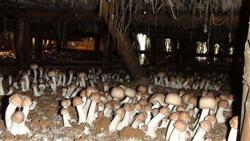
How is Agaricus blazei cultivated in northern China? Please introduce the method
Due to climatic constraints in northern regions, the cultivation of Agaricus blazei has long been limited. The author introduced the mushroom from the Institute of Edible Fungi, Fujian Academy of Agricultural Sciences, and, targeting the problems existing in Agaricus blazei cultivation at home and abroad, and based on the resources and climatic characteristics of Northeast China, systematically studied the biological characteristics, cultivation conditions and management techniques of Agaricus blazei, carried out adaptive domestication cultivation and fruiting experiments, and achieved preliminary success.
1 Biological characteristics. Agaricus blazei belongs to the group of fungi preferring moderate to slightly higher temperatures. The mycelium grows at 10-37°C, with an optimum of 25-27°C. The optimum pH is 6.5-7.5, and a material-to-water ratio of 1.0-1.4 is suitable; the optimum carbon source is sucrose at a concentration of 7%, and ammonium sulfate is the most suitable nitrogen source at a concentration of 0.3%. The fruiting body development temperature is 20-26°C. The mycelial growth stage requires no light, while the fruiting body growth stage requires a small amount of scattered light.
2 Arrangement of cultivation seasons. According to the biological characteristics of Agaricus blazei, under natural climatic conditions in northern regions, spring, summer and autumn cultivation seasons should be arranged according to local conditions; refer to Table 1 for details.
Table 1 Cultivation schedule for Agaricus blazei in spring, summer and autumn (month/day)
Cultivation procedure Spring mushroom cultivation Summer mushroom cultivation Autumn mushroom cultivation
Mother culture rejuvenation 12 2 (same year) 6
Stock culture production January (same year) 3 7
Raw and auxiliary material storage Mid-to-late February Mid-to-late April Mid-to-late July
Spawn production 2 4 8
Cultivation material composting 3 (in greenhouse) 5 8
Cultivation site selection Mid-to-late March (in greenhouse) Mid-to-late May (indoors) Mid-to-late August
Cultivation method selection Late March Late May (indoors) Late August
Bedding and boxing for cultivation Early April Early June (indoors) Early September (in greenhouse)
Cultivation management Mid-April to mid-June Mid-June to mid-August Mid-September to late November
Harvesting and drying Early May to late June Early July to late August Late September to early December (in greenhouse)
3 Selection of cultivation sites. The climate in northern regions is dry and winters are cold, so Agaricus blazei is best cultivated indoors, in greenhouses or in plastic sheds. The cultivation site must have conditions of ventilation, shading, moisture retention, and warmth in winter and coolness in summer; it should be far from chicken farms, pig farms, garbage dumps, etc., and have a clean water source and convenient drainage. Indoors, bed cultivation and box cultivation are mostly used; the beds should run north-south to facilitate ventilation and even light. In greenhouses and sheds, bed cultivation is mostly used.
4 Building heaps for fermentation. Cultivation material formula: dry rice straw 64.2%, dry cow dung 23%, wheat bran 7%, potassium dihydrogen phosphate 0.75%, urea 0.5%, superphosphate 0.5%, gypsum powder 0.5%, lime 1.5%, calcium carbonate 2%. Livestock manure is air-dried, crushed and sieved; dry rice straw is cut into lengths of about 3cm and soaked overnight; after the rice straw is drained, mix it thoroughly according to the formula. Inorganic salts are first mixed with wheat bran, then mixed evenly with cow dung. Composting for fermentation is carried out 30 days before spawning. Place several long wooden or bamboo poles on a concrete floor, spread over them a 20cm-thick layer of pre-wetted rice straw 1.0-1.5m wide, tread it firm, then spread a layer of the mixed material of cow dung, wheat bran and inorganic salts, just enough to cover the rice straw, and continue building upward in this way, with livestock manure as the top layer, to a heap height of 1.0-2.0m, covered with film to prevent rain. Bury a round log every 1m inside the material heap in advance, and pull them out after the heap is built to allow aeration. After 6-7 days, when the material temperature rises to 60°C, carry out the first turning; after re-stacking, carry out the second turning 6-7 days later, the third turning after another 5-6 days, and the last turning after another 4-5 days; the composting period is 25-30 days.
5 Spreading material and spawning. Before spawning, first use clarified limewater to adjust the cultivation material to a moisture content of about 65% and pH 7.2-7.5. Fumigate and disinfect the mushroom house (shed) with sulfur at 15g per cubic meter, disinfect the bed surface or wooden boxes with limewater, and kill insects with dichlorvos. The fermented material is brought into the greenhouse (indoors) while hot, allowed to cool naturally, and loosened; spread the material at 13.5kg per sq m (15-20cm thick). When the material temperature drops to 25°C, broadcast the spawn in two layers (middle and surface) at a spawn rate of 6%. 10-15 days after spawning, when the mycelium has spread to 2/3 of the depth of the cultivation material, immediately case with soil: first cover with a layer of soil clods about 1cm in diameter, 2cm thick, with the clods at 60%-65% moisture. When mycelium is seen emerging through the gaps between the clods, cover again with a layer of soil particles about 0.5cm in diameter, 1-2cm thick, and likewise spray water to retain moisture.
6 Fruiting management. Under suitable conditions, it takes only 30-35 days from spawning to fruiting. After each flush ends, there is a 15-20 day mycelium recovery period, after which the second flush begins. Generally there are 2-3 flushes per season, and the biological efficiency can reach about 40%-60%. Besides nutrient conditions, mushroom yield is also affected by environmental temperature and humidity, so the temperature and humidity of the mushroom house should be adjusted in good time; humidity control relies only on manual water supplementation, and indoor humidity is kept at 85%-95%.
Generally, 30 days after spawning, when the mycelium has colonised, mushroom buds will form. When the fruiting bodies grow to the size of a soybean, the amount of water sprayed should be increased to promote normal fruiting. When large numbers of small mushrooms grow on the bed surface, the material temperature should be kept at 27°C; the optimum fruiting temperature is 20-27°C. In muggy weather with high temperatures, small mushrooms will die. At the same time, the moisture of the soil must be well controlled; soil moisture that is too high or too low, or poor ventilation, will likewise rot the small mushrooms, so the focus at this stage is warmth retention, moisture retention and ventilation.
7 Pest and disease control. The main diseases of Agaricus blazei are green mold and Neurospora, which often occur after casing; spraying with prochloraz 2,000-fold solution, chlorothalonil wettable powder 600-fold solution, or carbendazim wettable powder 500-fold solution once every 5-7 days for 2-3 consecutive times gives very good results. Pests include Lan's Brennandania mite, giant pygmephorid mite, large phorid fly, black phorid fly, etc.; spray with abamectin EC 1,000-fold solution, or propargite 2,000-fold solution, at midday when temperatures are high and mites are active, onto the mushroom beds, or spray cypermethrin 2,000-fold solution onto the casing soil of the beds and the walkways in the shed once every 8-10 days for 2-3 consecutive times.
Click to get more Agaricus blazei cultivation techniques
Click to get more edible mushroom cultivation techniques