The shaggy mane mushroom is a rare mushroom used both as food and medicine
The shaggy mane mushroom, scientifically known as Coprinus comatus, belongs to the macrofungi. Its flesh is tender, delicious, and nutritious, and it has multiple medicinal functions, making it a mushroom used both as food and medicine with high commercial potential. It has now been designated as one of the 16 rare edible fungi that meet the requirements of the United Nations [Weibo] Food and Agriculture Organization (FAO) and the World Health Organization (WHO) for combining the three functions of "natural, nutritional, and health-promoting"...
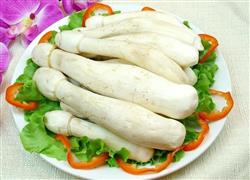
The shaggy mane mushroom, scientifically known as Coprinus comatus, belongs to the macrofungi. Its flesh is tender, delicious, and nutritious, and it has multiple medicinal functions, making it a mushroom used both as food and medicine with high commercial potential. It has now been designated as one of the 16 rare edible fungi that meet the requirements of the United Nations [Weibo] Food and Agriculture Organization (FAO) and the World Health Organization (WHO) for combining the three functions of "natural, nutritional, and health-promoting".
According to analysis, the shaggy mane mushroom contains 20 amino acids, as well as alkaloids such as adenine, choline, crude ammonia, tyramine, and tryptamine, and 8 fatty acids including sterol esters. It has the functions of benefiting the spleen and stomach, aiding digestion, increasing appetite, and treating hemorrhoids.
The shaggy mane mushroom has a relatively short growth cycle, taking about 18-20 days from fully developed mycelium to harvest. If cultivated indoors, it takes about 35 days from sowing to fruiting. According to measurements by Zhongkai University of Agriculture and Technology, the fruiting body reaches a maximum length of 34 cm, and the largest individual wet weight is 60 grams. Compared with other projects, it can be called a "short, flat, and fast" project.
The shaggy mane mushroom has a high bioconversion rate. With tree leaves or rice straw as the main substrate, the bioconversion rate can reach over 130%, more than 3 times higher than the current yield of straw mushroom cultivated with rice straw. Zhongkai University of Agriculture and Technology trial-cultivated the shaggy mane mushroom using pruned Taiwan grass and sugarcane bagasse, achieving a bioconversion rate of 90%. Currently, when cultivated in greenhouses, more than 5 kg of mushrooms can be harvested per square meter, with remarkable benefits.
According to analysis of ecological conditions, in Guangdong, except for the three hot, high-temperature months of July, August, and September, the shaggy mane mushroom can basically grow. Regarding humidity requirements, the mycelium stage needs about 60%, and the fruiting body stage needs 85-95%. For pH requirements, pH 4.5-7.5 is generally suitable. The fruiting body stage requires diffused light, which can be satisfied with a shade net.
The shaggy mane mushroom can be cultivated in open fields, on bed frames in mushroom houses, and also under trees. If cultivated under fruit trees (such as lychee, longan, citrus, etc.), the land can be used more rationally and scientifically, harvesting fruit from the trees and mushrooms under the trees, with spent mushroom substrate returned to the field, achieving multiple benefits at once. Experiments have confirmed that under trees, as much as 6.5-7.5 kg of mushrooms can be harvested per square meter. With indoor cultivation, management is more convenient, environmental conditions are easier to control, and the yield is also relatively higher than in open fields.
Click to get more shaggy mane mushroom cultivation techniques
Click to get more edible mushroom cultivation techniques