What are the precautions for bed cultivation of shaggy mane mushrooms?
What should be paid attention to in bed cultivation of shaggy mane mushrooms? Please give a detailed introduction to shaggy mane mushroom cultivation techniques. The shaggy mane mushroom, also known as the shaggy ink cap, with the scientific name Coprinus comatus, is a newly emerging edible mushroom variety. In Shandong Province, the suitable cultivation time is March in spring and August to September in autumn. There are many cultivation methods; here we introduce the bed cultivation technique. 1. Shaggy mane mushroom cultivation...
 What should be paid attention to in bed cultivation of shaggy mane mushrooms? Please give a detailed introduction to shaggy mane mushroom cultivation techniques
The shaggy mane mushroom, also known as the shaggy ink cap, with the scientific name Coprinus comatus, is a newly emerging edible mushroom variety. In Shandong Province, the suitable cultivation time is March in spring and August to September in autumn. There are many cultivation methods; here we introduce the bed cultivation technique.
1. Shaggy mane mushroom cultivation materials
Spawn: disease-resistant varieties such as Tewhite 33 (Gaoyou, Jiangsu) stock spawn, with commercial spawn made on site.
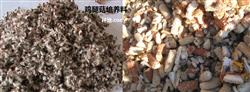
Substrate formula: 46% cottonseed hulls, 42% corncob, 1% phosphate fertilizer a, 10% wheat bran, 3% quicklime powder, 2% NPK compound fertilizer, 2% gypsum; the material-to-water ratio is 1:13 (volume ratio). Ferment conventionally for 1 week and set aside.
2. Self-made bed frames and bag filling
Use bamboo poles or wooden sticks, wooden boards, etc. to build bed frames inside the greenhouse that are 1.2 m wide, with about 50 cm between layers and about 10 m long, for a total of three layers.
Choose 26 cm x 35 cm x 0.005 cm polypropylene plastic bags. Soak them in a 200-fold dilution of Jinxing disinfectant for 1 minute, then remove. Break the spawn into peanut-sized pieces and spread them out. When the material temperature drops below 30 degrees C, fill the bags, using 3 layers of spawn and 2 layers of material, that is, two layers of spawn at the two ends of the bag, 1 layer of spawn in the middle, and two layers of material outside the spawn. The filled material in the bag is about 25 cm long, about 1 kg per bag, for a total of 1000 bags. The amount of spawn used is 15% of the dry material. Place the filled spawn bags on the bed frames in the greenhouse for mycelial growth.
After the mycelium begins to colonize the material, use a needle to prick dozens of small holes in a ring around the 3 layers of spawn to improve aeration. In about 20 days, the mycelium will fill the entire bag.
Stand the bags fully covered with mycelium upright on the bed frames and arrange them firmly. Open the top of the bag and stand it up, then cover with about 3 cm of soil. Cover with a layer of plastic film to help retain heat and moisture.
3. Casing soil for shaggy mane mushrooms
Because shaggy mane mushrooms have the characteristic of not fruiting unless the mycelium contacts soil, casing soil is essential. The casing soil material uses 50% garden soil, 40% river silt soil, 8% plant ash, plus 1%-2% lime powder, mixed evenly, and finally sprayed wet with water. The water content is 60%-70%; the limit should be that it forms a ball when squeezed and crumbles when dropped. The casing soil thickness is generally 3-5 cm, and the best soil particle size does not exceed 2 cm in diameter. Pile it together and cover tightly with plastic film, make a concave shape on top, place a container and add formaldehyde and potassium permanganate for gas sterilization for 48 hours, then spread the pile to air for 3 days before use. It must not be exposed to rain.
4. Temperature conditions for shaggy mane mushroom growth
The temperature range for mycelial growth is 3-35 degrees C, with the optimum at 22-28 degrees C. The mycelium is cold-resistant but not high-temperature-resistant; above 35 degrees C the mycelium undergoes autolysis. The temperature range for fruiting body growth is 9-26 degrees C; below 9 degrees C it easily dies, and above 28 degrees C the caps easily open and autolyze. At 16-20 degrees C, fruiting bodies form in large numbers, grow quickly, and yields are high; above 20 degrees C, quality begins to decline. At an air temperature of 20-27 degrees C, the mycelium can grow to the soil surface in about 10 days, at which point the film can be removed.
5. Moisture (humidity) conditions for shaggy mane mushroom growth
The water content of the substrate should be kept at about 65%. During the fruiting body growth and development period, the relative air humidity should be kept at 85%-90%. Above 95%, spot disease easily occurs, the base of the fruiting body and the stipe easily become gray-black and rot, and the top of the cap is mostly dark brown. During the mycelial growth stage of bag cultivation with sterilized substrate, the relative humidity is preferably 70%; during the mycelial growth stage of bed cultivation with unsterilized substrate, the relative humidity is preferably 70%-80%. Water can be sprayed into the air or onto the walls to maintain humidity.
6. Light for shaggy mane mushroom growth
Suitable light can promote mycelial growth. When the light intensity is less than 10 lux, mycelial growth is quite slow, and fruiting is delayed by an average of about 7-11 days compared with normal conditions. Fruiting bodies also grow very slowly without light stimulation, with harvest delayed by an average of 5-9 days, and biological efficiency is also average, at about 100%. When light is too strong, such as above 1500 lux, both mycelial and fruiting body growth are slower than below 10 lux. At this time, fruiting body growth is not only slow, but quality is poor, dry, and pale yellow in color, with little commercial value. The most ideal light intensity is generally 70-800 lux. Shaggy mane mushrooms grown under such light fruit quickly, have high yields, good quality, are less likely to be infected by contaminating microorganisms during growth, and have high commercial value.
7. Air conditions for shaggy mane mushroom growth
The shaggy mane mushroom is an aerobic saprophytic fungus, so it needs a large amount of oxygen during growth. Suitable oxygen content in the air can significantly improve the growth capacity of shaggy mane mushroom mycelium. This is because suitable oxygen enhances the mycelium's ability to decompose the culture substrate, and oxygen supply is an important factor in increasing shaggy mane mushroom yields. Both mycelial growth and fruiting body growth require fresh air, so during both the mycelial growth and fruiting stages, attention must be paid to proper ventilation and air exchange indoors.
8. Suitable pH for shaggy mane mushroom growth
The mycelium can grow in culture media with pH 2-10. The casing soil material is preferably pH 7-7.5. In production, to prevent the occurrence of competitive contaminating microorganisms, an appropriate amount of lime is added when preparing and composting the substrate to raise the pH.
9. Prevention and control of major diseases and pests of shaggy mane mushrooms
1. Diseases: (1) Diehliomyces microsporus: also called false "wood ear," it is a malignant infectious disease that easily occurs in shaggy mane mushroom cultivation. In the early stage of the disease, dense white cottony mycelium mostly appears within the casing soil layer, followed by fruiting bodies of varying sizes similar in shape to wood ear on the soil surface. When the diseased part is dug open, the substrate gives off a strong bleaching powder smell, the shaggy mane mushroom mycelium autolyzes, and the substrate turns black. Control methods: strictly select spawn, and resolutely do not use any spawn found to be poor; casing soil must be taken from soil 20 cm below the surface and strictly disinfected; pour concentrated limewater locally and stop watering; after the local soil turns white, carefully remove it and bury it deeply far away. (2) White plaster mold: this disease is caused by the substrate being too acidic. It generally occurs within 10-15 days after spawning. Initially, white patches of varying sizes form on the casing surface, resembling lime powder. When mature, the patches turn pink, and yellow powdery spore masses can be seen. When the substrate is dug open, there is a strong foul odor, and the shaggy mane mushroom mycelium dies and rots. Control methods: add 5% lime powder during substrate fermentation to adjust the pH to 8.5; spray locally with 500-fold carbendazim or 5% carbolic acid; strengthen ventilation and reduce the air humidity on the bed surface. (3) Coprinus competitors: the spores of these contaminating microorganisms enter the mushroom bed mixed in with the raw materials, and within 5-10 days a large number of coprinoid fungi appear on the bed surface and compete with shaggy mane mushrooms for nutrients. After their fruiting bodies rot and decompose, they exude ink-like spore liquid and reproduce extremely quickly. Control methods: use fresh, dry rice straw as the substrate and adopt secondary fermentation to kill Coprinus spores; when Coprinus is found, remove it promptly before the caps open and bury it deeply.
2. Pests: (1) Mites: there are many kinds of mites, mainly harming mycelium and fruiting bodies. When mite populations are dense, shaggy mane mushrooms cannot form fruiting bodies. Mites come from rice straw and poultry and livestock manure, prefer dark and damp environments, and reproduce extremely quickly. Control methods: carefully clean up debris before using the cultivation site and spray once with dichlorvos; when the fermentation temperature reaches 55 degrees C, spray the surface of the material pile with 2000-fold propargite; regularly spray the mushroom yard with 1000-fold dichlorvos or 2000-fold kascot. (2) Mushroom flies: mushroom flies not only harm shaggy mane mushroom fruiting bodies but are also the main culprits in spreading contaminating microorganisms. Affected substrate becomes bran-like, has a foul odor, and shows crawling maggots, with the mycelium being eaten. Control methods: spray the ground and surroundings with 0.1% derris extract; spray with 1500-fold pyrethrin or 3000-fold 2.5% cypermethrin; keep the site ventilated and clean. (3) Flea beetles: these insects are indicator pests of an overly humid cultivation environment and poor sanitation. They often cluster on the partial veil at the base of the cap and in the substrate. Affected fruiting bodies turn red and exude mucus, losing commercial value. Control methods: improve the sanitation conditions of the cultivation site and prevent excessive humidity; spray with 0.1% derris extract or pyrethrin.
Click to get more shaggy mane mushroom cultivation techniques
Click to get more edible mushroom cultivation techniques