What are the key technical points for cultivating straw mushrooms in summer?
What are the key points for cultivating straw mushrooms in summer? Please advise. Straw mushrooms are an edible fungus cultivated in the hot season, and they are the fastest to harvest among all edible fungi. From spawning to harvest, they need only 10-14 days. The technique is easy to master, the cost is low, and the returns are quick, making them very suitable for summer greenhouse cultivation. So for cultivating high and stable mushroom yields in summer, one should...
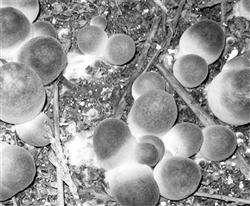
What are the key points for cultivating straw mushrooms in summer? Please advise.
Straw mushrooms are an edible fungus cultivated in the hot season, and they are the fastest to harvest among all edible fungi. From spawning to harvest, they need only 10-14 days. The technique is easy to master, the cost is low, and the returns are quick, making them very suitable for summer greenhouse cultivation. So what should be noted when cultivating high and stable mushroom yields in summer? How should one operate to achieve high benefits?
I. Preparatory work in the early stage must be done thoroughly
Straw mushrooms are a high-temperature type of mushroom, suitable for summer cultivation. Because the early cultivation methods for straw mushrooms are relatively simple, many mushroom farmers focus their management on the period after the straw mushrooms enter the shed. But the reporter does not think so. When growing straw mushrooms, the preparatory work in the early stage is equally very important. Once the early preparatory work is not done well, the entire growth period of the straw mushrooms will be greatly affected.
First, disinfect the mushroom shed well. First clean up the dead branches and fallen leaves in the shed, clear them out of the shed, and use 5% lime water or bleaching powder to spray and disinfect the whole shed. For well-sealed mushroom sheds, seal the air vents tightly, disinfect with formaldehyde or potassium permanganate, keep sealed for seven days, then ventilate to release gas. For poorly sealed mushroom sheds, spray and disinfect the floor and walls of the whole shed with 5% formaldehyde, and enter the shed to operate only after one week.
Second, prepare the base material. There are many culture materials suitable for the growth of straw mushrooms, mainly cottonseed hulls, waste cotton, wheat straw, and rice straw, among others. Among them, waste cotton is the best, cottonseed hulls are second, and wheat straw and rice straw are slightly worse. In recent years, the prices of waste cotton and cottonseed hulls have soared, greatly increasing the production cost of edible fungi. Vegetable farmers can choose raw materials with abundant resources and low prices, such as wheat straw, according to local conditions. Here, taking wheat straw as an example, the method for treating the raw material is introduced: choose wheat straw harvested in the current year, not rained on, and not deteriorated. Spread the whole bundles of wheat straw on the ground, crush them with a stone roller or car wheel to break them and make the texture soft; wheat straw thrown out by a combine harvester can also be used directly. Soak the crushed wheat straw in 2% lime water overnight. During soaking, tread on it with feet to promote softening of the wheat straw and water absorption, then scoop it out for stacking and fermentation. Scoop out the soaked wheat straw and pile it into a stack, with a stack height of 1.5 m and a width of 1.5 m, and unlimited length. After stacking, cover with plastic film to keep warm and moist to facilitate fermentation. When the temperature at the center of the wheat straw stack rises to about 60°C, maintain it for 24 hours, then turn the stack, turning the outer wheat straw into the center of the stack so that the wheat straw ferments evenly. After turning the stack, when the center temperature again rises to 60°C, maintain it for another 24 hours, and fermentation can be terminated. The fermentation time is generally about 5 days. During fermentation, the fermentation time and temperature should be well controlled to prevent excessive fermentation, which would cause massive reproduction of saprophytic fungi and consume nutrients. At the end of fermentation, check the quality of the fermented wheat straw.
The standard for fermented wheat straw is: the wheat straw is soft in texture, with the surface wax removed, feeling elastic when held in the hand, golden yellow, with the aroma of wheat straw. There is a small amount of white mycelium, the water content is about 70%, a small amount of water droplets can be squeezed out when gripped hard by hand, and the pH value is about 9.
II. Choose a suitable cultivation mode
There are many cultivation modes for straw mushrooms, commonly used are arched-shed three-dimensional cultivation and trench-type flat cultivation. Vegetable farmers can choose different cultivation methods according to different sites.
1. Ground bed cultivation in greenhouses: generally build beds 1.2-1.4 m wide, dig 0.2 m deep, shape them into turtle-back-shaped beds, build 10 cm wide water-soaking ditches on both sides, spread material and sow spawn; second, on the 3rd day after sowing, insert bamboo arches at intervals of 0.3-0.4 m. After budding, pull out the plastic film on the material surface and place it on the arch frame. Open-air sheds should be covered with another 2 layers of straw mats, while under a shade shed only one layer is needed. During the mycelium growth period, in addition to lifting the film for ventilation, the water ditches should be filled with water, first to lower the temperature and second to keep the bed foundation soil at a relatively high water-holding rate. When the temperature exceeds 35°C, the straw mats should be sprayed wet multiple times each day. On the fourth day after inoculation, and no later than 7 days, straw mushrooms can bud. After that, management should focus on ventilation, cooling, and moisture retention. On cloudy or lightly rainy days and at night, the plastic film can be removed, leaving only the straw mats, which not only facilitates ventilation but also provides sufficient scattered light and can effectively retain moisture. However, note that the film must not be lifted in heavy rain. In clear and good weather, direct sunlight makes the shed temperature rise quickly, so pay attention to thickening the covering and spraying water. At night, the plastic film around the shed can be lifted about 10 cm, and the water-soaking ditches filled with water, so as to strengthen ventilation while retaining moisture and lowering the temperature.
2. Trench-type flat cultivation: level the soil in the greenhouse, dig trenches 20 cm deep and 120 cm wide, and irrigate thoroughly; after spreading material and sowing spawn, make the material surface level with the ground. To ensure control of temperature and humidity, a shade net or old straw curtain should be set up above the greenhouse. The greatest advantage of this method is that the ground temperature is lower and the soil moisture is greater, which can provide a suitable temperature environment and water conditions for the base material. Especially in terms of water management, compared with the aforementioned cultivation method, it truly has unique advantages. However, attention should be paid to rain prevention and drainage; otherwise, water accumulation and waterlogging are very likely to form, affecting or damaging normal straw mushroom production.
III. Grasp the environmental regulation during the fruiting period
Straw mushrooms belong to a high-temperature variety, but to obtain high yield and high quality production results, management during the fruiting period must be done well, especially the control of temperature and humidity and light management.
First, temperature regulation. The most suitable temperature range for the fruiting period of straw mushrooms is 28-32°C; while in summer the temperature inside the shed is high, specific cooling measures can be achieved through a series of measures such as thickening the covering, spraying the straw mats wet, watering inside the shed, and ventilating at night. Under suitable temperature conditions, straw mushrooms are larger and open their caps later; if above 33°C, the straw mushrooms are obviously smaller and open their caps very quickly, greatly reducing the rate of marketable mushrooms.
Second, do a good job in ventilation management. Adhere to the principles of more ventilation at night, all-day ventilation on cloudy and rainy days, ventilation in the morning, and less or no ventilation during the high-temperature period in the daytime. First, keep the temperature inside the shed relatively lower; second, keep the temperature inside the shed relatively stable, which is conducive to producing good mushrooms and reducing the incidence of disease.
Third, water management. Water is both an important material condition (water content of the base material and bed foundation) and an indispensable environmental condition (air humidity); neither can be lacking. Generally speaking, maintaining 60%-70% water content of the base material and relatively high, even near-saturated, water content of the bed foundation, as well as about 90% air humidity, is an important foundation for ensuring high yields of straw mushrooms. In production, flexible regulation should be carried out according to the conditions at the time and place.
In addition, light management. Straw mushrooms both need light and cannot accept strong light. In production, management should be carried out according to the characteristics of the strain. Generally, it can be controlled so that a newspaper can be read normally inside the shed, about 400-500 lux. Specifically, regulation can be carried out through methods such as entrances and exits, vents, and lifting the corners of straw mats around the greenhouse. Mushroom farmer experience: Mushroom farmer Li Fasheng of Tianliu Town:
Three measures to increase straw mushroom yield
In recent years, the price of summer straw mushrooms has indeed been very gratifying. Low yield and poor quality of grown straw mushrooms are the key factors affecting high yield and high efficiency. During the growth of straw mushrooms, appropriately adopting some management measures can promote increased yield and improved quality of straw mushrooms, achieving the effect of high quality and increased yield. The specific methods are:
1. Casing soil
Straw mushrooms can also fruit normally without casing soil, but casing soil is more conducive to retaining moisture in the culture material, supplying the water needed for straw mushroom growth, and can effectively improve the quality and yield of straw mushrooms. Casing soil for straw mushrooms can improve the moisture retention performance of the culture material and its adaptability to humidity changes, making the mushroom bodies plump, reducing dead mushrooms, with a yield increase range of 20%-40%. The casing soil material can be garden soil (dug from 8-10 cm below the surface), and the casing soil thickness is generally preferably 2 cm.
2. Re-inoculation
Re-inoculation is beneficial for increasing straw mushroom yield. Straw mushroom mycelium grows too fast and is extremely prone to aging, resulting in weakened vitality and inability to effectively use the nutrients in the culture material to continue fruiting. After harvesting the first flush of mushrooms, loosen the material surface, splash it thoroughly with lime water, adjust the pH value of the culture material to 8-9, then broadcast spawn on the material surface, and after sowing cover with a thin layer of fermented culture material. Alternatively, after harvesting the first and second flushes of mushrooms, turn the material blocks over, turn the bottom layer of culture material to the surface layer, spray 1% lime water to supplement water and adjust the pH, then inoculate a second time on the surface, with an inoculation amount of 2%-3%, which generally can increase yield by about 30%. When cultivating straw mushrooms with rice straw, 4 days after stacking the straw and sowing, insert spawn into the gaps between the straw layers for a second inoculation, with an inoculation amount of about 20% of the first amount. In this way, after the first flush of mushrooms is harvested, the second inoculated spawn can decompose from the straw stack, accumulate nutrients, and continue to fruit.
3. Adjust the pH well
During the growth of straw mushrooms, a large amount of nutrients in the culture material is consumed, producing metabolites, among which organic acids can increase the acidity of the culture material and affect the normal recovery of straw mushroom mycelium and continued fruiting. After harvesting the first flush of mushrooms, supplement some nutrient solution and adjust the pH of the culture material to make it slightly alkaline, which can promote mycelium recovery, prolong the mushroom harvesting period, and increase mushroom yield. There are many methods, but the following two can be used: first, spray 1%-3% lime water onto the culture material, which not only supplements water but also makes the culture material slightly alkaline. Second, spray 0.1% urea and bran water onto the culture material (100 kg water plus 10 kg bran, boil and filter, take 50 kg filtrate plus 50 kg clear water). The urea amount is 0.1%-0.2%; the amount must not be too much, otherwise it is easy to produce contaminating fungi. You can also spray nutrient agents specially for edible fungi, such as Gu'er Gao Neng Yuan, Gu Duo Sheng, Gu Bao Le, Gu Da Zhuang, Gu Li Yuan, etc., used according to the instructions, which is very convenient.
Click to get more straw mushroom cultivation techniques
Click to get more edible fungus cultivation techniques