What are the precautions for artificially cultivating bamboo fungus?
What should be noted when artificially cultivating bamboo fungus? Please provide guidance. The following points should be noted when artificially cultivating bamboo fungus: 1. Field spawn production: As long as growers purchase bamboo fungus raw materials, they can make cultivation spawn themselves at the field edge. From late December to early January, choose a corner of the field and prepare a compost spawn-raising bed. Use 80% mixed wood sawdust, ...
 What should be noted when artificially cultivating bamboo fungus? Please provide guidance.
The following points should be noted when artificially cultivating bamboo fungus:
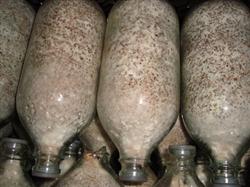
1. Field spawn production:As long as growers purchase bamboo fungus raw materials, they can make cultivation spawn themselves at the field edge. From late December to early January, choose a corner of the field and prepare a compost spawn-raising bed. Use 80% mixed wood sawdust and 20% wheat bran as the culture material for bamboo fungus spawn, add 110% water, then put it into woven bags. After 10 hours of atmospheric sterilization, take it out and flush water into the bags with clean water to let it drain, then mix in 1% gypsum powder and pile it onto the spawn-raising bed. Use the 2-layer material, 1-layer spawn sowing method, and scatter some spawn on the surface of the final layer of material. For each sq m of bed, use 20 kg of dry material and 3-4 bottles of bamboo fungus stock spawn. To cultivate 100 sq m of area, only 4 sq m of spawn production at the field edge is needed, equal to 25:1.
After sowing, cover the surface with woven bags, shade with straw, and finally cover with a film supported by bamboo strips in an arch. After sowing, uncover the film for ventilation once every 3-5 days. After 40-50 days of cultivation, once the mycelium covers the compost pile, it becomes field-edge bamboo fungus spawn.
2. Selection of cultivation raw materials:The raw materials currently used for cultivating bamboo fungus fall into four major categories. First, bamboo: the culms, branches, leaves, bamboo heads and bamboo roots of various bamboos; second, trees: mixed wood chips, branches, leaves, and scraps from factory offcuts; third, straws: bean stalks, jute stalks, rice husks, rapeseed stalks, corn cobs, cotton stalks, cottonseed hulls, sorghum stalks, sunflower stalks and hulls, etc.; fourth, wild grasses: reeds, Themeda, Dicranopteris, Saccharum arundinaceum, etc. The above raw materials should be sun-dried for later use.
3. Production season arrangement:Bamboo fungus cultivation is generally divided into spring and autumn seasons. Spring sowing is preferable. Because temperatures differ between northern and southern China, two points should be grasped: first, the sowing-period temperature should not exceed 28°C, which is suitable for mycelial growth and development; second, during the 2-3 month primordium development period after sowing, the temperature should not be lower than 10°C, so that the primordia develop healthily into fruiting bodies.
In the southern provinces, bamboo fungus is usually intercropped with crops in spring sowing. Material spreading and sowing begin at "Jingzhe," and intercropping of crops begins at "Qingming"; in the north, this is appropriately delayed. After sowing, 60-70 days are spent on spawn running, and mushrooms emerge from May to September in summer, ending in October. The production cycle is about 7 months.
4. Site and bed preparation:Use the open spaces in orchards such as apple, citrus, grape, peach and pear orchards, as well as open spaces among mountain trees, to intercrop bamboo fungus. Flat land or gently sloping land is required, close to a water source, with humus-containing sandy loam soil. Clean up residual matter or weeds in the site 7-10 days before sowing, turn the soil and sun-dry it until white. Bordeaux mixture can be sprayed on the fruit trees to kill pests and diseases. Generally, fruit trees are spaced 3 m x 3 m, and the open space between them is used as the bed for cultivating bamboo fungus. The bed width is 60-80 cm, the walkway spacing is 30 cm, and the soil clods should not be too fine when preparing the land, so as to facilitate aeration. Leave 40-50 cm beside the fruit trees as a working path.
5. Sowing, covering with soil and spawn running:Before sowing, soak the culture material in water and control the water content at 60%-70% for later use. For sowing, adopt one layer of material and one layer of spawn; both spot sowing and broadcast sowing of spawn are acceptable. For each sq m of bed, spread 10 kg of culture material and 5 bottles of spawn. Spread material on one side and sow on the other, then cover the bed with plastic film. Within 15-20 days after sowing, generally no water spraying is needed; it is best to uncover the film for ventilation for 30 minutes each day, and increase ventilation frequency later.
There is a lot of rain in spring, so dig drainage ditches; the ditches should be 30 cm deeper than the beds. The suitable temperature for mycelial growth is 23-26°C. After sowing, cover the bed surface with a 3 cm thick layer of humus soil; the suitable water content of the humus soil is 18%. After covering with soil, cut bamboo leaves or reeds into small sections and spread them on the surface, and cover the bed with film to prevent rain from soaking it. If the crop intercropping method is adopted, the intercrop varieties include soybean, cowpea, sorghum, corn, chili, cucumber, sunflower and other tall-stalked or vine crops. When 15-20 days have passed after bamboo fungus sowing and soil covering, crop seeds can be sown in holes beside the bed, intercropping one plant at intervals of 50-60 cm.
6. Scientific management of mushroom emergence:After sowing, under normal temperature, cultivate for 25-33 days. Once the mycelium climbs onto the material surface, the film covering the bed can be removed. After cultivation, the mycelium continuously proliferates, absorbs a large amount of nutrients, forms mycelial strands, and climbs onto the material surface, transforming from vegetative growth to reproductive growth. Mushroom buds soon appear, break through the ball and form a stalk, forming fruiting bodies. At this time, it is exactly the period when forest and fruit trees and intercropped crops have luxuriant branches and leaves, playing a shading role.
During the mushroom emergence period, the water content in the culture material should preferably be 60%, the water content of the covering soil should not be lower than 20%, and the relative air humidity should preferably be 85%. During the mushroom bud growth period, except in rainy weather, spray water once in the morning and once in the evening each day, maintaining relative humidity not lower than 9%. The mushroom buds swell and gradually develop raised tops, then within a short time break through the ball, quickly extend the stalk and spread the skirt to form fruiting bodies.
Bamboo fungus cultivation places great emphasis on water spraying, with the specific requirement of the "four observations": first, observe the covering material. When bamboo leaves or stalks and grass become dry, spray water. Second, observe the covering soil. If the covering soil turns white, spray more and spray frequently. Third, observe the mushroom buds. If the buds are small, spray lightly and spray as mist; if the buds are large, spray more and spray heavily. Fourth, observe the weather. On sunny and dry days with high evaporation, spray more; on cloudy and rainy days, do not spray. Only in this way can buds grow well, mushrooms emerge well, and the caps be beautiful.
7. Harvesting, processing and packaging:After sowing, bamboo fungus can produce 4-5 flushes of mushrooms. The fruiting bodies mature before 12 noon each day. When the skirt spreads to 4-5 cm from the lower end of the stalk, they should be picked. After picking, send them promptly to the factory for dehydration and drying. Dried products have a very strong tendency to absorb moisture, so they can be packaged in double-layer plastic bags, and the bag openings tied firmly. For export as commodities and domestic market retail, small plastic bags are needed, with different specifications of 25 g, 50 g, 100 g and 300 g per bag, and double-corrugated kraft paper boxes for outer packaging.
Click to get more bamboo fungus cultivation techniques
Click to get more edible mushroom cultivation techniques