What are the common pests and diseases in Dictyophora (bamboo fungus) cultivation?
What pests and diseases affect Dictyophora cultivation? Please provide an introduction and guidance on prevention and control. Dictyophora is a precious edible fungus delicacy, and during the fruiting body growth period, chemical pesticides are prohibited for pest and disease control. Therefore, pest and disease control should start from environmental factors, focusing on prevention, and adopt comprehensive measures. Reference methods are as follows: (...
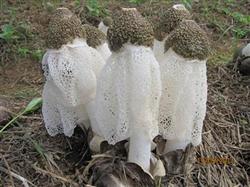 What pests and diseases affect Dictyophora cultivation? Please provide an introduction and guidance on prevention and control
Dictyophora is a precious edible fungus delicacy, and during the fruiting body growth period, chemical pesticides are prohibited for pest and disease control. Therefore, pest and disease control should start from environmental factors, focusing on prevention, and adopt comprehensive measures. Reference methods are as follows:
(1) Removing contaminant microorganisms
During the mycelium management period, remove contaminant microorganisms and pollutants from the bed surface. If "black, red, or green" colored contaminants are found, immediately cover them with ammonium bicarbonate or lime plus a plastic film to disinfect and inhibit them. If contaminants appear during the fruiting period, before the Dictyophora skirt unfolds, spray an aqueous chlortetracycline solution; in severe cases, spray a 0.1% carbendazim solution for control.
(2) Paddy-upland crop rotation
To prevent large-scale contamination that causes yield loss, Dictyophora cultivation fields should not be continuously cropped; they should be switched to rice, and Dictyophora can only be replanted after three years.
(3) Pest control
1. Tea seed cake for pest control. Adding 3-5% tea seed cake (camellia seed cake) powder to the substrate, or mixing the substrate with water boiled from tea seed cake, can effectively control pests.
2. Manual capture. When pests appear, capture them by hand.
3. Chemical control
(1) Termites: They can bore into and feed on Dictyophora mycelium, affecting yield. They can be killed by spraying with mirex or 700x dilution of phoxim, 2000x dilution of 25% fenvalerate-pyrethroid compound, or by baiting with alum powder mixed with sugar water sprinkled on bracken fern that termites prefer, or by using burned bones as bait.
(2) Mites: They easily break out under high temperature and high humidity, occurring during both the mycelium growth stage and the fruiting stage of Dictyophora. They can bite through mycelium, causing it to shrink and stop growing, and can also bite the fruiting bodies and transmit pathogens; severe outbreaks can cause total crop failure. They can be killed by spraying with 200x dilution of 70% propargite or 2000x dilution of 2.5% bifenthrin, or other specialized acaricides.
(3) Slugs: They are a type of mollusk, commonly known as "snails without shells," lacking an outer shell with a bare body. They mainly devour Dictyophora fruiting bodies, causing holes in the fruiting bodies and leaving a trail of white mucus. They can be killed by spraying with fenitrothion, or by baiting with a 1:50:50 mixture of calcium arsenate, wheat bran, and water placed where slugs frequent, or by spraying 5% cresol soap solution or dripping 50% saline solution where slugs frequent.
(4) Disease control
1. Slime molds: They occur on exposed soil or straw mulch on the Dictyophora bed surface. Initially they are sticky and gooey, capable of deformation and movement, appearing milky white, orange-yellow, or yellow-green. They inhibit mycelium growth or cause it to gradually die out; in severe cases, Dictyophora stops growing, and the fruiting body primordia become damaged, appearing water-soaked and rotting. Ventilation should be strengthened. In the early stage, spray with carbendazim, 1000x dilution of 70% thiophanate-methyl, 500x dilution of copper sulfate, or 10% bleaching powder continuously 3-4 times.
2. Ash mold: It often occurs in high temperature and high humidity environments. Initially, dirty-white fuzzy mycelium appears on the casing soil layer of the Dictyophora bed, quickly turning pink and then black. The colony becomes dark smoke-gray and produces large amounts of black spores. It mainly harms Dictyophora mycelium, causing it to break and eventually die.
The early stage when dirty-white fuzzy mycelium appears is the optimal treatment period. Spray 3% carbolic acid or 2% formaldehyde directly on the affected areas. When black spores appear, spray with a dilution of formalin 20x + 70% thiophanate-methyl wettable powder 700x. In severe cases, dig out and cut off the substrate around the affected area, spread fresh lime on and around the affected area, and cover the affected area with plastic film to control its spread.
Click to get more Dictyophora cultivation techniques
Click to get more edible fungus cultivation techniques