How to grow Agrocybe aegerita for high yields? Detailed growing techniques
How to grow Agrocybe aegerita for high yields? Please advise on the method. To grow Agrocybe aegerita for high yields, you can refer to the following methods: 1. Growing conditions for Agrocybe aegerita. 1. Nutrition. Agrocybe aegerita is a wood-rotting fungus with a relatively weak ability to decompose lignin and cellulose. Wild Agrocybe aegerita grows only on Camellia oleifera trees; after artificial...
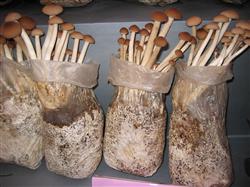 How to grow Agrocybe aegerita for high yields? Please advise on the method
To grow Agrocybe aegerita for high yields, you can refer to the following methods:
I. Growing conditions for Agrocybe aegerita
1. Nutrition. Agrocybe aegerita is a wood-rotting fungus with a relatively weak ability to decompose lignin and cellulose. Wild Agrocybe aegerita grows only on Camellia oleifera trees. After artificial domestication, broadleaf trees such as tung tree, maple, willow, oak and white poplar can be used as cultivation materials. However, sawdust from miscellaneous hardwoods that is relatively loose in texture and contains less tannin is more suitable for the growth of Agrocybe aegerita. Wheat bran, rice bran, cake fertilizer and the like can be fully used as nitrogen sources.
Besides miscellaneous hardwood sawdust, bagasse, rice straw, cottonseed hulls and mushroom grass can also provide carbon sources for Agrocybe aegerita. Among carbon sources, mono- and disaccharides are the best, while the ability to use starch and cellulose is relatively weak. If the cultivation substrate formula contains only glucose, the mycelium grows relatively loosely; when a small amount of sucrose is added as well, the mycelium grows densely and vigorously. This indicates that mineral elements are involved in the mycelial growth process.
2. Temperature. Agrocybe aegerita is a medium-temperature edible mushroom. On PDA medium at 26°C, spores germinate after 24 hours, and after 48 hours fine mycelium can be seen with the naked eye. The optimum temperature for mycelial growth is 23-28°C; growth stops above 34°C, and it can be preserved for 3 months at minus 4°C. The temperature range for differentiation of fruiting body primordia is 12-26°C, with the optimum at 18-24°C; lower or higher temperatures both delay primordium differentiation. At lower temperatures, the fruiting bodies grow slowly, but the tissue is firm, the mushrooms are larger and the quality is good; at higher temperatures, the caps open easily and long-stemmed mushrooms with thin caps form.
3. Moisture. The water content of the substrate for cultivating Agrocybe aegerita should be kept at 60%-65%. That is, when you grab a handful of substrate and squeeze hard, it is moist between your fingers with a few water droplets but no dripping; when you let go, it forms a clump, and it is best if it breaks apart after falling to the ground. However, different types of sawdust and different degrees of coarseness make a slight difference, so this should be adjusted flexibly. During mycelial growth, the relative air humidity should be below 70%; during the fruiting body formation and development stage it should be 85%-95%, and should be appropriately lowered during the growing period to extend the product's shelf life.
4. Air. Agrocybe aegerita is an aerobic macrofungus and is very sensitive to carbon dioxide. Poor ventilation and excessively high carbon dioxide concentration easily lead to slow mycelial growth, thick and long fruiting body stipes, small caps, early cap opening, deformed mushrooms and other problems.
5. Light. Agrocybe aegerita is a light-requiring fungus, and its fruiting bodies have phototropic growth characteristics. Suitable diffuse light is a necessary condition for completing its normal life cycle. During the mycelial culture period, it still grows under dark conditions but does not form fruiting bodies. Fruiting bodies do not differentiate easily without light; the suitable light intensity is 50-300 lux.
6. pH. Agrocybe aegerita mycelium prefers a weakly acidic environment, with the optimum pH 5.5-6.5. Below pH 4 or above pH 6.5, the mycelium grows sparsely and slowly.
II. Spawn production methods for Agrocybe aegerita
Agrocybe aegerita can be cultivated in spring and autumn. The cultivation season should be arranged according to the local temperature variation pattern, choosing the appropriate time for cultivation. Practice has proved that when the temperature drops to 24°C in the hot season, and when the temperature rises to 18°C in the cold season, a large number of fruiting bodies will form. Therefore, for spring cultivation, the cultivation bags should be inoculated 2 months before the local temperature stabilizes at 18°C; for autumn cultivation, the cultivation bags should be inoculated 2 months before the temperature stabilizes at 24°C.
(1) Spawn production. The production time of cultivation spawn equals the date of spawn use for making cultivation bags minus the number of days required to culture the cultivation spawn; the production time of stock spawn equals the production date of the cultivation spawn minus the actual number of days for culturing the stock spawn. In the same way, the production time of mother spawn can be calculated. Under the same culture conditions, different media require quite different culture times for Agrocybe aegerita spawn.
1. Mother spawn production: For Agrocybe aegerita mother spawn, well-grown fruiting bodies with a round, neat shape are usually selected from cultivated or wild fruiting bodies as tissue isolation material. The strains obtained by tissue isolation then undergo adaptability trials, and strains with excellent comprehensive economic traits are screened out for demonstration and promotion.
Mother spawn medium formulas and preparation:
Formula 1: potato 200 g, glucose 20 g, agar 20 g, water 1000 ml, natural pH.
Formula 2: potato 200 g, glucose 5 g, sucrose 5 g, agar 20 g, wheat bran 50 g (boiled extract), magnesium sulfate 0.15 g, water 1000 ml, natural pH.
Prepare, dispense, sterilize and make slants according to conventional methods for later use.
Isolation and culture. Under aseptic conditions, cut the stipe short and split it open lengthwise; cut a small piece of tissue from the junction between the stipe and the cap and transfer it onto the slant medium. Place it in a constant-temperature incubator at 25±2°C for culture; when the mycelium covers the slant, it is mother spawn.
2. Production and culture of stock spawn and cultivation spawn:
Medium and preparation: Stock spawn commonly uses wheat grain medium or sawdust medium, dispensed into mushroom bottles. Because cultivation spawn is used in large amounts, sawdust is commonly used as the main raw material for the medium, dispensed into polypropylene bags; the sawdust medium formula is the same as that of the cultivation substrate. Add water to the raw materials and mix evenly (wheat grains need to be soaked and boiled), then dispense into bottles or bags and press firm. Make a hole in the middle, wipe clean any material sticking to the bottles or bags, make cotton plugs, and sterilize and cool according to conventional methods.
Inoculation and culture: Under aseptic conditions, inoculate mother spawn (or stock spawn). Each tube of mother spawn can inoculate about 5 bottles of stock spawn. After 40-45 days of culture, the cultivation spawn mycelium can fill the bottle (bag).
III. Cultivation techniques for Agrocybe aegerita
Agrocybe aegerita cultivation is divided by season into spring cultivation and autumn cultivation. In spring cultivation, the mycelial culture stage requires proper heat preservation; in the later stage of fruiting body growth, the temperature rises, growth is fast, the fruiting bodies are smaller, the quality is relatively poorer, and they are prone to disease and pest damage. In autumn cultivation, after inoculation, the mycelial culture temperature is relatively suitable.
Fruiting bodies formed at lower temperatures are larger, of good quality, with fewer disease and pest problems, a relatively high biological conversion rate and good economic returns. As for the cultivation site, both indoor and outdoor cultivation are possible. Cultivation forms are divided into shelf-style bag cultivation, wall-style bag cultivation and bed-style soil-covering cultivation, etc. Each place can choose according to local conditions.
(1) Substrate formulas
Formula 1: miscellaneous hardwood sawdust 76%, wheat bran 20%, sugar 1%, superphosphate 1%, calcium carbonate 1%, gypsum 1%;
Formula 2: miscellaneous hardwood sawdust 68%, wheat bran 15%, tea seed cake powder 15%, sugar 1%, gypsum powder 1%;
Formula 3: miscellaneous hardwood sawdust 58%, cottonseed hulls 20%, wheat bran 20%, sugar 1%, gypsum powder 1%;
Formula 4: miscellaneous hardwood sawdust 60%, bagasse 18%, wheat bran or rice bran 20%, superphosphate 1%, gypsum powder 1%;
Formula 5: miscellaneous hardwood sawdust 60%, corncobs 20%, wheat bran or rice bran 19%, gypsum powder 1%;
The above formulas have a water content of 60% and natural pH. For autumn cultivation, 0.1%-0.2% carbendazim should be added; in Camellia oleifera cultivation areas, 10% tea seed hull powder can be added, which can effectively increase yield.
(2) Indoor bag cultivation
Indoor bag cultivation can use greenhouses, mushroom houses and idle empty rooms, etc., with the whole process from mycelial running to fruiting completed in the same place. The microclimate of indoor bag cultivation is easy to control artificially, convenient to manage, and makes it easy to obtain high quality and high yields; it is also suitable for factory cultivation.
1. Site selection and disinfection
The site used for indoor bag cultivation must be clean and hygienic, far from workshops, warehouses and poultry and livestock sheds, with good temperature regulation and light transmission. Before cultivation, comprehensive insecticide and disinfection must be carried out. First, clean and wash it thoroughly, then spray a 500-800 times dilution of dichlorvos solution to kill insects. After 3-5 days, fumigate and disinfect with sulfur or formaldehyde solution to prevent the growth of contaminating microorganisms.
2. Mixing, dispensing and sterilization
According to the selected cultivation substrate formula, weigh out the various raw materials, add water and mix evenly so that the water content reaches 60%-65%, and dispense by hand or with a bagging machine into 17×33×0.005 cm polypropylene gusseted bags, with consistent tightness and a level surface, filling height 13-15 cm, then seal with cotton-free covers or ring-and-cotton plugs. Sterilize at 100°C under normal pressure for 10 hours, leave overnight, or sterilize at 0.138 MPa under high pressure for 1.5 hours.
3. Inoculation and culture
After sterilization and cooling, under aseptic conditions inoculate 1 spatula of cultivation spawn into the substrate bags, and put on cotton-free covers or ring-and-cotton plugs. The spawn should be kept in chunks as much as possible, avoiding excessive fragmentation to prevent spawn death. Stand the inoculated bags upright on indoor shelves and culture at 25±2°C for 45-55 days; the mycelium will then fill the whole bag. During the mycelial running period, keep the room as dark as possible.
IV. Harvesting and processing of Agrocybe aegerita
Not only the caps of Agrocybe aegerita are edible, but the stipes are also very crisp and tender, so they should be harvested together with cap and stipe. After the fruiting bodies emerge, harvest when the caps are still curled inward and spores have not yet been produced in large quantities. Either one-time harvesting can be used, or the method of picking the large and leaving the small, picking the old and leaving the young can be used for harvest in batches; when harvesting in batches, care must be taken to protect the young mushrooms. Generally, 3-4 batches can be harvested, and every 100 kg of dry substrate can produce 60-70 kg of fresh mushrooms.
Click to get more Agrocybe aegerita cultivation techniques
Click to get more edible mushroom cultivation techniques