How to Grow Tea Tree Mushrooms for High Yield? A Detailed Guide to Cultivation Techniques
How to grow tea tree mushrooms for high yield? Here are the methods. To achieve high yield when growing tea tree mushrooms, you can refer to the following methods: Method 1: Select superior strains. At present, the superior tea tree mushroom strains mainly cultivated in various parts of China come from two sources. One is the Fujian Sanming Fungus Research Institute; its strains have thick stipes...
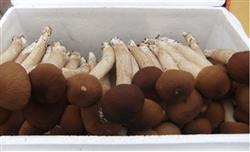 How to grow tea tree mushrooms for high yield? Here are the methods
To achieve high yield when growing tea tree mushrooms, you can refer to the following methods:
Method 1: Select superior strains: At present, the superior tea tree mushroom strains mainly cultivated in various parts of China come from two sources. One is the Fujian Sanming Fungus Research Institute; its strains have thick stipes, few fruiting bodies per cluster, darker color, brownish cap, strong tolerance to high temperature, and high yield, but the fresh mushrooms have a slightly poorer taste. The other is Jiangxi Guangchang; its strains have thin stipes, many fruiting bodies per cluster, slightly lighter color, reddish-brown cap, and slightly lower yield, but the flesh is tender and the fresh mushrooms taste good. Mushroom farmers are advised to introduce mother cultures directly from authorized units for propagation.
Method 2: Use scientific formulas:If the nitrogen content of the tea tree mushroom substrate is too high, the contamination rate is high and fruiting is delayed; if the nitrogen content is too low, the yield is low. It is recommended to use the following two formulas: sawdust 36%, cottonseed hull 36%, wheat bran 20%, corn flour 5%, tea seed cake 1%, light calcium carbonate 1%, sugar 1%, pH 7-7.5; or cottonseed hull 87%, wheat bran 10%, lime 2%, sugar 1%, moisture content 56%-60%, pH 7-7.5.
Method 3: Improve the finished bag rate:
First, substrate quality -- the substrate must be fresh and free of mold, and the sawdust must be aged and sieved. The moisture content of the substrate should be appropriate, such that when squeezed tightly, water appears between the fingers but does not drip.
Second, bag making -- cottonseed hulls and sawdust should be pre-wetted 24 hours in advance and mixed with lime for stacked fermentation, then wheat bran is added, and the time from mixing the substrate and filling bags to loading them into the stove should not exceed 5 hours.
Third, disinfection and sterilization -- put the substrate bags into an atmospheric pressure stove, generally 2500-3000 bags per stove, and not too many. During sterilization, achieve "strong start, controlled middle, maintained end", shorten the time to raise the temperature to 100°C as much as possible, and after the temperature reaches 100°C, maintain it for 16-18 hours to achieve thorough sterilization.
Fourth, spawn culture -- tea tree mushrooms are sensitive to light and temperature, so spawn culture should be carried out under relatively constant temperature and light-avoiding conditions, with the temperature controlled at 22-26°C. The culture room should be inspected once every 10 days to remove contaminated spawn.
Fifth, bag inoculation -- after sterilization, cool the substrate temperature to below 30°C, then put it into an inoculation box for inoculation. Minimize damage to the bags.
Method 4: Scientifically arrange the bag-making season:Tea tree mushroom mycelium can grow at 5-35°C, and the suitable temperature for fruiting body differentiation is 22-26°C. Below 20°C, the fruiting bodies grow slowly, the flushes turn slowly, the stipes are short, and the yield is low; above 28°C, the fruiting bodies grow quickly and the caps open easily, affecting quality. In Gaochun County, mid-to-late May and mid-to-late September are most suitable for the formation and growth of tea tree mushroom fruiting bodies. Counting back 55-60 days gives the reasonable bag-making period, generally arranged in early-to-mid March and early-to-mid July.
Method 5: Carry out integrated pest control well: Physical control and biological control are mostly used, and chemical control should be avoided as much as possible during the fruiting period. Focus on good sanitation, promptly dispose of waste mushroom bags, disinfect inside and outside the mushroom house, and use clean tap water for replenishment. Use a combination of insect-proof nets, black light lamps, and the water immersion method (before mushroom primordia appear or after harvesting, pour water into the mushroom logs so that the water surface is 1-2 mm above the substrate surface, soak for 2 days, then pour it out) to control insects.
Click to get more tea tree mushroom cultivation techniques
Click to get more edible mushroom cultivation techniques