How to Grow Agaricus blazei for High Yield? Detailed Explanation of Cultivation Techniques
How to grow Agaricus blazei for high yield? Please, fellow growers, share some advice. To grow Agaricus blazei, you can refer to the following methods: Growing conditions for Agaricus blazei: Agaricus blazei is similar in biological characteristics to the button mushroom (Agaricus bisporus) and the meadow mushroom (Agaricus arvensis). The mycelium growth temperature for Agaricus blazei is 10°C-30°C, with the optimum temperature being 22°C-26°C. Well-grown mycelium...
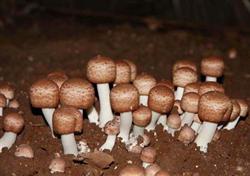 How to grow Agaricus blazei for high yield? Please, fellow growers, share some advice.
To grow Agaricus blazei, you can refer to the following methods:
Growing conditions for Agaricus blazei:
Agaricus blazei is similar in biological characteristics to the button mushroom (Agaricus bisporus) and the meadow mushroom (Agaricus arvensis). The mycelium growth temperature for Agaricus blazei is 10°C-30°C, with the optimum temperature being 22°C-26°C. Well-grown mycelium can withstand high temperatures, is not afraid of drought, has good moisture tolerance, and strong adaptability. The fruiting body formation and growth temperature is 20°C-33°C, with the optimum temperature being 22°C-25°C, giving it a stronger high-temperature tolerance than other edible fungi in the Agaricus genus.
The moisture requirement for the Agaricus blazei compost and casing soil should reach 60%-65%, the relative humidity for mycelium growth is 60%-75%, and the relative humidity for fruiting body formation and growth is 70%-85%. The optimum pH value of the compost is 6.5-6.8. A large amount of fresh air is needed during fruiting body formation.
Key Cultivation Techniques for Agaricus blazei
1. Producing Agaricus blazei spawn at the right time:
In the Nanjing area, for example, the mother culture (primary spawn) is generally made in March, the stock culture (secondary spawn) in April, and the cultivation spawn in May-June.
The mother culture uses potato dextrose agar (PDA); after inoculation, it is placed in a constant-temperature incubator for culture at the optimum temperature.
When making the stock culture and cultivation spawn, composted and fermented manure-straw compost is used, filled into 750 ml spawn bottles or 25-28 cm x 15-18 cm polypropylene plastic bags, with the bag opening plugged with a cotton plug and then tied tightly with plastic rope.
The compost for the cultivation spawn should be made from rice straw, wheat straw (or cottonseed hulls) plus cow or horse manure (or chicken manure, rabbit manure, etc.), with additional materials such as ammonium sulfate (or urea), phosphate fertilizer, slaked lime, and gypsum powder, piled and fermented, then sun-dried, chopped, mixed with water until moist, filled into bottles (bags), disinfected and sterilized, inoculated in a sterile room (box) when the temperature drops to 26°C, and then placed in a culture room to grow at the optimum temperature. It takes 40-50 days for the mycelium to grow well.
For indoor cultivation in the Nanjing area, sowing in mid-to-late August is preferable; sowing too late will affect the autumn mushroom yield. For outdoor cultivation (small arched shed), sowing after mid-September is generally better.
2. Scientifically composting the Agaricus blazei compost:
For every 100 sq m of area, 2500 kg of rice and wheat straw, 2000-2200 kg of dried cow manure or horse manure, chicken manure, 50 kg of gypsum powder, 50 kg of superphosphate, 25 kg of slaked lime, 30 kg of urea, and 30-40 kg of soybean powder or 50-60 kg of soybean cake are needed. First pre-wet the dry rice straw and cow manure, start the pile from the ground, with a pile width of 2.0-2.5 m, one layer of straw and one layer of manure, piled into a trapezoid, 6-7 layers, with a pile height of 1.5 m.
After piling, if water seeps out around the pile, pour it back onto the straw pile, keeping the surface layer of the pile from becoming too dry. After 3 days, the pile heats up due to fermentation. After 6-7 days, when the pile temperature rises above 60°C, it needs to be turned once, then turned once every 3-4 days, for a total of 25-28 days.
After fermentation, the rice straw turns tea-brown, is relatively soft, breaks when pulled by hand, and has a special odor, indicating the compost is ready. If the secondary fermentation method is used, the outdoor pre-fermentation only needs 12 days of piling, followed by post-fermentation treatment in the mushroom house.
3. Carefully managing the mushroom house:
The Agaricus blazei compost should be moved into the mushroom house while hot, then allowed to cool naturally, and the pile material should be broken up and spread flat, with the humidity adjusted to 65%, pH 6.5-6.8, each layer of compost about 20 cm thick, and sowing when the compost temperature drops below 25°C.
Inoculate one hole every 15-20 cm square, bury the spawn into the compost, then cover with some compost. About 1.5 kg of spawn is needed per sq m. 15-20 days after sowing, when the mycelium has basically spread evenly through the mushroom bed compost, casing soil should be applied. First apply a layer of soil clods the size of longans, and spray water to keep moist; when mycelium is seen emerging through the soil cracks, apply another layer of soil particles the size of soybeans, likewise spraying water to keep moist. The moisture should be neither too wet nor too dry. The casing soil should contain no fertilizer, and sandy loam with good water retention and air permeability is preferable.
Agaricus blazei needs a large amount of oxygen during fruiting and releases carbon dioxide, so good ventilation and air exchange conditions should be maintained during the fruiting period. The top of the mushroom house should have ventilation shafts, and ventilation windows should be set on all four walls. Mushroom house management should be flexibly adjusted according to weather conditions, keeping the indoor air humidity at 75%-85%.
After sowing, the mycelium develops for 30-40 days and then forms mushroom buds, that is, fruiting begins. About 3 days after the fruiting bodies emerge, when the mushroom caps have not yet expanded (4-6 cm in diameter), it is best to harvest. Generally, fruiting occurs once every 10 days, and 5-6 harvests can be made throughout the growing period. After each harvest, the bed surface should be cleaned up and watered thoroughly. When the fruiting bodies grow to the size of soybeans, the amount of water sprayed should be increased to promote normal growth and rapidly increase yield.
For Agaricus blazei generally used for processing and export, it should be harvested and processed by drying in time according to requirements, that is, when the mushroom cap has not yet expanded, the cap diameter is about 5 cm, and the stipe length is 1.5-2 cm. If sold fresh on the market, it can be harvested 1-2 days later to increase the total yield and boost returns.
Click to get more Agaricus blazei cultivation techniques
Click to get more edible fungus cultivation techniques