Where can I find the cultivation method for white king oyster mushrooms? A detailed explanation of the cultivation technique
Where can I find the cultivation method for white king oyster mushrooms? Is there a fellow grower who can help explain it? The white king oyster mushroom has tender flesh and a delicious taste, with high edible value. It is known as the "boletus of the grasslands" and as a pleurotus, and is quite popular with consumers. Zhongdi Network has compiled the cultivation method for white king oyster mushrooms, listed below for fellow growers' reference....
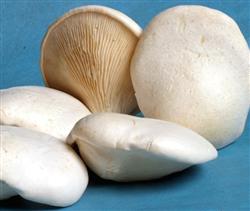 Where can I find the cultivation method for white king oyster mushrooms? Is there a fellow grower who can help explain it?
The white king oyster mushroom has tender flesh and a delicious taste, with high edible value. It is known as the "boletus of the grasslands" and as a pleurotus, and is quite popular with consumers. Zhongdi Network has compiled the cultivation method for white king oyster mushrooms, listed below for fellow growers' reference.
Step 1: Preparation of the mushroom house for white king oyster mushrooms:
The mushroom house used for cultivating white king oyster mushrooms is generally a vegetable protected cultivation facility, such as a solar greenhouse, a large shed, etc. Before growing mushrooms, it is best to remove the film and sun the shed for two weeks; before the material enters the shed, fumigate once more with chemicals. Generally, an ordinary building needs to be tidied and whitewashed before it can serve as a fruiting site for white king oyster mushrooms, and it must also be treated once with chemicals before the material is brought in.
Step 2: Preparation of the cultivation material for white king oyster mushrooms and the sterilization method:
1. Preparation of the cultivation material:Cottonseed hulls 100 kg, cornmeal 5 kg, wheat bran 5 kg, lime 3 kg, gypsum 2 kg.
2. Fermentation method of the cultivation material:For pile fermentation, the amount of material used is best around 300 kg, with a pile height of 1.2-1.4 m, a width of 1.1-1.5 m, and unlimited length. If the pile is too small, it is not easy to raise the temperature and the fermentation will not be thorough; if the pile is too large, the middle lacks oxygen and it is also inconvenient to turn the pile. Mix the fermentation material with water to 60%-65%, and add 2% lime to bring the pH value to 8-8.5. After building the pile, make holes for ventilation, with a hole spacing of 30 cm, punching 1 row on top of the pile and 2-3 rows on the sides. The fermentation time depends on the room temperature; when the temperature is high, the time can be shorter, with 7-8 days being suitable; when the temperature is low, the number of days can be appropriately increased, and a plastic film should be added as a cover. During fermentation, attention should be paid to turning the pile, turning it once every 1 day. Thoroughly fermented material should be brown, with no sour or foul odor.
3. Sterilization method of the cultivation material:The fermented material needs its moisture measured again, and the water content adjusted to 55%-60%, with the pH value adjusted to 8-8.5. For the plastic bags, choose 17 cm x 33 cm gusseted polyethylene bags, filling 0.75-1 kg of wet material. When filling by hand, press tightly with the hand while filling; when filling by machine, control the compactness according to the machine's power situation. Sterilize the filled material under high pressure for 2-3 hours, or under normal pressure for 14-16 hours. Be careful that sterilization is thorough.
Step 3: Inoculation method for white king oyster mushrooms:
When the sterilized spawn bags have cooled to 30°C, move them into the inoculation room for inoculation, with the inoculation amount being appropriate to cover the surface of the spawn bag. During inoculation, pay attention to the disinfection of personnel and utensils, and do not cause artificial contamination by unwanted microorganisms. After inoculation, place the spawn bags indoors for cultivation.
Do not move the spawn bags for the first 3 days after inoculation. After 1 week, turn the stack to check for contamination by unwanted microorganisms, remove those with contamination, and after drying and sterilization they can be used again. During cultivation, pay attention to avoiding light; the air humidity should be below 65%, and the temperature should be kept at 25°C-28°C as much as possible. After 45-60 days, the spawn bags can be fully colonized, after which they can be transferred to the fruiting stage.
Step 4: Management during the fruiting period of white king oyster mushrooms:
After the mycelium is fully grown, let the mycelium undergo 1 week of reverse mycelium growth to make the mycelium grow thoroughly, then move the spawn bags to a low-temperature place or carry out reverse operations on the fruiting shed, covering straw curtains during the day and removing them at night, and increase ventilation to carry out low-temperature stimulation, combined with spraying water to promote the formation of mushroom buds.
When the mushroom buds grow to the size of a thumb, open the bags and further increase moisture. At this time, the air humidity should be kept at 85%-90%, and the temperature should be kept at 8°C-15°C as much as possible. When the white king oyster mushrooms grow to the size of a ping-pong ball, release them from the bag opening and increase the ventilation to ensure normal mushroom shape. When ventilation is insufficient, deformed mushrooms or long-stemmed mushrooms are likely to appear. At the same time, be careful not to let wind blow directly on the white king oyster mushrooms, to prevent the mushroom bodies from cracking due to excessive water loss.
Step 5: White king oyster mushrooms should be harvested and cleaned up in time:
When the white king oyster mushrooms reach eight-tenths maturity, harvest them in time to prevent spores from scattering and affecting yield and quality. Generally, each bag can produce 1 mushroom, and each mushroom weighs 150-250 grams, producing only one flush of mushrooms, but after further management, two flushes can be produced. After harvesting, the white king oyster mushrooms should be cleaned up promptly to prevent contamination. The white king oyster mushroom bodies are pure white, thick-fleshed, and low in water content, which is beneficial for transportation. After harvesting, they should be packaged promptly for fresh sale or processed.
Click to get more white king oyster mushroom cultivation techniques
Click to get more edible mushroom cultivation techniques