What are the reasons why bag-cultivated shiitake mushrooms do not produce mushrooms?
Why do bag-cultivated shiitake mushrooms not produce mushrooms? What are the main factors causing this? Is there any netizen who can help guide? If bag-cultivated shiitake mushrooms are not operated properly, it will cause delayed mushrooming. Zhongdi Network has sorted out several factors and solutions for bag-cultivated shiitake mushrooms not producing mushrooms. The following is a detailed list for netizens' reference. Not producing...
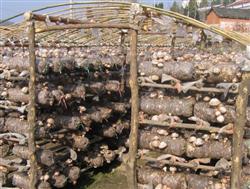 Why do bag-cultivated shiitake mushrooms not produce mushrooms? What are the main factors causing this? Is there any netizen who can help guide?
If bag-cultivated shiitake mushrooms are not operated properly, it will cause delayed mushrooming. Zhongdi Network has sorted out several factors and solutions for bag-cultivated shiitake mushrooms not producing mushrooms. The following is a detailed list for netizens' reference.
Reasons for not producing mushrooms 1. The selected variety is unsuitable:
For spring cultivation of shiitake mushrooms, with bags made in early spring and mushrooms produced in autumn, winter and spring, medium-temperature or low-temperature type, late-maturing varieties should be selected, such as 939, Weixiang No. 1, etc. For off-season cultivation of shiitake mushrooms, with bags made in late winter or early spring and mushrooms produced in late spring, summer and autumn, medium-temperature or high-temperature type, early-maturing varieties should be selected, such as Shenxiang No. 10, Shenxiang No. 6, 931, Wuxiang No. 1, etc.
If a late-maturing variety is selected for off-season cultivation, after inoculation it must take 3-4 months for the mycelium to reach physiological maturity. If the fungus logs are intact, they can safely pass the summer, and they will not produce mushrooms in late spring and summer of that year. They will not produce mushrooms until autumn, winter and the spring of the following year. Similarly, if a medium-high temperature type, early-maturing variety is selected for spring cultivation, after inoculation it will colonize for 60-70 days. By the time of mushrooming, the temperature has risen, and mushrooming management should be carried out according to off-season cultivation techniques. In deep winter and early spring, the nutrients in the fungus sticks are almost exhausted, yield drops sharply, and there is no production significance.
Solution:Suitable varieties and corresponding cultivation techniques should be selected according to local climatic conditions and cultivation seasons.
Reason 2 for not producing mushrooms: Insufficient nutrients in the bag material:
1. Unqualified sawdust selection:The selected broadleaf tree sawdust such as fruit tree branches is decayed and deteriorated, resulting in insufficient or even exhausted effective nutrients for supplying the normal growth and development of shiitake mushrooms. The selected coniferous tree sawdust such as pine, fir, camphor and cypress is used directly without treatment. The terpene substances contained can inhibit or even kill shiitake mushroom mycelium, causing insufficient mycelial nutrition and frustration of mushrooming.
Solution: It is ideal to select broadleaf tree sawdust from Rosaceae, Fagaceae and Betulaceae such as fruit trees, oak and birch. The sawdust of these trees is fresh, dry, free of pests and free of mildew.
2. Unreasonable management of bag-cultivated shiitake mushrooms:It is mainly manifested in the three time periods of bag-making and mycelium cultivation, summering and intermittent mycelium cultivation.
Solution: Control mycelium cultivation through measures such as piercing holes, heating, thinning piles, ventilation and shading. The ambient temperature for fungus sticks during summering is 18-25°C. After one batch of mushrooms finishes producing, the intermittent mycelium cultivation period is generally 7-15 days, or even longer, so that the mycelium can rejuvenate and accumulate more nutrients. The best time to stimulate mushrooming for the next batch is when the mycelium at the base of the previous batch's mushrooms changes color.
Reason 3 for not producing mushrooms: Inadequate color-changing management:
Some fungus sticks, due to strong light exposure, overly dry air or too many turnings, often change color too deeply, forming a thicker armor-like fungal skin, which makes mushrooming difficult.
Solution: During the color-changing period, keep the mushroom shed temperature at 18-22°C, relative humidity at 55-75%, and maintain scattered light. For fungus sticks with overly thick fungal skin, during mushrooming the fungal skin should be softened by soaking the fungus sticks in water and then covering with film to raise temperature, and then mushrooming should be stimulated.
Reason 4 for not producing mushrooms: Improper mycelial growth:
After the mycelium is inoculated onto the culture medium, fruiting bodies can only form when it develops to physiological maturity. The length of mycelial age is restricted by species characteristics and affected by environmental conditions, and temperature is the key to affecting the physiological maturity of the mycelium.
For medium- and low-temperature type varieties, the suitable temperature for mycelial growth is 20-25°C. If the mycelium is kept below 20°C for a long time, especially below 10°C, although the mycelium is cultured for a very long time, the required accumulated temperature is insufficient, the mycelium does not mature, and therefore it will not produce mushrooms.
Solution: Place the fungus bags under 20-25°C for continued cultivation, or pile up the fungus logs and cover with film to raise the pile temperature, prompting mycelial development.
Reason 5 for not producing mushrooms: Improper temperature regulation in the mushroom shed:
In winter or early spring, if the mushroom shed temperature is below 8°C, it will cause no mushroom production. This is determined by the physiological characteristics of shiitake mushrooms.
Solution: Raise the temperature through flues, stoves, heating, exposing the shed film to the sun and other methods, so that the mushroom shed temperature reaches 8-25°C.
Reason 6 for not producing mushrooms: Poor spawn quality:
Solution: For spawn production, mushrooming trial demonstrations should be done well, and the number of subcultures should be strictly controlled, generally within 3 times. A spawn factory should have basic facilities for spawn production and conditions for preserving spawn. When purchasing spawn, cultivators should, under the guidance of technical departments, purchase from scientific research units with good reputation and strong technical strength, clearly ask the variety name and characteristics, and select uniform, robust spawn of suitable age. Do not use degraded spawn or aged spawn.
Inoculation methods for shiitake mushrooms
Control methods for rotten shiitake mushroom logs
Click to get more shiitake mushroom cultivation techniques
Click to get more edible fungus cultivation techniques