What causes deformed lion's mane mushrooms (Hericium erinaceus)?
Why do lion's mane mushrooms grow deformed? Are there any methods to prevent and control this? We also ask experienced readers to help share their knowledge. Quite a few farmers have found deformed lion's mane mushrooms while cultivating them, so Zhongdi Network has compiled the causes of deformed lion's mane mushrooms and the prevention and control methods, listed in detail below for readers' reference...
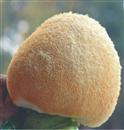 Why do lion's mane mushrooms grow deformed? Are there any methods to prevent and control this? We also ask experienced readers to help share their knowledge.
Quite a few farmers have found deformed lion's mane mushrooms while cultivating them, so Zhongdi Network has compiled the causes of deformed lion's mane mushrooms and the prevention and control methods, listed in detail below for readers' reference.
Causes of bald, spineless lion's mane mushrooms:
This type of deformity is mainly caused by relatively high temperature and relatively low humidity. At a temperature of 25°C, the fruiting bodies evaporate too much water while humidity cannot keep up in time, resulting in no spine hairs growing and the formation of bald mushrooms.
Bald, spineless lion's mane mushroomPrevention methods:Pay attention to temperature control and moisture retention. When the air temperature exceeds 25°C, for cultivation on outdoor mushroom beds, uncover the covering film in the morning and evening for ventilation, and during the day open the film at both ends to let air through; irrigate the furrows to lower the ground temperature, spray atomized water into the space to increase humidity and keep it above 90%, and add thicker shade covering to reduce sunlight penetration and lessen water evaporation.
Causes of coral-clustered lion's mane mushroom formation:
The base of the coral-clustered mushroom body branches and clusters repeatedly, resembling coral, and a root-like rhizomorph connecting to the substrate can clearly be seen. Some of these fruiting bodies die during the fruiting period, while others can continue to grow and develop. The tips of the small branches keep swelling, forming multiple small fruiting bodies in the state of lion's mane mushrooms.
The formation of this type of mushroom is mainly due to excessively high carbon dioxide concentration, which stimulates the continuous differentiation of the stipe and inhibits development of the central part, resulting in an irregular coral-like shape; in some cases, because the substrate contains aromatic compounds or other sterilizing substances, the mycelium is inhibited or abnormally stimulated during growth and development; some cultivators one-sidedly emphasize heat preservation and moisture retention, neglecting ventilation and air exchange, and under such saturated humidity and still-air conditions, the fruiting bodies are forced to develop abnormally.
Coral-clustered lion's mane mushroomPrevention methods:
1. Strengthen ventilation and air exchange in the mushroom yard to eliminate the occurrence of deformed young mushrooms; especially for indoor cultivation, pay extra attention to ventilation and improve environmental conditions.
2. When selecting substrate, be careful to exclude trees with sterilizing effects such as Chinese fir, pine, camphor, poplar and pagoda tree.
3. For fruiting bodies that have already formed a coral shape, scrape them off together with the surface substrate immediately when they are young, then cultivate again for normal fruiting.
Causes of abnormally colored lion's mane mushroom formation:
Generally, the mushroom body turns yellow in color, and the spines are short and thick; some fruiting bodies turn red, or from the young mushroom stage to maturity are pink, and the mushroom body tastes bitter.
The main factor in forming this type of mushroom is relatively low temperature. Often due to autumn and winter cultivation, when the air temperature drops suddenly and the fruiting body development and growth stage is below 10°C, the mushroom body turns red, and the color deepens as the temperature drops. During ventilation in indoor cultivation, the fruiting bodies are stimulated by direct draft, and the mushroom body turns sallow.
For discolored mushrooms, the causes should be distinguished and treated accordingly. For those caused by low temperature, when arranging inoculation, consider that about 25 days after inoculation the local air temperature should preferably not be lower than 14°C; using this as the boundary, calculate backward to the best inoculation period, and low-temperature damage can be avoided.
Prevention methods for abnormally colored lion's mane mushrooms:
For outdoor furrow cultivation, the covering film can be sealed, ventilated at noon when the temperature is high, and the covering thinned to let in light and raise the temperature; for indoor cultivation, avoid direct wind blowing on the mushroom bodies during ventilation, or cover the mushroom bags near the windows with wet gauze.
Fruiting methods for lion's mane mushrooms
If lion's mane mushrooms are cultivated, can high yields be achieved?