What are the precautions for growing shaggy ink cap mushrooms?
What should be noted when growing shaggy ink cap mushrooms? Experienced netizens are also asked to help explain. The shaggy ink cap mushroom is a common name for the shaggy mane, named because its shape resembles a chicken leg and its flesh and flavor resemble shredded chicken. It is a rare mushroom variety developed artificially in recent years with commercial potential, and is known as the "new star among mushrooms." Based on the cultivation of shaggy ink cap mushrooms, Zhongdi Network has compiled 5 precautions, listed in detail below for netizens' reference.
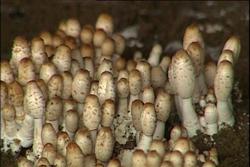 What should be noted when growing shaggy ink cap mushrooms? Experienced netizens are also asked to help explain
The shaggy ink cap mushroom is a common name for the shaggy mane, named because its shape resembles a chicken leg and its flesh and flavor resemble shredded chicken. It is a rare mushroom variety developed artificially in recent years with commercial potential, and is known as the "new star among mushrooms." Based on the cultivation of shaggy ink cap mushrooms, Zhongdi Network has compiled 5 precautions, listed in detail below for netizens' reference.
Precaution one,Shaggy ink cap mushrooms may produce too dense a first flush, making it difficult to transition to the next flush. Many first-flush mushrooms are small, and even clustered mushroom buds lift up the casing soil, causing large numbers of small mushrooms to die from being separated from the substrate surface, making a second flush difficult.
Causes:The mushroom logs are too densely spaced, or the logs are too long, or the substrate layer is too thick.
Solutions:Increase the spacing between mushroom logs to 2-3 cm, and fill the gaps between the logs firmly with soil, or cut the mushroom-bearing logs into two sections and lay them down to fruit.
Precaution two,In shaggy ink cap mushroom cultivation, fruiting may not occur on the bed surface. Very few mushrooms fruit on the bed surface, while more fruit on the surrounding soil ridges.
Cause:The casing soil thickness is inappropriate, the bed soil is dry and crumbly, and the surrounding soil layer is relatively moist.
Solution:The casing soil should not exceed 3 cm, the water content of the casing soil across the whole bed should be uniform, and it should be controlled between 20%-30%.
Precaution three,In the early stage of shaggy ink cap mushroom cultivation, the mycelium may "emerge from the soil." The mycelium emerges onto the bed surface and may even form a mycelial mat.
Causes:Excessive vegetative growth of the mycelium.
Solutions:When the mycelium is about to grow to the bed surface, increase ventilation to dry the surface of the bed soil and promote the transformation of the mycelium to reproductive growth. If the mycelium emergence is slight, increase ventilation and scatter plant ash on the bed surface. If the mycelium has formed a mycelial mat, cut it away with a knife, pick out the mycelial clumps, spray heavily, increase ventilation, and replace the bed surface with fine soil.
Precaution four,During cultivation, shaggy ink cap mushrooms may produce large numbers of "red-headed mushrooms." The scales on the cap are rust-colored, but they do not penetrate the flesh and do not affect growth and development.
Causes:High humidity in the bed substrate and air, and unsuitable light.
Solutions:After the fruiting bodies emerge from the soil, watering must be combined with ventilation. Do not spray with the room closed, so as to keep the mushroom surface free of water and maintain suitable light intensity.
Precaution five,During shaggy ink cap mushroom cultivation, chicken-claw mushrooms may appear. Brown branches, 3-5 of them, grow from the base of the mushroom cluster and resemble chicken claws.
Causes:High temperature and high humidity, and the mycelium is infected by miscellaneous fungi in the soil layer, causing deformation or a diseased state.
Solutions:Maintain suitable humidity in the bed substrate and air, do a good job of environmental sanitation, and use the casing soil only after sterilization.
Method for cultivating shaggy ink cap mushrooms with distillers' grains
Complete guide to shaggy ink cap mushroom cultivation methods