What pests need to be controlled in shiitake mushroom cultivation?
What pests need to be controlled in shiitake mushroom cultivation? What methods can be used to control shiitake mushroom pests? We also ask knowledgeable readers to help explain. The pests that generally need to be controlled in shiitake mushroom cultivation are mites, mushroom gnats (sciarid flies), gall midges, springtails, nematodes, slugs and termites. In response to the above pests, Zhongdiwang has compiled control methods, which are listed in detail below for...
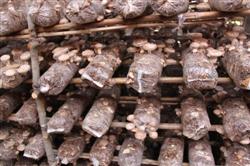 What pests need to be controlled in shiitake mushroom cultivation? What methods can be used to control shiitake mushroom pests? We also ask knowledgeable readers to help explain
The pests that generally need to be controlled in shiitake mushroom cultivation are mites, mushroom gnats (sciarid flies), gall midges, springtails, nematodes, slugs and termites. In response to the above pests, Zhongdiwang has compiled control methods, which are listed in detail below for readers' reference.
I. The harm caused by shiitake mushroom mites and their control methods:
Mites are commonly known as fungus lice and are divided into two types: flour mites and straw itch mites. Straw itch mites are small and not easily seen with the naked eye; they mostly gather into clumps on the surface of the compost. Flour mites are larger, white and shiny, do not form clumps, and appear powdery when numerous. On shiitake mushroom blocks infested by mites, the mycelium is bitten and eaten, and in severe cases the mycelium can be completely eaten away.
If mites occur in the spawn, a cotton plug dipped in 50% dichlorvos can be inserted to fumigate and kill them. If mites appear during the spawn-running period, they can be killed by spraying 0.5% dichlorvos, or by spraying 2000-times diluted 25% julehe ester. If mites occur during the fruiting period, julehe ester can be sprayed to kill them, but mushrooms can only be harvested 3 days after spraying the pesticide.
II. The harm caused by shiitake mushroom sciarid flies and their control methods:
The young larvae of sciarid flies feed inside the compost, while the older larvae bore into and feed on the fruiting bodies of shiitake mushrooms and other fungi.
Control methods: The mushroom house, mushroom yard and surrounding environment should be kept clean and hygienic. Before cultivation, the mushroom house and mushroom yard should be sprayed with insecticide, using 1000-1500-times diluted 40% dichlorvos. If sciarid flies occur during the fruiting period, they can be killed by spraying 1000-1500-times diluted 40% dichlorvos, or 2000-times diluted 25% julehe ester can be sprayed on the surface of the compost for control.
III. The harm caused by shiitake mushroom gall midges and their control methods:
The larvae of gall midges mainly harm the mycelium and fruiting bodies.
Control method: If gall midges occur during the fruiting period of shiitake mushrooms, they can be killed by spraying 1000-1500-times diluted 40% dichlorvos, or 2000-times diluted 25% julehe ester can be sprayed on the surface of the compost for control.
IV. Control methods for shiitake mushroom springtails:
Springtails are also called collembolans, soot insects, etc. Control methods: The inside and outside of the cultivation room and the mushroom yard should be sprayed with 500-times diluted 40% dichlorvos. If springtail damage occurs during the spawn-running period, dichlorvos plus honey can be used as a poison bait, that is, 500-times diluted 40% dichlorvos is sprayed on paper, then a few drops of honey are added, and the pesticide papers are scattered on the surface of the compost to trap and kill them. If springtail damage occurs during the fruiting period, 0.1% derris extract or pyrethrum can be used to kill them.
V. The harm caused by shiitake mushroom nematodes and their control methods:
In compost damaged by nematodes, the surface layer or the entire compost becomes wet, black, sticky, and the mycelium shrinks or disappears, and young mushrooms die. The surface of dead young mushrooms is sticky and has a fishy odor. Under humid, stuffy and unventilated conditions, nematode damage is likely to occur.
Control methods: A 2% formaldehyde solution can be sprayed to kill them. When nematode damage occurs on part of the compost, the affected part of the nutrient material can be dug out and sprayed with formaldehyde to kill them.
VI. The harm caused by shiitake mushroom slugs and their control methods:
Slugs, also called nose worms, are a type of mollusk. They hide in dark, damp places during the day and come out at night. They bite and eat the fruiting bodies of shiitake mushrooms and other edible fungi. At 9-10 o'clock at night, when slugs come out to move, they can be caught by hand, or 1% potassium permanganate solution or 5% salt solution can be sprayed on the places and routes where they move for control.
VII. The harm caused by shiitake mushroom termites and their control methods:
Termites mainly harm mushroom wood. Control methods: Use 80% arsenious acid, 15% salicylic acid and 5% ferric chloride to make a toxic agent, and spray it on termite trails and nests, spraying 6-16 milliliters per nest; or use 50% mercuric chloride, 35% arsenious acid, 10% salicylic acid and 5% ferric chloride to make termite powder and spray it on termite nests. As long as some termites are exposed to the pesticide, the entire nest can be wiped out.
Inoculation methods for shiitake mushrooms
Methods for inducing mushroom budding in bag-cultivated shiitake mushrooms