What are the common problems in king oyster mushroom cultivation?
What are the common problems in cultivating king oyster mushrooms? How should they be solved? We also ask netizens with experience in king oyster mushroom cultivation to help introduce it. The king oyster mushroom is one of the edible mushroom species that has developed in China in recent years. Its production cycle is short, results come quickly, and its economic benefits are relatively high. The planting area is constantly expanding, but in cultivating king oyster mushrooms there are...
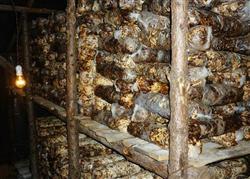 What are the common problems in cultivating king oyster mushrooms? How should they be solved? We also ask netizens with experience in king oyster mushroom cultivation to help introduce it
The king oyster mushroom is one of the edible mushroom species that has developed in China in recent years. Its production cycle is short, results come quickly, and its economic benefits are relatively high. The planting area is constantly expanding, but in cultivating king oyster mushrooms there are quite a few common problems that lead to low yields. Therefore, Zhongdi Network has compiled the common problems and solutions for king oyster mushrooms, listed in detail below for netizens' reference.
Problem one, contamination of the mushroom bags:
The direct cause of contamination in most mushroom bags is incomplete sterilization. Under suitable moisture and temperature conditions, the miscellaneous bacteria in the mushroom bags that have not been killed begin to multiply, at first distributed in scattered specks on the mushroom bags, and later spreading into patches.
Causes of mushroom bag contamination: 1. During mixing, the culture material has not fully absorbed water, and there is a dry core inside the material, especially in harder-textured culture materials such as sawdust and corncobs, where this situation is prone to occur.
2. During the sterilization process, the cold air is not completely expelled, and a portion of the sterilization pot is always occupied by cold air, resulting in poor heat circulation.
3. Insufficient sterilization time, or a stop in the fire during sterilization, or too many mushroom bags placed too tightly in the sterilization pot, will all lead to the problem of incomplete sterilization.
Problem two, slow mycelial growth of king oyster mushrooms:
Cause 1: If the spawn vigor is weak, it can cause slow mycelial growth. Be sure to buy spawn from larger-scale, reputable units. The suitable spawn age is 30-40 days, and white, dense, thick mycelium indicates strong vitality.
Cause 2: If the mushroom bags are packed too tightly or the water content is too high (higher than 65%), the lack of sufficient oxygen inside the mushroom bags inhibits the growth rate of the mycelium.
Cause 3: If the incubation temperature is too low, such as less than 20°C, and ventilation is poor or the pH of the culture material is unsuitable (the suitable pH value is about 7), it will also cause slow incubation.
Problem three, king oyster mushrooms fruiting from the side of the mushroom bags and mostly deformed:
During the sterilization process, the mushroom bags press against each other, and the round mushroom bags become deformed, creating gaps between the culture material and the mushroom bags, providing space for the mycelium to knot. Combined with low temperature, light stimulation, and mechanical stimulation (such as turning the bags), the mycelium on the side of the mushroom bags knots to form primordia, which develop into fruiting bodies.
Due to the restriction of the plastic bag, these mushrooms are all deformed. If this situation is found, the mushroom buds should be pinched and pressed in time to stop their growth, so as to avoid more waste of nutrients.
Problem four, king oyster mushroom fruiting bodies are small:
The cause of this situation is failure to thin the mushroom buds. After the primordia differentiate, many mushroom buds grow on both sides of the mushroom bag, as few as a few and as many as dozens. However, due to the limitations of nutrients and space, most of these mushroom buds cannot grow into commercial mushrooms, so bud thinning should be carried out to avoid wasting nutrients. The principle of bud thinning is that when the mushroom buds have just formed, choose buds with a good position, proper shape, and similar size, leaving 4-6 per side, and when the fruiting bodies grow to 2 cm, carry out another selection, leaving 2-4 per side. In this way, a relatively high commercial rate can be ensured.
Problem five, excessive mycelial growth of king oyster mushrooms:
During fruiting, the mycelium suddenly grows vigorously, white mycelium covers both ends of the mushroom bag and the fruiting bodies, and the fruiting bodies begin to shrink from the middle of the cap, and in severe cases the fruiting bodies turn yellow and die. This is mainly caused by a sudden rise in temperature inside the mushroom shed.
During the fruiting stage, both the mycelium and the fruiting bodies are growing. Under normal conditions, these two kinds of growth reach a dynamic balance. What determines this balance is temperature; higher temperatures favor mycelial growth, while lower temperatures favor primordium differentiation. A sudden temperature rise breaks the original balance, giving mycelial growth the advantage.
When nutrients and water are fixed, if more nutrients and water are supplied to mycelial growth, less nutrients and water are supplied to the fruiting bodies, and in severe cases the nutrients of the fruiting bodies flow backward, showing externally as shrinkage of the fruiting bodies, or even yellowing and death. A sudden rise in temperature inside the mushroom shed should be prevented.
What needs attention when cultivating king oyster mushrooms
How to cultivate king oyster mushrooms