How to Use the Plant Growth Regulator Paclobutrazol on Lawn Grass
In lawn management, to save on mowing costs, besides mechanical mowing, plant growth regulators can also be used to control lawn growth. For example, people use various plant growth regulators such as paclobutrazol on lawns, which can make the intercellular spaces of lawn grass plant cells smaller and slower to form, shorten internodes, thicken leaves, and deepen color...
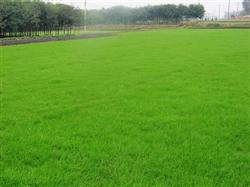
In lawn management, to save on mowing costs, besides mechanical mowing, plant growth regulators can also be used to control lawn growth. For example, people use various plant growth regulators such as paclobutrazol on lawns, which can make the intercellular spaces of lawn grass plant cells smaller and slower to form, shorten internodes, thicken leaves, and deepen color, thereby inhibiting their growth. So, how should paclobutrazol be used rationally?
Paclobutrazol, also called PP333, is a light brown powder chemical agent that can retard plant growth. It is used for chemical regulation of lawns and has many advantages. It can not only effectively control lawn grass growth and achieve the goal of reducing mowing frequency, but also has other advantages, such as delaying grass growth speed, reducing plant height, and increasing the number of lawn tillers. Although the root system becomes shallower, the secondary roots of the lawn grass grow faster, fibrous roots increase, and the root-to-shoot ratio of the whole plant increases. After applying paclobutrazol, the drought tolerance of the lawn grass improves, the soluble sugar content in stems and leaves increases, leaf transpiration decreases, and the water consumption of the lawn grass is reduced by about 25%. After treatment with paclobutrazol, the degradation rate of chlorophyll and protein in the lawn grass slows down, and the protective enzyme system in the plant changes, which can delay lawn aging and prolong the ornamental green period of the lawn.
The method of using paclobutrazol is: generally during the rapid growth period of the lawn, prepare a solution with paclobutrazol at a concentration of 200-300PPM, and use a sprayer to quickly and evenly spray it on the leaf surfaces of the lawn grass. When applying, note that the concentration must not be too high, so as to avoid excessive inhibition. Generally, spray within 2-3 days after mowing. According to observation, the effect can be shown 7-10 days after spraying: in appearance, the lawn color is dark green, the ornamental effect is excellent, and it lasts for a long time. The number of tillers per unit area of mixed-sowing lawn increases rapidly after spraying, by about 15% compared with those not sprayed with paclobutrazol. Therefore, it can rapidly increase the lawn coverage rate and make it quickly form a lawn. In addition, compared with unmixed Kentucky bluegrass lawn not sprayed, the plant height of mixed-sowing Kentucky bluegrass lawn after spraying paclobutrazol is reduced by half, which can greatly reduce the number of lawn mowings.
It is worth noting: First, after spraying paclobutrazol, the leaf color of the lawn grass is dark green. This is an external phenomenon after application. Some people mistakenly think that no fertilization is needed. In fact, fertilizer should be applied when it is time to fertilize, to promote lawn grass growth. Second, if the concentration is too high and the inhibition is too strong, 1-2 mg of gibberellin can be used, mixed with 1 kg of water, and sprayed twice to alleviate the excessive inhibition symptoms and restore normal growth. Third, paclobutrazol can be mixed with chemical pesticides, which can significantly improve its use effect. For example, combined application of paclobutrazol and rare earth can significantly improve the tillering ability of the lawn. Fourth, combine it with mechanical mowing. Although using paclobutrazol saves labor, time, and effort compared with mechanical mowing, it is still difficult to completely replace mechanical mowing. Moreover, mechanical mowing can also overcome the shortcoming of poor lawn uniformity caused by chemical pruning.