Excessive use of pesticides for pest control is not advisable; only rational use is safe
1. Chlorpyrifos easily causes phytotoxicity when used during the seedling stage of melon crops, and its use should also be avoided during the flowering period of certain crops. 2. Pesticides containing triazophos should not be used on fruit cane, as they easily cause phytotoxicity. 3. Because phoxim easily decomposes when exposed to light, its use should be avoided during the watermelon growing period and the seedling stage of radishes and leafy vegetables (even during the growing period...
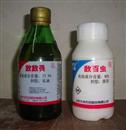 In rural areas, one often encounters this phenomenon: when farmers spray pesticides, they do not know what pesticide they are using, nor how many times it should be diluted, but only know that one bucket of water should be mixed with a few caps (pesticide bottle caps). This is a true portrayal of how most Chinese farmers use pesticides today.
Of course, this current situation is related to farmers' own low educational level, and even more to insufficient, or rather absent, publicity and popularization of pesticide knowledge. In the past, farmers were quite familiar with the names of many pesticides. As batches of highly toxic pesticides were withdrawn from the market, especially after 5 categories of highly toxic organophosphorus pesticides were withdrawn from the market in 2007, many environmentally friendly pesticides and new formulations appeared, yet farmers know very little about these new pesticides, or do not understand them at all. Many pesticide dealers also have not truly changed their thinking, have not truly realized the significance of banning highly toxic pesticides, and even operate with the mentality of bystanders: farmers can use whatever pesticide they like and use it however they like, as long as they themselves can sell the pesticide and earn money. It is precisely under such circumstances that the popularization of pesticide knowledge has become a blind spot: government departments merely issue red-headed documents, but no one truly takes action; and the dealers who deal with farmers have this attitude of it being none of their business, so naturally the publicity and popularization of pesticide knowledge among farmers has come to nothing.
In addition, pesticide dealers themselves are not highly qualified, lack relevant knowledge, and do not know how to learn. They buy and sell pesticides only with an irresponsible and arbitrary attitude, thinking that as long as farmers use the pesticide to kill pests, it is fine. Therefore, some dealers deliberately have farmers increase the dosage, and based on the size of the pesticide bottle cap, casually teach farmers to mix a few bottle caps of pesticide into one bucket of water. If the cap is small, they have farmers mix 3 caps, 4 caps, or even 5 or 6 caps. In short, they encourage farmers to increase the dosage, which can both increase pesticide sales and strengthen the insect-killing effect. As for environmental protection, residues, phytotoxicity, and so on, these dealers do not consider them at all.
Also, when many farmers use pesticides now, if they use the dosage recommended on the label, the insect-killing effect is often unsatisfactory or simply ineffective (pests develop resistance, or manufacturers deliberately mark inflated figures and exaggerate the efficacy). They also often very casually multiply the dosage beyond the recommended amount.
Many dealers are afraid that farmers will understand things clearly, believing that the less farmers understand, the more they will trust what the dealer says, which is more conducive to arbitrary sales. For example, when farmers clearly already have a pesticide for controlling aphids, the dealer deliberately says that pesticide cannot be used and has the farmer buy another one that the dealer recommends. In this way, one pest is matched with one pesticide, which increases farmers' investment and also damages the environment.