Application of Plant Growth Regulators in Fruit Production
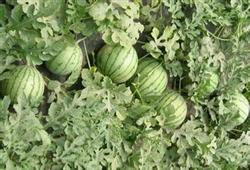
Growth Disorders and Countermeasures - Application of Growth Regulators in Watermelon Growth Regulation: Improving Seed Vigor - Regulating Plant Growth - Improving Fruit Set Rate - Fruit Ripening - Preventing Fruit Cracking - Post-harvest Preservation. Improving Seed Vigor: In winter-spring cultivation of watermelon, low temperatures and poor environmental conditions result in slow and uneven emergence. Using Chinese Academy of Agricultural Sciences...
 1. Definition, Types, and Functions of Plant Growth Regulators
1. Definition of Plant Growth Regulators
Plant growth regulators are a class of pesticides used to regulate plant growth and development, including artificially synthesized compounds and natural plant hormones extracted from organisms.
2. Types and Functions of Plant Growth Regulators
Substances that have been found to regulate plant growth and development include auxins, gibberellins (GA), cytokinins (CTK), abscisic acid (ABA), ethylene (ETH), brassinosteroids (BR), salicylic acid, jasmonic acid, and polyamines. The first six major categories are mainly applied as plant growth regulators in agricultural production:
2.1 Functions of Auxins
Low concentrations of auxins promote organ elongation, thereby reducing transpiration water loss. When the concentration exceeds the optimum, ethylene production is induced, the growth-promoting effect declines, and it may even turn into inhibition. Different organs respond differently to auxins: roots are the most sensitive, followed by buds, while stems are the least sensitive. Auxin (indoleacetic acid) can be artificially synthesized. In production, synthetic auxin-like substances such as indolepropionic acid, indolebutyric acid, naphthaleneacetic acid, 2,4-D, and 4-iodophenoxyacetic acid are used. They can be used to prevent abscission, promote parthenocarpy, thin flowers and fruits, promote cutting rooting, and prevent potato sprouting.
2.2 Functions of Gibberellins
The most notable effects of gibberellins are promoting stem and leaf elongation, promoting fruit development and parthenocarpy, breaking tuber and seed dormancy, and promoting germination. Commercially produced gibberellins are GA3, GA4, and GA7. GA3, also known as gibberellic acid, was the first gibberellin to be isolated and identified.
2.3 Functions of Cytokinins
The main physiological functions of cytokinins are promoting cell division and preventing leaf senescence. Cytokinins can also promote bud differentiation. Synthetic cytokinins such as 4-D and 4-iodophenoxyacetic acid are commonly used to prevent fruits and vegetables from aging and deteriorating during storage.
2.4 Functions of Abscisic Acid
The function of abscisic acid is to inhibit stem and lateral bud growth, making it a growth inhibitor. It is conducive to cell volume expansion and has antagonistic effects with gibberellins. In production, it is used to inhibit cell division, inhibit seed germination, and promote leaf and fruit senescence and abscission.
2.5 Functions of Ethylene
The main functions of ethylene are promoting fruit ripening and promoting organ abscission and senescence. Ethylene is a gas, making it inconvenient for field application. Ethephon, a liquid compound that releases ethylene, has been widely used for fruit ripening, defoliation before cotton harvest and promoting boll opening and fluffing, stimulating rubber latex secretion, rice dwarfing, increasing female flowers in cucurbits, and promoting pineapple flowering.
2.6 Functions of Brassinosteroids
They have physiological functions such as promoting cell elongation and cell division, promoting vascular differentiation, promoting pollen tube elongation to maintain male fertility, accelerating tissue senescence, promoting lateral root development, maintaining apical dominance, and promoting seed germination.
Other important plant growth regulators include B9, chlormequat, paclobutrazol, and maleic hydrazide, which are mainly used for plant growth inhibition.
2. Application of Plant Growth Regulators in Local Fruit Production
1. Early-maturing Pear Enlargement Technology
Liguoling is a pear fruit enlargement agent developed by the Department of Horticulture at Zhejiang Agricultural University. Its main components are GA4 and GA7 composite plant endogenous growth regulators. It can regulate gibberellin content in flowers and fruits, promote transport of photosynthates to flowers and fruits, improve fruit set rate, promote fruit enlargement, improve appearance, and advance maturity. When applying this new type of plant growth regulator, 25 to 45 days after full bloom of pear trees, apply 15 to 20 mg of "Liguoling" paste on both sides of the fruit platform or fruit stalk per fruit. This can advance fruit maturity by 7 to 10 days and increase fruit weight by 12% to 40%. According to fruit quality measurements from various regions, the application of "Liguoling" can significantly reduce fruit firmness, promote crisp and tender flesh, increase soluble solids content by 1.5 percentage points during the same period, and also reduce pear fruit cracking.
2. Grape Seedlessness and Enlargement Technology
2.1 Grape Seedlessness Technology
Currently, plant growth regulators used for seedless grape production include gibberellins (GA), 4-CPA, and cytokinins (6-benzylaminopurine (BA), forchlorfenuron (CPPU, 4PU, KT30)). The specific methods are as follows:
Treat once before flowering and once after fruit set. For varieties such as Delaware, 14 days before full bloom, when flower buds at 2 cm below the inflorescence begin to spread, treat the inflorescence with 100 mg/kg GA solution, then 7 to 14 days after full bloom, repeat the treatment with 100 mg/kg GA. The purpose of the first treatment is to cause abnormal pollen and ovule development to induce seedless fruit formation; the second is to promote cell volume increase and fruit enlargement.
Treat once at flowering and once after fruit set. For varieties such as Pioneer, treatment before flowering has relatively large side effects. Instead, delay to the period from before flowering to early flowering, first dip the inflorescence with 10 to 25 mg/kg GA, then after 10 to 15 days, repeat the treatment with a mixture of 25 to 50 mg/kg GA and 5 mg/kg BA.
When treating varieties such as Kyoho, to reduce rachis lignification and improve seedlessness rate, the first treatment time can be slightly advanced to 2 to 5 days before flowering, while the second treatment time should be slightly later, conducted 10 to 12 days after full bloom with GA concentration of 25 mg/kg. This produces relatively ideal results.
2.2 Grape Enlargement Technology
Generally, treatment is applied after full bloom, with the main agents being gibberellins or gibberellins combined with other hormones. For seedless grape varieties, treatment should be conducted 3 to 9 days after full bloom at a concentration of 100 to 200 mg/kg, while for seeded grape varieties, treatment should be conducted 10 to 15 days after full bloom at a concentration of 25 to 100 mg/kg. Practice has shown that when using growth regulators to treat fruit clusters to promote grape fruit enlargement, gibberellin should not be used alone but should be combined with agents such as GA3 and KT30.
3. Watermelon Seedlessness and Enlargement
In 1995, Japanese researchers treated unpollinated watermelon ovaries with 200 ml/L CPPU to induce parthenocarpy and produce seedless fruits without affecting watermelon fruit shape or soluble solids content. Plant growth regulators began to be used in seedless watermelon production. Domestically, treating unpollinated watermelon female flower ovaries with Zuogualing (main component CPPU) also produces seedless watermelon fruits. However, this technique is time-consuming and labor-intensive, and has significant side effects, so it is not suitable for practical production.
The cytokinin forchlorfenuron can be used for watermelon enlargement, but it should be sprayed on the young fruit on the day the female flower opens or 1 to 3 days before flowering, and should be applied according to the dosage recommended at registration. Otherwise, it will cause watermelon deformity and fruit cracking.
4. Chinese Bayberry Dwarfing Cultivation Technology
The purpose of Chinese bayberry dwarfing cultivation is to control vegetative growth, reduce the operational difficulty of production management measures such as pruning and harvesting, and alleviate the "alternate bearing" phenomenon of Chinese bayberry. Generally, soil application and spraying of paclobutrazol are used. For soil application of paclobutrazol, the dosage is calculated based on the effective ingredient per sq m of tree canopy shading area, with 0.2 g to 0.4 g being optimal, keeping growth in a semi-inhibited state so that the tree bears fruit while simultaneously producing shoots. For spraying paclobutrazol, it is conducted after spring shoot growth stops, with 15% paclobutrazol at 200 times dilution being optimal.
5. Kiwifruit Fruit Enlargement
The main component of kiwifruit enlargement agent is also forchlorfenuron. The main purpose of using the enlargement agent is to produce large-fruited kiwifruit of over 100 g that is popular in the market. The more scientific application period is 15 to 25 days after flowering. The application concentration is 5 to 8 mg/kg (i.e., 50 ml of 0.1% forchlorfenuron diluted with 6.25 to 10 kg water). When applying, use a sprayer to evenly spray the fruit surface; dipping young fruits is prohibited.
The above techniques are all applied in fruit production in the Hangzhou area. In addition, growth regulators can also be used in fruit tree breeding and seedling propagation, tree resistance control, and fruit quality control. Since they are rarely applied locally, they will not be described in detail.
3. Side Effects of Plant Growth Regulators
Plant growth regulators have side effects in production. If the timing, dosage, and method of use are incorrect, they will bring losses to production:
The side effects of Liguoling are not obvious, but early-maturing pears produced using Liguoling have large fruit shape, and the fruit stalk and fruit base tend to elongate on both sides into a columnar shape. Soluble solids content increases, but taste declines, flesh tends to become mealy, and fruit storage time at room temperature is shortened.
When using enlargement agents on grapes, attention should be paid to application timing. Early treatment of seeded varieties will result in some seedless berries, affecting the perfection of the fruit cluster; too-early treatment of seedless varieties causes severe rachis lignification.
Obtaining seedless watermelon through exogenous hormone treatment is time-consuming and labor-intensive. Even with strict control of agent concentration, treatment timing, and cultivation technical measures, there still exist phenomena such as low fruit set rate, unstable fruit set, thick fruit rind, deformity, and bland taste. It is also prone to food safety issues, making it difficult to utilize in production.
There is a phenomenon of abuse of paclobutrazol in Chinese bayberry production. Fruit growers often spray high-concentration paclobutrazol solutions to suppress Chinese bayberry growth, excessively suppressing vegetative growth, leading to gradual tree decline and susceptibility to pathogen infection, causing diseases such as flesh scorch disease and dieback disease, and reducing Chinese bayberry yield.
Using enlargement treatment on kiwifruit young fruits can significantly increase fruit size and yield, but at the same time, fruit appearance becomes distorted and unsightly, flavor becomes sour, flesh firmness decreases, softening occurs easily, disease resistance decreases leading to easy rotting, poor storage tolerance, and tree vigor weakening causing alternate bearing. This has already caused relatively serious consequences for the kiwifruit industry in certain provinces.
4. Relevant Recommendations for the Use of Plant Growth Regulators in Local Fruit Production
The use of any plant growth regulators is not advocated in fruit production in the Hangzhou area.
1. Avoid Using Growth Regulators as Much as Possible
Whether artificially synthesized plant growth regulators are harmful to human health remains inconclusive. The country lacks relevant standards for the use of plant growth regulators, and the regulatory system for the production, use, and detection of plant growth regulators in agricultural products is still incomplete. With recent incidents such as "exploding watermelons," consumers will pay more attention to the use of additives in agricultural products, and the relevant national regulatory system will gradually improve. By then, fruits using growth regulators may not necessarily be welcomed by the market.
2. Carefully Select Plant Growth Regulators
Plant growth regulators fall under the category of pesticides. Therefore, when purchasing, in addition to paying attention to reagent composition and effects, producers should focus on whether product registration information is reliable. If conditions permit, they should log onto the China Pesticide Information Network to verify the authenticity of product registration certificate numbers and registration contents. Before using plant growth regulators, it is best to consult the local agricultural technology extension department for technical advice, so as to avoid economic losses caused by incorrect or mistaken use of growth regulators.
3. Scientifically Use Plant Growth Regulators
From a practical production perspective, the enlargement of early-maturing pears, grapes, kiwifruit, watermelons, and other fruits can be fully achieved through fertilizer and water management. Naturally enlarged fruits are plump and well-proportioned with natural and pure flavor. Using enlargement agents in orchards with improper fertilizer and water management will weaken tree vigor due to excessive nutrient consumption. Due to technical instability, using plant growth regulators to produce seedless watermelon is not advocated; for seedless watermelon production, triploid watermelon seeds can be purchased from seed companies. For producing seedless grapes and dwarfing Chinese bayberry trees, growth regulators can be used, but concentration and timing should be strictly controlled.