What are the characteristics of herbicides specifically for licorice?
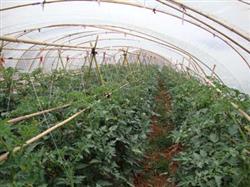
With the adjustment of the agricultural industrial structure, the area planted with greenhouse crops is growing larger and larger. However, because the temperature and humidity conditions inside plastic greenhouses differ greatly from the external environment, applying pesticides according to conventional methods can easily cause phytotoxicity. To reduce the occurrence of phytotoxicity, when applying herbicides in greenhouses, attention should be paid to...
 Herbicide No. 0:
It has relatively strict requirements for timing of use, and its operability is rather poor. To use Herbicide No. 0, the soil must be level and the humidity must be high. Generally, it must be used after sowing or transplanting seedlings, within a few days after watering, and before the weeds have emerged, so it can inhibit weed seed germination. Spraying must be uniform, and the dose must be sufficient. Herbicide No. 0 is ineffective against weeds that have already sprouted and emerged, and is also ineffective against deep-rooted weeds. The usual application rates are: low dose 100 milliliters per mu, medium dose 150 milliliters per mu, high dose 200 milliliters per mu. The amount of water for dilution should be determined by testing the performance of the spraying machinery. When atomization is good, less water can be added; when the atomization effect is poor, an appropriate amount of more water can be added. Dilution is generally 30-50 kilograms per mu. When spraying, do not repeat and do not miss any area. For seed-propagated weeds, it can ensure no weeds emerge within 60 days.
Herbicide No. 1:
Apart from being less effective against deep-rooted and tuberous weeds, Herbicide No. 1, when timed properly, can prevent various weed seeds from germinating and promptly kill small weeds. At high doses, it also damages larger weeds. It can be used both for seedling raising and after transplanting seedlings, and the timing can be appropriately relaxed. Within half a month after the first watering, as long as the weeds are at the young stage of 3-5 leaves, they can be killed, and it also has an inhibitory effect on weeds that have not yet germinated. Because the timing of use is relatively broad, its operability is relatively strong. Herbicides sold on the market that have a pre-emergence closure function often cannot kill weeds that have already emerged, while herbicides with a weed-killing function often do not have a closure function. Herbicide No. 1 combines both functions. As long as the dosage is sufficient, spraying is uniform, and water use is reasonable, it can ensure no weeds for 70 days, greatly reducing the cost of weed control. The normal application rates are: low dose 70 milliliters per mu (suitable after sowing or transplanting seedlings when there are no weeds in the field or the weeds are at a young stage), medium dose 100 milliliters, high dose 130 milliliters. When exceeding 130 milliliters, there is no experimental data proving the effects and side effects, but it has been proven that it causes considerable damage even to deep-rooted weeds. Herbicide No. 1 is also safe for licorice. When using it, it is recommended to choose within the range of 70-130 milliliters. Likewise, how much water to add must also be determined according to the performance of the spraying machinery.
Herbicide No. 2:
Herbicide No. 2 has a relatively good weed-killing effect on deep-rooted and monocotyledonous weeds, such as wheatgrass. If such weeds occur over a large area, choosing Herbicide No. 2 gives a remarkable effect. It compensates for the use of Herbicides No. 0 and No. 1. Under normal circumstances, when Herbicide No. 1 is used correctly, Herbicide No. 2 can also be omitted. Herbicide No. 2 must also be used at the small seedling stage of 1-3 leaves of the weeds, sprayed uniformly with a sprayer; the application rate is relatively small, it takes effect slowly, and its duration of action is relatively long. Before licorice emerges, the application rate is within 60 milliliters per mu; after licorice emerges, the application rate can be controlled within 40-60 milliliters. Herbicide No. 2 is very sensitive to monocotyledonous weeds, but is likewise safe for licorice.
The above three herbicides are all commissioned by the Licorice Research Institute and produced by a nationally qualified chemical research institute. They fully comply with the national standards for pesticides, and all growers can use them with complete confidence.
Regarding spraying machinery, practice has proven that large machinery gives the best results, and hand-operated sprayers often cause overlapping and missed areas in actual operation. The most economical and effective method is to use a small four-wheel tractor, with a motorized sprayer pump, and to make nozzles by drilling holes in steel pipes or hard plastic pipes.
For perennial licorice, before spraying, the dried stems and stalks from the previous year on the licorice should first be cleared away, and the land should be appropriately leveled.
Last year, the overall use of herbicides was successful. Wherever the herbicide was applied when the weeds were at 3-5 leaves, the results were generally very good. However, a few growers reported that the weed-killing effect was not obvious. The main reasons were that the timing of application was too late, the dosage was too small, and the timing for weed control was not judged accurately.
Although our herbicides fully comply with national standards and are produced by a qualified national chemical research institute, and there is no problem with product quality, they are still at the experimental and trial-use stage. Our herbicides are specially customized, for our own use, limited to use by our contract growers, and must not be sold externally. The stated usage regulations must not be violated by technical representatives and growers in any region.
The main safety issues to note in the use of herbicides are:
The transportation and storage of herbicides must be carried out with dedicated transport and dedicated custodians.
Herbicides must be stored properly in a place out of reach of the elderly, children, poultry, and livestock, and in a ventilated, dry location.
During use, wear plastic gloves and a mask to avoid direct skin contact with the chemical. After spraying, promptly wash hands and face with soapy water, and also promptly clean the spraying equipment. When conditions permit, the equipment used for spraying herbicides can be kept separate and dedicated from that used for spraying other substances.