What herbicide is good for growing vegetables under insulation?
In seasons with lower temperatures, to bring vegetables to market earlier and sell them at a good price, in recent years the method of covering with plastic film has often been used to increase temperature and retain heat to promote early maturity and higher yields of vegetables, while also applying chemicals for weed control, which saves labor and increases efficiency. However, years of experience and lessons with chemical weed control under film tell us that if the selected...
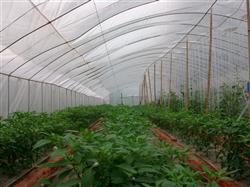
In seasons with lower temperatures, to bring vegetables to market earlier and sell them at a good price, in recent years the method of covering with plastic film has often been used to increase temperature and retain heat to promote early maturity and higher yields of vegetables, while also applying chemicals for weed control, which saves labor and increases efficiency. However, years of experience and lessons with chemical weed control under film tell us that if the selected herbicide variety is inappropriate, or the application method is wrong, first, the weeds cannot be completely eliminated; second, the vegetables will suffer herbicide damage; third, the environment will be polluted; and fourth, the market value of the vegetables will be reduced. To give full play to the effectiveness of herbicides, the herbicides suitable for solanaceous fruit vegetables, beans, and leafy vegetables are introduced as follows:
For solanaceous fruit vegetables such as tomato, eggplant, and pepper, the herbicides that can be selected are: 72% Dual emulsifiable concentrate at 100-150 ml per mu or 48% dinitramine emulsifiable concentrate at 150-300 ml per mu, each diluted with 30 kg of water and applied after sowing before covering with plastic film; 33% pendimethalin emulsifiable concentrate at 150-300 ml per mu, or 24% Goal emulsifiable concentrate at 50-100 ml per mu, or 50% metribuzin wettable powder at 50 g per mu, each diluted with 40-50 kg of water, sprayed after sowing and before emergence, then covered with plastic film.
For bean vegetables such as peas, edamame, and cowpeas, the herbicides that can be selected are: 48% trifluralin emulsifiable concentrate at 100-150 ml per mu, diluted with 40-50 kg of water; 50% metribuzin wettable powder at 23-45 g active ingredient per mu, diluted with 40-50 kg of water, applied after land preparation and before sowing and mixed into the soil, then sow and cover with film; 33% pendimethalin emulsifiable concentrate at 150-200 ml per mu, 50% acetochlor emulsifiable concentrate at 70-150 ml per mu, diluted with 40-50 kg of water, or 50% simazine wettable powder at 33-100 g active ingredient per mu, diluted with 40-50 kg of water, applied after sowing and before emergence, then covered with film.
For cruciferous vegetables such as Chinese cabbage, red flowering stalk, cabbage, and cauliflower, the herbicides that can be selected are: 33% pendimethalin emulsifiable concentrate at 100-150 ml per mu, 48% Lasso emulsifiable concentrate at 150-200 ml per mu, 50% thiobencarb emulsifiable concentrate at 100-150 ml per mu, and 50% napropamide wettable powder at 100-200 g per mu, each diluted with 40-50 kg of water and sprayed on the soil surface before covering with film.
When applying herbicides under film, several points should be noted: first, the amount of water used for dilution per mu must not be too low; only by ensuring moisture can the spreading and penetration ability of the herbicide be enhanced; second, when applying the chemical, do not spray repeatedly; it must be done in one pass to avoid increasing the concentration and causing herbicide damage; third, trifluralin and metribuzin are highly volatile, so after application they must be thoroughly mixed with the soil using a toothed rake, to a depth of 2-3 cm; fourth, the film covering must be tight, with neither missed chemical application nor missed film covering, and any broken film found must be patched promptly.