How can pesticides be mixed to improve their effectiveness?
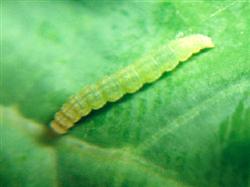
With the adjustment of the agricultural industrial structure, vegetable production has developed rapidly, and the planting area of cabbage among cruciferous crops has expanded year by year. This has provided abundant food for the diamondback moth and the cabbage caterpillar, which prefer cabbage-type vegetables. In addition, the short generation cycle of the diamondback moth and the cabbage caterpillar and their high egg-laying capacity have made them a major pest of cruciferous...
 When farmers use pesticides, if they mix and apply spray solutions, they should pay attention to the following 5 points.
1. Synergistic effect. Pesticides can enhance each other's effects, especially those with different insecticidal mechanisms, where the synergism is more pronounced, thus improving the insecticidal control effect. How can we determine whether an insecticidal mixture is synergistic or not? Usually, data are obtained through tests using a certain method, and then a formula is used to calculate a number called the "co-toxicity coefficient." If the co-toxicity coefficient is greater than 1, it indicates synergism; the larger the number, the higher the effect. If the co-toxicity coefficient is less than 1, it indicates reduced efficacy, meaning that the two insecticides used together are less effective than when used alone. Therefore, people generally use the size of the co-toxicity coefficient to judge and indicate synergism. For example: when beta-cypermethrin and malathion are mixed in a certain ratio and tested on cotton bollworm, the co-toxicity coefficient is 219; when tested on peach aphid, the co-toxicity coefficient is 476. This shows that the mixture of these two insecticides has a significant synergistic effect. Some insecticides decompose and lose effectiveness when they encounter alkaline substances, such as organophosphorus insecticides. If the pesticide mixed with them is alkaline, the effect will be reduced, so not all insecticide mixtures will necessarily be synergistic. Some farmers often take several insecticides and mix them together at the edge of the field before use. This method of operation is inappropriate and should be avoided.
2. After mixing, the advantages should complement each other. The insecticidal speed of two insecticides is not the same. If mixed reasonably, their advantages can complement each other. For example: pyrethroid insecticides act quickly, while specific insecticides kill insects slowly. Mixing the two can make up for each other's shortcomings. For example, when abamectin is mixed with beta-cypermethrin, the former kills insects slowly and the latter kills insects quickly; after mixing, the insecticidal action can be accelerated.
3. Expand the insecticidal spectrum. Some insecticides have a good killing effect on Lepidoptera pests but are ineffective against mites. If mixed with an insecticide with strong acaricidal action or an acaricide with strong acaricidal action, they can simultaneously control Lepidoptera pests and mite pests. One pesticide serving multiple purposes can save labor and time. 4. Delay pest resistance. Pyrethroid pesticides are relatively likely to cause some pests to develop resistance, such as cotton bollworm. If they are mixed with other insecticides, the development of resistance in the pests can be delayed or the resistance level can be kept low. According to test data: when 20% fenvalerate-malathion emulsifiable concentrate (a mixture of fenvalerate single agent and malathion) and 20% fenvalerate were used separately to treat cotton bollworm, after 16 generations of continuous treatment, resistance levels were measured. It was found that the resistance of cotton bollworm treated with fenvalerate alone was 65.54 times higher than that of cotton bollworm treated with fenvalerate-malathion emulsifiable concentrate, indicating that fenvalerate-malathion emulsifiable concentrate has a significant effect in delaying cotton bollworm resistance. 5. Reduce control costs. Some insecticides are more expensive, while others are relatively cheap. If mixed reasonably, they not only have the many advantages above, but can also reduce control costs. For example: 59% imidacloprid-carbosulfan wettable powder. Imidacloprid has a good insecticidal effect but is expensive. If mixed with the cheaper carbosulfan and used on rice, it can not only control rice planthoppers but also control leafhoppers, while also reducing costs.