What are the precautions for using bacterial biological insecticides?
Bt is a bacterial biological insecticide commonly used in vegetable production today, and its effect on controlling Lepidoptera larvae is especially pronounced, but the following points should be noted when using it: 1. Check whether the quality of Bt passes muster; this can be tested by "smelling." Normal Bt products all contain a certain amount of bacteria; when the lid is opened...
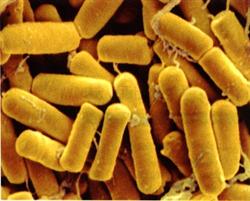 Bacterial biological insecticides have the advantages of a high insecticidal rate, no environmental pollution, safety to natural enemies, harmlessness to humans and livestock, and not inducing pest resistance, making them a new type of protective agent currently promoted for key use in pollution-free cultivation. Because their control effect depends mainly on the bacterial activity in the agent, the following six points should be noted when using them:
I. Avoid using inferior agents
They should be purchased from regular manufacturers and agent sales outlets to prevent counterfeits and inferior goods, and attention should be paid to the production date and service life of the agent as well as reasonable storage and keeping of the agent to prevent expiration and loss of efficacy. In addition, normal agent products generally all contain a certain amount of bacteria; when the lid is opened there should be no foul odor, and sometimes there is even a fragrant smell (given off by the culture medium), while expired or fake pesticide products often produce an unusual odor or have no smell.
II. Avoid using at low temperatures
The active ingredients of bacterial biological insecticides are protein crystals and living spores. Under low-temperature conditions, the spores reproduce slowly in the pest's body, and the protein crystals do not easily take effect. Ambient temperatures of generally 10-35°C are suitable; if too low, it will affect the insects' food intake and the control effect will be somewhat poorer.
III. Avoid heavy rain washing
If moderate to heavy rain occurs shortly after spraying a bacterial biological insecticide, it will wash away the bacterial liquid sprayed on the crop stems and leaves and reduce the pesticide's efficacy. But if light rain falls 5 hours after application, it will not only fail to reduce the control effect but will instead have a synergistic effect.
IV. Avoid mixing with fungicides
When applying bacterial biological insecticides, never mix them with fungicides (such as carbendazim, thiophanate-methyl, etc.), otherwise it will easily lead to a severe reduction in the number of bacteria in the agent, thereby affecting the insecticidal effect. Therefore, even a sprayer that has been used for fungicides must be rinsed clean before being filled with bacterial biological insecticide.
V. Avoid dry environments
The bacterial spores in bacterial biological insecticides like humid environments, so the greater the field humidity when used, the higher the efficacy; especially when spraying powdered biological pesticide preparations, even more attention should be paid to field humidity. Generally, bacterial powder preparations are sprayed in the early morning and at dusk when there is dew.
VI. Avoid strong light
Ultraviolet rays in sunlight have a killing effect on spores; if the light is strong, ultraviolet rays will kill the bacteria. Therefore, spraying bacterial biological insecticides should be carried out on cloudy days or in areas with weak light. Generally, application is carried out before 10 a.m. on sunny days or in the evening.