Is adding laundry detergent to rice pesticides really effective?
The choice of rice pesticides affects the operator's health, the control effect, the cost of use, and their pollution of the environment and rice. 1. Low toxicity does not mean low efficacy, and high toxicity does not mean high efficacy. The toxicity of a pesticide is not classified according to its toxicity to pests, but according to its toxicity to mammals. For pests...
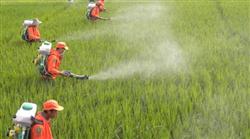
The choice of rice pesticides affects the operator's health, the control effect, the cost of use, and their pollution of the environment and rice.
1. Low toxicity does not mean low efficacy, and high toxicity does not mean high efficacy. The toxicity of a pesticide is not classified according to its toxicity to pests, but according to its toxicity to mammals. The control effect on pests must be determined according to the species of pest, the way the pest causes damage, and the mode of action of the pesticide. For example, the striped stem borer (Chilo suppressalis) is a boring pest of the order Lepidoptera. During the egg stage, an ovicidal pesticide can be used; after hatching and before it bores into the plant, contact and fumigant insecticides can be used; after it has bored into the plant, control is difficult, and an insecticide that can be absorbed and translocated by the plant can be used.
2. Avoid using highly toxic and extremely toxic pesticides. Because the timing of rice pest control is mainly in high-temperature seasons, using extremely toxic or highly toxic pesticides such as 1605 can easily cause poisoning or even death of the operator, and can easily kill natural enemies of pests pollute the environment and, if used later, may also directly contaminate rice.
3. Selection of nereistoxin pesticides. Nereistoxin pesticides are the first choice of rice insecticides in silkworm-free areas. Common ones include dimehypo, monosultap, etc., which have contact, stomach, and ovicidal action, can be absorbed and translocated by crops, and are low in toxicity to humans, livestock, and fish. In particular, such pesticides are absorbed rapidly through the roots and are generally stable in water and soil, so in fields with shallow water, the-dose poisonous soil broadcast application method gives better control and a longer residual effect. Such insecticides can control many pests on rice, are low in toxicity to natural enemies, and have control effects exceeding those of extremely toxic and highly toxic pesticides. However, such pesticides are insect neurotoxins and are highly toxic to silkworms, so near mulberry groves, drift of pesticide mist must be avoided to prevent contamination of mulberry leaves. The poisonous soil broadcast application method can avoid drift contamination. In rice fields that mulberry trees can reach, do not use such pesticides; instead, trichlorfon, dimethoate, dichlorvos, isoprocarb, and buprofezin, etc., can be selected.
4. About mixing and blending. Pesticide mixing is intended to increase efficacy and expand the control range, follows the principle of not undergoing chemical reactions with each other, and must be prepared and used immediately. Nereistoxin pesticides can be mixed with many fungicides, but disinfectant fungicides such as strong chlorine bleach and sterilization agents must be used alone. Mixing isoprocarb and dimehypo at 1:1 can increase their insect toxicity by 1.8 times. Adding laundry detergent at 0.05% of the liquid volume can increase the spreading property of liquids such as dimehypo on rice leaves by 3 times, greatly improving the control effect of spraying.
5. Precautions. The applicator should wear labor protection equipment properly to avoid soaking the body with pesticide liquid. The spraying time should avoid high temperatures. After application, thoroughly wash the body and clothing.