Three key points for good herbicide efficacy to remember
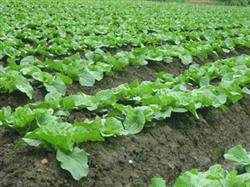
1. Pay attention to applying the herbicide before the seedlings emerge as much as possible. Chemical weeding in vegetable fields mostly uses soil treatment, but it must be applied before sowing or before emergence after sowing, and the best time to apply it is at the initial stage of weed growth. This can avoid or reduce contamination of vegetables by the chemical. 2. Pay attention to making the soil level, fine and moist. When using...
 With the widespread use of herbicides, more and more problems are appearing in production. Many people only focus on the specific effectiveness of the herbicide and arbitrarily increase the dosage, while neglecting the timing and method of use. The basic principle of herbicide weed control is to selectively control weeds based on time, location, morphological differences and physiological differences among different plants, and so on. Therefore, the use of herbicides must be well managed in the three links of choosing the right chemical, timing and application method. Choose the right chemical
There are hundreds of commonly used herbicides, but their characteristics and target weeds are often different; weeds are divided into annual and perennial, as well as broadleaf and grass family; different crops, and even different varieties of the same crop and different growth stages, also differ greatly in their sensitivity to the same herbicide. Therefore, the first step in the rational use of herbicides is to choose the right chemical. For example, for controlling weeds in wheat fields in spring, 2,4-D butyl ester or isooctyl ester has the best effect on lambsquarters, but poor efficacy on shepherd's purse, cleavers and the like, so it is best to use it in combination with other chemicals; fluroxypyr has a more outstanding effect on flixweed and field bindweed. Choose the right time
First, consider at which growth stage of the crop the herbicide is both safe and highly effective. For example, most wheat field herbicides should be used before wheat jointing, when the weeds have about 3 leaves. Therefore, weeding before winter and spraying as early as possible in spring are the two most suitable periods for using herbicides in wheat fields; the efficacy of most herbicides is related to temperature, especially systemic conductive herbicides. Applying them under temperature conditions suitable for rapid weed growth can allow weeds to absorb more of the chemical, so the efficacy is better. For example, when using herbicides in wheat fields in spring, choosing sunny, warm and slightly windy weather is not only good for the efficacy but also safer for the wheat.
Apply thoroughly
Whether contact-type or systemic conductive herbicides, they can only exert their efficacy after enough of the chemical has adhered to or been absorbed by the weeds. Therefore, in the application of herbicides, whether they can be applied thoroughly is also very important. In recent years, among the many problems reported as poor efficacy or even herbicide damage, most were caused by considering only increasing the amount of chemical while reducing the amount of spray liquid, resulting in very uneven distribution of the liquid, with little liquid falling on the weeds and more adhering to the crops, thus leading to the consequences of weeds not dying and crops suffering herbicide damage. Therefore, when applying herbicides, an adequate amount of spray liquid must be ensured.