What are some practical ways to improve the effectiveness of insecticides?
It is once again the season when pests are rampant. What should be noted when spraying insecticides? When using pesticides to control crop pests, to achieve the best insecticidal effect, in addition to selecting the right targeted pesticide and applying it at the appropriate time, special attention should also be paid to the following two easily overlooked issues. First, it depends on the climate characteristics and the pest's day-night activity...
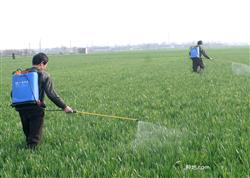 Nowadays, planting costs are getting higher and higher, and insecticides account for a large part of them, yet the results are often unsatisfactory. How can insecticide effectiveness be improved?
When using chemical pesticides to control crop pests, there are three factors that directly affect the control effect:
First, climate. If it rains after application, or if application is done during rain, the pesticide will be washed away and lost by rainwater; if applied on a clear morning, because there is dew on the crop leaves, the pesticide solution will be diluted; at noon on a clear day (especially in summer), the high temperature and strong light will cause evaporation loss during application and decomposition failure due to strong light exposure. In addition, dry hot wind will also accelerate the volatilization of the pesticide solution.
Second, the activity patterns of pests. Pest activity is clearly governed by the alternation of day and night, and in behavior it manifests as day-active and night-active types. Day-active pests such as cabbage white butterfly, cotton semilooper, and rice grasshopper all like to be active during the day when there is sufficient light; the three-generation rice stem borer hatches most abundantly in the morning; the rice leaf roller hatches all day as long as there is sunlight. But the vast majority of pests prefer to be active at night, and they are phototactic. For example, the rice skipper often hides inside leaf rolls during the day and comes out to feed in the evening; the rice weevil and scarab beetle are nowhere to be seen during the day and only come out at night to cause damage; the cutworm hides in soil cracks or beside plant roots during the day and comes out at night to bite crops; and the tobacco cutworm and bean pod borer also show the pattern of hiding by day and emerging at night.
Third, the parts of the crop that pests damage. Pests damage crops in certain parts. For example, aphids often live on the underside of leaves; armyworms, cotton semiloopers, rice leaf rollers, cabbage caterpillars, and rice grasshoppers mostly feed on crop leaves; rice planthoppers and rice leafhoppers often gather at the base of rice plants to feed and lay eggs; bean pod borers like to damage bean pods and feed on the beans; tobacco cutworms mostly bite plant fruits, and so on.
In summary, while selecting the right pesticide and applying it at the appropriate time, it is also necessary to apply the pesticide at the right time according to different situations and deliver it to the right place.
1. According to climate characteristics and the day-night activity patterns of pests, apply pesticides at favorable times. The suitable time for spraying pesticides is after 9 a.m. and after 4 p.m. This is because after 9 a.m., the dew on crop leaves has dried, and it is also the time when day-active pests are most active, which allows pests to come into direct contact with the pesticide and increases the chance of poisoning. After 4 p.m., the sun leans to the west, light weakens, and temperature drops. It is exactly the time when flying activity at dusk occurs and night-active pests are about to emerge. Applying the pesticide at this time can put the pesticide on the crops in advance, so that when pests come out to move or feed, they contact the toxic liquid or die from poisoning after feeding. At the same time, evaporation loss and photodegradation failure can also be avoided.
2. According to the parts damaged by pests, select different pesticides and adopt different application methods to deliver the pesticide to the right place. For example, for pests that damage roots, apply the pesticide into the plant root area or into the sowing furrow; for pests that feed on the underside of leaves, spray the pesticide solution onto the reverse side of the leaves; to control stem borers causing dead heart seedlings, broadcast poisoned soil, and to control white heads, spray or splash application; to control rice planthoppers and rice leafhoppers, spray the pesticide solution onto the base of the rice plants; to control tobacco cutworms, spray the pesticide solution onto the fruits; to control bean pod borers, spray the pesticide solution onto flower buds and young pods. In addition, for concealed pests such as rice planthoppers and rice leafhoppers, according to their piercing-sucking mouthpart feeding method, insecticides with strong systemic action can be selected for stem smearing or leaf spraying, and after absorption through stems and leaves, they are transmitted to other parts of the plant, achieving the purpose of delivering the pesticide to the right place.
More insecticide application techniques