What are the common insecticides used on bananas? A reference for growers on pesticide use
What insecticides are commonly used on bananas? Here is an introduction so you can stock up. The insecticides commonly used on bananas include the following varieties (additions welcome): (1) High-efficiency Dagongchen 5% High-efficiency Dagongchen wettable powder is a new type of highly effective, low-toxicity, strongly systemic insecticide, with a significant control effect on piercing-sucking mouthpart pests such as aphids and thrips...
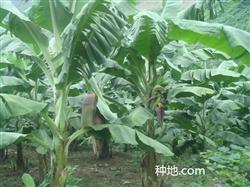
What insecticides are commonly used on bananas? Here is an introduction so you can stock up
The insecticides commonly used on bananas include the following varieties (additions welcome):
(1) High-efficiency Dagongchen 5% High-efficiency Dagongchen wettable powder is a new type of highly effective, low-toxicity, strongly systemic insecticide, with a significant control effect on piercing-sucking mouthpart pests such as aphids and thrips. Its characteristics are:
① Ultra-high efficiency, low dosage, 10-20 grams per 667 sq m, lasting effect of 20 days, faster action than 10% imidacloprid;
② Low toxicity, low residue, does not cause phytotoxicity,
③ Good control effect on resistant pests, with no cross-resistance to other types of pesticides. Dosage: 2000-5000 times dilution.
(2) Haizheng Miechongling is an antibiotic acaricidal and insecticidal agent. It has special effects on various Coleoptera pests, aphids, Lepidoptera pests and root-knot nematodes. This agent is a sixteen-membered macrolide antibiotic, a microbial fermentation product with a complex structure, so pests find it difficult to develop resistance, and it has high activity against pests that have developed resistance to other agricultural pesticides. Its efficacy against pests can last 7-14 days, and against mites about 30 days. It is safe for humans and livestock, non-carcinogenic, non-teratogenic and non-mutagenic. Its residue level in crops is extremely low, with no need for a pre-harvest interval after spraying. It can effectively protect natural enemies such as the seven-spot ladybird and spiders. Dosage: 3000-8000 times dilution.
(3) Mimic 20% F suspension concentrate is an insect molting accelerator that can induce Lepidoptera larvae to produce a molting reaction prematurely before they have entered the molting stage. After spraying, they stop feeding within 6-8 hours, dehydrate within 2-3 days, and die of starvation. It is effective against larvae of all instars, uses a small amount and has a long residual effect, causes no phytotoxicity or residual spots on crops, and has no adverse effects on beneficial insects, birds or natural enemies. Dosage: 1000-2000 times dilution.
(4) Derris extract is a botanical insecticide extracted from the roots of derris, with contact and stomach poison action, and has a relatively good effect on aphids and Lepidoptera larvae. Because it is extremely safe for humans, livestock and crops, it is especially suitable for use on fruit, vegetables, tea and mulberry. The commonly used spray is 2.5% derris extract emulsifiable concentrate at 500-800 times dilution.
(5) Qingchongjun belongs to a variety of Bacillus thuringiensis. This type of insecticidal bacterium is non-toxic to humans, livestock, crops and aquatic organisms, and has relatively good stability, and can be mixed with other pesticides. This bacterium has varying degrees of pathogenic and toxic effects on more than 150 species of insects, especially Lepidoptera insects. When pests eat this insecticidal bacterium, they quickly stop feeding, become paralyzed, soften, rot, give off a foul odor and die. The formulations include wettable powder (10 billion viable spores/gram) and emulsion (10 billion viable spores/milliliter), and can be applied by spraying, dusting, or as poisoned soil. The commonly used dosage is 50 grams of bacterial powder per 667 sq m. If mixed with pyrethroid pesticides or trichlorfon, it has an obvious synergistic effect, but it cannot be mixed with fungicides or systemic organophosphorus insecticides. It works best when applied at temperatures above 30°C, and should be used with caution in silkworm-rearing areas.
(6) Acephate is a low-toxicity systemic insecticide with both stomach poison and contact action, and it can also kill eggs. It is a slow-acting insecticide; after application the initial effect is slow, the effect becomes significant after 2-3 days, and the after-effect is strong. It is suitable for controlling pests with chewing or piercing-sucking mouthparts on many crops including agriculture, forestry, fruit and vegetables, and is also suitable for controlling many harmful mites. The commonly used spray is 40% acephate emulsifiable concentrate at 500-1000 times dilution.
(7) Lorsban, also known as chlorpyrifos, is a moderately toxic insecticide with contact, stomach poison and fumigant action. Its residual period on leaves is not long, but its residual period in soil is relatively long, so it has a relatively good control effect on underground pests. The commonly used spray is 40.7% Lorsban emulsifiable concentrate at 1000-1500 times dilution.
(8) Wanling, also known as methomyl, is a carbamate insecticide with contact, stomach poison and systemic action, and what is more prominent is its killing power against certain insect eggs. It acts quickly and decomposes relatively quickly on crops, so its residual period is short. It has a very good control effect on diamondback moth, citrus leafminer and leafhoppers, and is especially effective against thrips. The commonly used spray is 24% Wanling emulsifiable concentrate at 600-800 times dilution.
(9) Padan, also known as paidan and cartap, is a derivative of nereistoxin, with strong action, and simultaneously has contact and systemic action and a certain antifeedant and ovicidal effect. It has a broad insecticidal spectrum and can be widely used to control various pests on food crops, fruit and vegetables. Because Padan's insecticidal mechanism is to block conduction in the insect nervous system, which is completely different from the mechanism of action of organophosphorus, organochlorine and carbamate insecticides, it is especially suitable for pests that have developed resistance to these types of pesticides. Padan has good systemic translocation, so in addition to spraying, it can also be applied to the root zone. Although Padan is moderately toxic, it is highly toxic to silkworms and fish, so it is generally not suitable for use in silkworm-rearing and fishing areas. Seedlings of cruciferous vegetables such as Chinese cabbage and cabbage are sensitive to Padan under high summer temperatures and prone to phytotoxicity, so it should not be used there either. The commonly used spray is 50% wettable powder at 800-1000 times dilution.
(10) Shachongshuang is a new variety of organic nitrogen pesticide from China in the 1970s. Its mechanism of action, scope of application and method of use are broadly the same as Padan, but because it is a domestically produced pesticide with a low price, it sells very well and has become the largest-tonnage variety in China's current pesticide production. The commonly used spray is 25% Shachongshuang aqueous solution at 500 times dilution.
More insecticide application techniques
More banana cultivation techniques