How should herbicides be used in a watermelon field?
How should herbicides be used in a watermelon field? Seeking guidance. Watermelon is one of the important cash crops in our county. To meet the needs of different periods, watermelons are grown in many different ways: direct seeding, transplanting, open-field cultivation, plastic film mulching, single-layer small arch shelters, double-layer small arch shelters, medium tunnels, and large greenhouses. Whether in open fields...
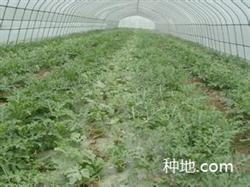
How should herbicides be used in a watermelon field? Seeking guidance
Watermelon is one of the important cash crops in our county. To meet the needs of different periods, watermelons are grown in many different ways: direct seeding, transplanting, open-field cultivation, plastic film mulching, single-layer small arch shelters, double-layer small arch shelters, medium tunnels, and large greenhouses. Whether in open fields or protected cultivation, weeds in watermelon fields are inconvenient to pull by hand, and the watermelon vines are delicate and very prone to herbicide damage. Choosing safe, efficient, high-quality suitable pesticide varieties and correctly using herbicides in watermelon fields under different cultivation methods has become an important topic for plant protection workers. Based on field trial results from the plant protection station combined with the experience introduced by Station Chief Yang of Jiuzhou Agricultural Technology Station, the experience is summarized as follows.
I. The occurrence pattern of weeds in watermelon fields: There are many kinds of weeds in watermelon fields. The main weeds causing damage include grassy weeds such as crabgrass, goosegrass, foxtail, barnyardgrass, and lovegrass, as well as broadleaf weeds such as lamb's quarters, amaranth, chickweed, Japanese chickweed, emarginate amaranth, redroot pigweed, purslane, copperleaf, and cocklebur. There are two peak periods for weed occurrence in watermelon fields. The first peak period is when watermelon seedlings emerge and weeds also emerge in large numbers. At this time, the weeds that emerge account for about 60% of the total number of weeds emerging during the entire watermelon growth period. The second peak period occurs when the watermelon vines are about 70 cm long.
II. Types of herbicides and timing of weed control: According to the different control periods for watermelon weeds, herbicides for watermelon fields can be divided into two categories: soil treatment and foliar treatment. The former can effectively control the vast majority of weeds in the field and eliminate weeds at the sprouting stage, while the latter can selectively control a certain type of weed during the weed growth period.
During the first peak period of weed occurrence, after sowing and before watermelon seedlings emerge, apply soil treatment agents to the soil surface. Commonly used products on the market include napropamide, Dahuili, and butralin (dibutalin).
During the second peak period of weed occurrence, selective herbicides that are safe for watermelon, such as haloxyfop, quizalofop-p, and fenoxaprop-p, should be used. These herbicides are sprayed during the 2-5 leaf stage of grassy weeds.
Herbicide application techniques
1. Soil treatment agents: There are many varieties of this type of herbicide. If used improperly, they can very easily injure watermelon seedlings. The author summarizes the field application situation as follows:
1.1 Direct-seeded fields: ① Open-field direct seeding: After sowing and before watermelon seedlings emerge, herbicides such as napropamide, Dahuili, and Dual can be applied to treat the soil surface. Among them, napropamide and Dahuili have relatively high requirements for soil moisture. If the soil is dry and the spray volume is normal, field results are reported to be poor. If you want to use such pesticides, you must increase the amount of water used. These 2 pesticides are very safe for watermelon and have very good control efficacy against grassy weeds, but poor efficacy against a small number of broadleaf weeds such as purslane and lamb's quarters. The formulation dosage is 120-180 g per mu. Watermelon fields dominated by broadleaf weeds should not choose this type of herbicide.
Dual or Gold Dual (metolachlor) has very good control efficacy against watermelon weeds and is currently used in relatively large amounts on the market. However, in practical application, if the dosage is slightly larger, herbicide damage is very obvious. The author conducted repeated comparisons. Under normal use, the watermelons in the blank control grew more or less more vigorously than those treated with the herbicide. Herbicide damage is the main factor affecting the application of this type of herbicide. Farmers are advised not to increase the dosage at will, and those without experience should use it cautiously.
② Protected direct seeding: In our county, open-field watermelon cultivation is becoming less and less common, while off-season watermelons in large greenhouses, arch shelters, and plastic film mulching are developing rapidly. Manual hoeing is very difficult, and the soil moisture in protected cultivation is generally good, so herbicides can really come into play. However, variety selection must be especially cautious. In terms of dosage, no matter which pesticide is used, the amount should be carefully calculated according to the actual used area (for 1 mu of land, the protected area is about 0.5-0.6 mu), and the dosage must never be increased at will.
③ Plastic film cultivation: Napropamide and Dahuili both have relatively good results and can both be applied. Apply the herbicide after watermelon sowing and before seedling emergence. Because the soil moisture under the film is relatively good, the lower limit of the recommended dosage can be chosen. Considering both safety and control efficacy, napropamide and Dahuili are best.
④ Large greenhouse and arch shelter cultivation: Many years of screening trials have shown that in watermelon fields in large greenhouses and arch shelters, napropamide and Dahuili are the most suitable soil treatment agents. Butralin (dibutalin), trifluralin, and pendimethalin (Stomp) as well as Dual or Gold Dual (metolachlor) must not be used. Herbicide damage often occurs on watermelon, and the lessons are profound. Dibutalin, trifluralin, and pendimethalin (Stomp) all cause reflux herbicide damage to watermelon. After watermelon sowing, if the above herbicides are used, because the microclimate temperature in the field is relatively high, the liquid sprayed on the soil surface evaporates and forms droplets containing the herbicide on the film surface of the arch shelter. The droplets fall down. If they drip onto the growing point, the growing point dies; if they drip onto the leaf surface, spots form. This is the so-called reflux herbicide damage.
Napropamide and Dahuili do not cause reflux herbicide damage. They are both safe and efficient, and the dosage should be controlled at about 150 g/mu.
1.2 Cultivation in transplanted watermelon fields: When using herbicides in transplanted watermelon fields, soil treatment should be carried out half a day or one day before transplanting. The herbicide varieties selected for different cultivation methods are basically the same as those selected for the same cultivation methods in direct-seeded fields. Dibutalin, Dual or Gold Dual (metolachlor), trifluralin, and pendimethalin (Stomp) must not be sprayed directly on watermelon seedlings. Napropamide and Dahuili can be used after transplanting under normal use, but if the dosage per unit area is high and the water for survival after transplanting is not applied in time, watermelon seedling growth is easily inhibited. Farmers should use them cautiously.
2. Foliar treatment agents. This type of herbicide is suitable for use during the watermelon growth period and will not cause herbicide damage to watermelon. The author has not found effective agents for controlling broadleaf weeds in watermelon fields, while there are many agents for controlling grassy weeds. Common ones include high-efficiency haloxyfop, quizalofop-p, and fenoxaprop-p.
High-efficiency haloxyfop can control annual and a few perennial grassy weeds, and should be applied during the 2-5 leaf stage of grassy weeds. To control annual grasses, use 50-60 mL of 10.8% high-efficiency haloxyfop emulsifiable concentrate per 667 sq m for foliar spray treatment; to control perennial grasses, the dosage should be doubled.
Quizalofop-p has good control efficacy against both annual and perennial grasses, but has no control efficacy against broadleaf weeds. During the 2-5 leaf stage of grassy weeds, use 70-130 mL of 35% or 15% quizalofop-p emulsifiable concentrate per 667 sq m for foliar spray. Fenoxaprop-p should be sprayed on foliage during the 2-5 leaf stage of grassy weeds, with fast efficacy and good results. To control annual weeds, use 60-80 mL of 8.8% fenoxaprop-p emulsifiable concentrate per 667 sq m; to control perennial weeds, use 150-250 g of 8.8% emulsifiable concentrate. If it rains 3 hours after spraying, the efficacy is not affected.
The weeds growing in clumps in watermelon fields not only compete for space, sunlight, fertilizer, and water, affecting the normal growth of watermelon, but are also intermediate hosts for many diseases and pests, and are natural enemies of watermelon. Now that we have herbicides as a weapon, we must become familiar with and master weed control techniques, make good use of this weapon, and make it create more sweetness for a bumper watermelon harvest!
Click to view more herbicide application techniques
Click to view more pesticide application techniques
Click to view more watermelon cultivation techniques