What are the methods for applying herbicides in watermelon fields?
How are herbicides applied to watermelon? What should be noted? To reduce and prevent mistakes in applying chemical herbicides to watermelon, the following issues should be noted in application technique. 1. Correctly select the herbicide. There are many herbicide varieties available for watermelon production, the most commonly used being 48% trifluralin emulsifiable concentrate, 25%...
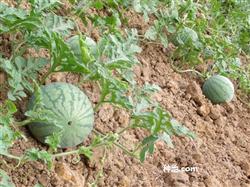
How are herbicides applied to watermelon? What should be noted?
To reduce and prevent mistakes in applying chemical herbicides to watermelon, the following issues should be noted in application technique.
1. Correctly select the herbicide. There are many herbicide varieties available for watermelon production, the most commonly used being 48% trifluralin emulsifiable concentrate, 25% nitrofen wettable powder, 33% pendimethalin emulsifiable concentrate, 48% butralin emulsifiable concentrate, 12.5% haloxyfop emulsifiable concentrate, 15% fluazifop-butyl emulsifiable concentrate, 15% quizalofop-p-butyl emulsifiable concentrate, 48% alachlor emulsifiable concentrate, 10% quizalofop emulsifiable concentrate, etc.
2. Strictly control the application dose. 48% trifluralin at 75-125 ml per mu, 25% nitrofen at 100-150 g per mu, 33% pendimethalin at 80-130 ml per mu, 48% butralin at 200 ml per mu, 12.5% haloxyfop at 65-150 ml per mu, 15% fluazifop-butyl at 75-130 ml per mu, 15% quizalofop-p-butyl at 50-60 ml per mu, 48% alachlor at 150-200 ml per mu, 10% quizalofop at 65-100 ml per mu. Dilute each with 40-50 kg of clean water and spray on the soil surface before transplanting the watermelon. Among these, trifluralin decomposes easily when exposed to sunlight, so after spraying, use a toothed rake to rake the medicated soil evenly to a depth of 5 cm, so as to give full play to the efficacy.
3. Apply flexibly according to the soil and the time. The effect of applying herbicides to watermelon is greatly related to the ecological environment. For example, applying herbicides to sandy loam takes effect faster than on clay, but clay soil is relatively safer after application, while sandy loam with too high a concentration is prone to cause phytotoxicity. The dosage must be accurately controlled according to the soil. When the temperature is above 20°C, the weed-killing effect is better; when the temperature is not high in spring and autumn, the dosage should be appropriately increased; in summer at high temperatures, the dosage should be reduced as appropriate. When soil moisture is good, the weed-killing efficiency is high; when soil moisture is poor, the weed-killing effect declines, so application should be chosen when soil moisture is good.
Click to get a massive amount of herbicide application techniques
Click to get a massive amount of pesticide application techniques
Click to get a massive amount of watermelon cultivation techniques