How to cultivate pollution-free ginger? Detailed explanation of key planting techniques
1Sowing period
Ginger is not tolerant of frost, so the sowing period should be after the last frost, when the soil temperature is stable above16°C. Within the suitable sowing season, early sowing at the right time is preferable; late sowing results in a short growth period and a marked reduction in yield.
2Selection and treatment of seed ginger
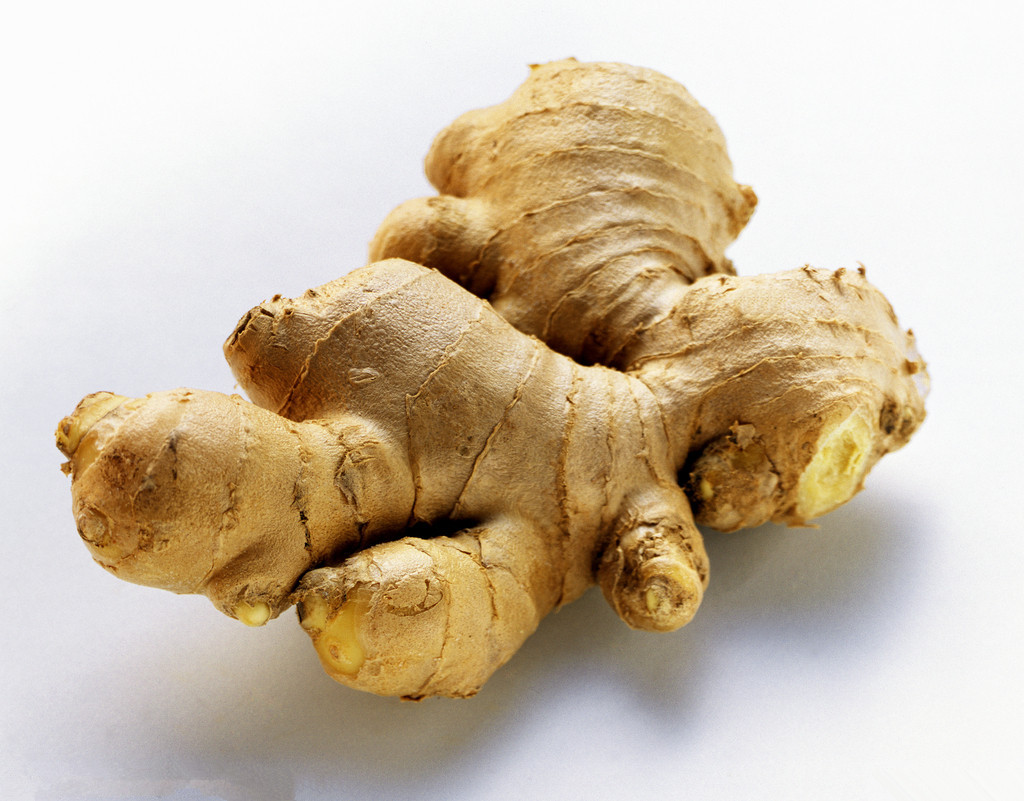
2.1Selection of seed ginger. For seed ginger, choose robust ginger pieces that are large, thick-fleshed, not shriveled, not rotten, not frost-damaged and free from pests and diseases.
2.2Sprout promotion. To make ginger grow earlier and promote fast and uniform emergence, generally the seed is pre-treated before sowing: sunning the ginger and resting the ginger. In the north, generally after Qingming, take out the stored ginger pieces and spread them in the sun to dry1~2d, to raise the temperature of the ginger pieces and reduce their water content, then place the ginger pieces indoors and pile them up3~4d, cover with straw mats to maintain11℃~16°C, to promote nutrient decomposition. This process is called resting the ginger, and generally after2~3dsunning and resting the ginger, sprout promotion can be carried out.
2.3Sprout promotion method. On an unheated kang, build a sprout-promotion bed with adobe bricks, line the inside with wheat straw10~14cm, lay3~4layers of straw paper around the sides, arrange the selected seed ginger in layers in the bed, about50~60cmthick, and cover the top with gunny sacks and cotton quilts for insulation. During the sprout promotion process, it is best to maintain alternating temperatures within the range of20℃~28°C, with20℃~22°C in the early stage,25℃~28°C in the middle stage, and22℃~25°C in the late stage, and keep relative humidity at70%~80%, which is favorable for forming short, sturdy sprouts.
3Land preparation, fertilization and sowing
3.1Plot selection. Ginger is best planted in soil with deep soil layers, loose and fertile texture, rich organic matter, and good aeration and drainage. Sandy loam is best, and neutral to slightly acidic soil gives good growth. Also practice3years or more of crop rotation.
3.2Fertilization. For base fertilizer, well-rotted high-quality organic fertilizer is best, using667m2of well-rotted barnyard manure per2000~3000kg, and compound fertilizer20~30kg. Apply the base fertilizer in furrows according to a row spacing of50~60cmand a furrow width of25cm. After mixing the manure with the soil, sowing can be carried out. Before sowing, cut the sprouted seed ginger into35~50gsmall pieces, keeping one strong sprout on each piece. The size of the seed ginger pieces has a significant effect on yield; generally use667m2of seed ginger per150~400kg. Planting density: row spacing55cm, plant spacing17~20cm, planting667m2per6250~7500plants. When sowing, first water the furrows thoroughly, and after the water seeps in, place the seed ginger pieces in the furrows with the ginger sprouts facing south, then cover with soil5~6cm。
4thick.
4.1Shading. Ginger is not tolerant of strong light, so grass can be inserted for shade. After sowing ginger, while the soil is moist and soft, insert millet straw or corn stalks on the south side of the ginger furrows and weave them into a lattice fence to create dappled shade, with a height of70~80cm, and remove them after the Beginning of Autumn.
4.2Intertillage and weeding. Ginger has a shallow root system, mainly distributed in the surface layer, so it should not be intertilled many times. Generally, only after emergence, combine with watering for shallow intertillage1~2times, to loosen the soil and preserve moisture.
4.3Watering, topdressing and earthing up. The watering time and frequency for ginger vary with soil texture. Generally, water thoroughly at sowing and then water again only after emergence80%. After emergence, the1watering should be timely; watering too early causes soil compaction that is unfavorable for young sprouts to emerge, while too late causes the ginger sprouts to suffer drought and grow poorly. During the seedling stage, the amount of watering should not be large; light watering is preferable. Combining hoeing with watering helps raise soil temperature and promote root development. In summer, the weather is hot and evaporation is high, so water frequently to lower the temperature, and drain promptly after heavy rain to prevent waterlogging in the field. After the autumn cools, ginger enters a period of vigorous growth and has a high water requirement, so the soil should be kept moist. Ginger has a long growth period, so in addition to base fertilizer, topdressing is needed. When the seedlings are13~16cmtall, apply a seedling-promoting fertilizer, applying667m2of ammonium bicarbonate per15kg. When the seedlings have1~2branches and leaves, apply a vigorous-seedling fertilizer, applying667m2of compound fertilizer per15~20kg. When ginger enters the vigorous growth stage, apply a heavy topdressing, applying667m2of compound fertilizer per20~25kg. Combine the heavy topdressing with earthing up, and during the peak growth period, earth up at any time together with watering.
5Harvest
Harvest before the frost period arrives, while the aboveground stems and leaves have not yet been frozen and withered.