A Complete Guide to High-Efficiency Summer Tomato Cultivation Techniques
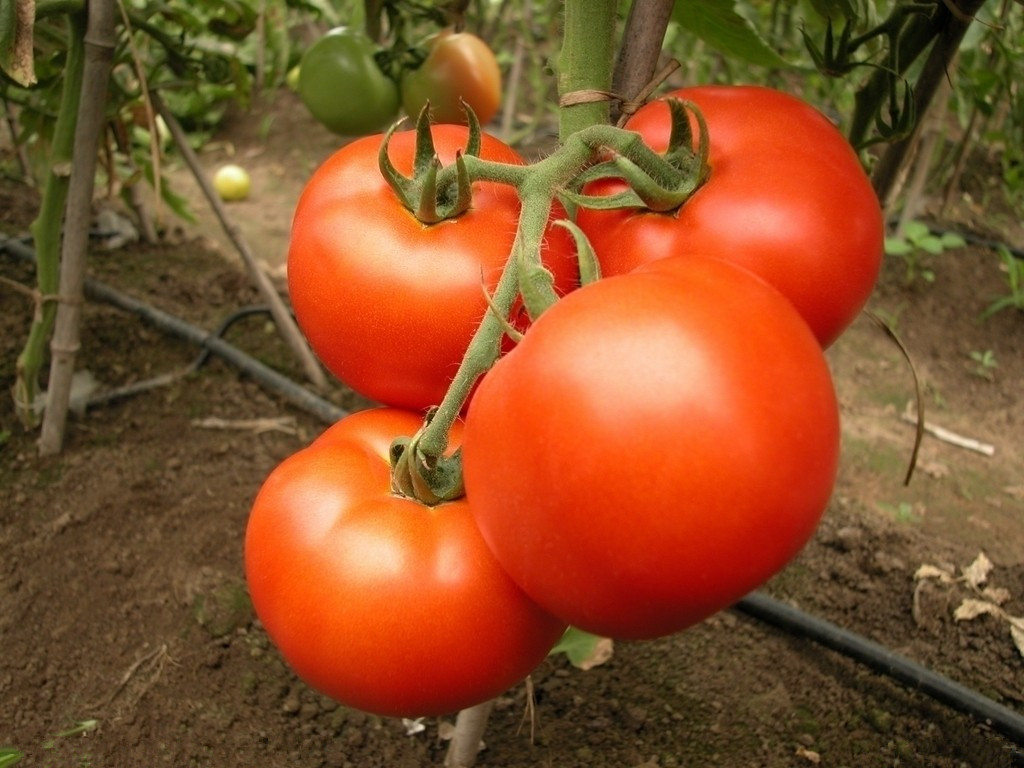
Summer tomatoes that reach the market around the "National Day" holiday each year fetch higher prices and deliver better growing returns. However, the summer tomato growing season coincides with the hot, rainy period, resulting in fewer flower buds, easy fruit drop, severe pest and disease damage, low yields, and poor quality. Using a double-layer cover of rainproof film and shade netting for summer tomato cultivation can significantly improve yield and quality, with yields generally reaching4000kg per mu.
1. Variety Selection
For summer cultivation, tomatoes should be varieties with strong heat tolerance and resistance to aphids and diseases, such as Maofen802, Sukang5,L402, Jiafen15, etc.
2. Raising Strong Seedlings
5Sow seeds for seedlings in the first or second ten days of the month. Before sowing, soak the seeds in1% potassium permanganate solution for15minutes, then soak in clean water for3~4hours, wash the seeds clean, air-dry the surface moisture, and sow. Each mu of field requires about10sq m of seedbed. Make the seedbed1.2~1.5m wide, spread an appropriate amount of organic fertilizer, then shallow-hoe, rake fine and level, and irrigate with running water; after the water seeps down, sow the seeds, then cover with soil0.5cm deep. Use sieved fine garden soil to cover the seeds, mixing into the covering soil for each square meter of seedbed50% carbendazim powder at5~8g. After sowing, cover with straw mats to retain moisture, and set up arched frames and shade netting to protect against rain and lower the temperature. After seedlings emerge, remove the straw mats and cover with shade netting around midday on sunny days.3At the leaf stage, transplant the seedlings; each mu of field requires about40sq m of transplanting bed.6At the leaf stage, plant out, with a seedling age of40~50days.
3. High-Ridge Planting with Double-Layer Film and Net Coverage
Per mu, apply4000kg of rotted farmyard manure,50kg of rotted cake fertilizer, and50kg of compound fertilizer to the field. After preparing the soil, form saddle-shaped high ridges80cm wide, with furrows30cm wide. Plant at a wide row spacing of70cm and a narrow row spacing of40cm, with a plant spacing of25~30cm, planting about4500plants per mu. Water thoroughly at planting, and after planting cover the wide rows with fresh wheat seedlings. Then set up a large frame and cover it with0.06mm-thick film as a rainproof cover, covering both sides down to40~50cm above the ground to allow ventilation. Cover with shade netting around midday on sunny days to lower the temperature.
4. Strengthening Field Management
After the seedlings recover, water once. Use single-stem pruning; when basal branches grow to about10cm, remove them to promote root development, and remove subsequent branches as early as possible. Stake and tie the vines promptly. Summer temperatures are high, making fruit set difficult; when flowers are half-open, apply Tomatotone to the flowers to promote fruit set. Keep3fruit clusters per plant, with3~4fruits per cluster, and pinch off the growing tip above the3rd cluster, leaving2~3leaves. When each fruit cluster begins to swell, apply per mu alongside watering10~15kg of urea and2~3kg of monopotassium phosphate. Generally water once every8~10days. Promptly remove lower old leaves and diseased leaves. In the mid-to-late stage, spray3~4times with0.3%~0.5% monopotassium phosphate solution or foliar fertilizers such as Feilibao to prevent premature aging.
5. Pest and Disease Control
When aphid damage is found, spray per mu with24.5% Abamectin EC at1500~2000times dilution or imidacloprid at1000times dilution for control. In the mid-to-late stage, spray once every10~15days with75% chlorothalonil at600times dilution or70% mancozeb at500times dilution to prevent disease. The main diseases include late blight, leaf mold, and gray mold, which are controlled by spraying47% Kasugamycin-plus at600times dilution,50% thiophanate-methyl at500times dilution, and50% procymidone at1500times dilution respectively, once every7~10days, for3~4consecutive treatments.