How to grow celery in summer? A full summary of practical growing techniques
1.Varieties and sowing time.For summer celery cultivation, heat-tolerant and disease-resistant varieties are mostly chosen, such as Qinggeng celery, Jinnan Shiqin, and Boli Cui celery. These varieties have less fiber in the leaf stalks, grow faster, are less prone to becoming tough, and have good quality. Generally in5―6they are sown in stages by month,8―10and harvested successively by month.
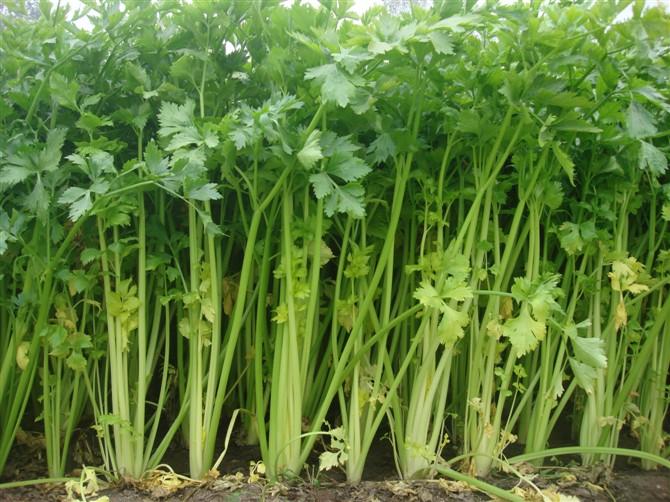
2.Cultivation methods and land preparation and fertilizing.Summer celery is mostly direct-sown, but can also be raised as seedlings and transplanted. For plots growing summer celery, choose land with higher terrain, convenient irrigation and drainage, good ventilation, and fertile soil. Before sowing, apply sufficient base fertilizer, plow deeply, level and refine the soil, make high beds, narrow beds, bed width1.2―1.5m.
3.Sowing of summer celery.The temperature is already relatively high, so generally after soaking the seeds to promote germination, sowing the germinated seeds results in faster emergence. Wet sowing can be used, that is, first water the bed thoroughly, sow after the water seeps down, and after sowing cover with fine soil0.5―1cm thick; if the covering soil is too thick, the young buds have difficulty emerging, and after emergence the seedlings are not vigorous. When sowing after entering6month, the temperature is high and dry hot winds are frequent. To lower the soil temperature, after sowing and covering with soil, cover the bed surface with shade netting and other shading to create a cool microclimate, so that seedlings emerge quickly and evenly. After the seedlings emerge, remove the covering material. Depending on the weather and soil moisture, water little and often to keep the bed surface moist. After heavy rain, drain accumulated water promptly to prevent waterlogging damage. You can also use low tunnels covered with shade netting before heavy rain to prevent rainwater from washing the bed surface and causing soil compaction.
4.Growth period management of summer celery.After summer celery grows5―6leaves, growth accelerates. In management, the main approach should be promoting growth, and generally the seedlings are not hardened off. In hot and dry seasons, it is advisable to cover with shade netting to cool down and retain moisture, which benefits growth, reduces fiber, and improves quality. For topdressing, follow the principle of small amounts applied many times, and do not apply too much each time. It is advisable to apply nitrogen fertilizer and decomposed light pig manure water; other organic fertilizers are not suitable. After the plants grow larger, topdressing can be applied together with watering. Summer temperatures are high, so keep the soil moist frequently, which is beneficial for the vigorous growth of celery. Pests and diseases should be controlled promptly. Stop watering with manure water and spraying pesticides10―15days before harvest.
5.Harvest.Harvest promptly according to celery growth and market demand. Generally, because the summer celery growing season is hot, which is not conducive to celery growth, summer celery is generally harvested earlier than autumn celery, that is, it is generally marketed as half-grown plants.