No-till autumn potato planting with rice straw mulch saves labor and increases yield
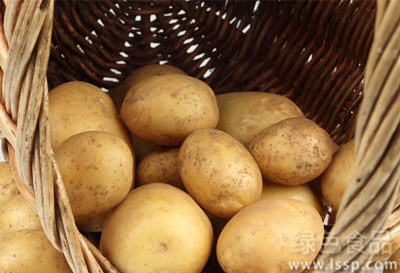
Autumn potatoes can be harvested in December and marketed as vegetable potatoes, giving good returns. No-till planting of autumn potatoes with rice straw mulch not only saves labor and time and reduces labor intensity, but also prevents environmental pollution caused by burning rice straw, and can increase yield by more than 10% compared with plow-tillage planting. The key cultivation points are as follows.
11. Select early-maturing, superior varieties
The effective growth period of autumn potatoes is short, generally 80-90 days. Therefore, seed potatoes should be varieties with early maturity, rapid tuber bulking, and good yield and disease resistance, such as Dongnong 303, Holland 15, etc.
22. Sow early at the right time
Generally, sowing is best when the daily average temperature is stable below 25°C. In mountainous areas at an altitude of 500-800 m, sowing in late August is advisable; in areas below 500 m, the suitable sowing period is late August to early September.
33. Use sprout-promoted sowing
When potatoes are sown in autumn, the temperature is still relatively high, which is unfavorable for seed potato sprouting. Sowing without sprout promotion often results in late and uneven emergence. Therefore, 7-10 days before sowing, soak the seed in "920" solution to promote sprouting. For small whole tubers, soak in "920" solution at a concentration of 4 mg/L for 20-30 minutes; for large tubers cut into 2-4 pieces, first soak in 1% potassium permanganate solution for sterilization, remove and drain the water, then soak in 1 mg/L "920" solution for 5-10 minutes. After soaking, air-dry the moisture and use a sand bed to promote sprouting. That is, spread a 4 cm thick layer of moist fine sand on the indoor floor (until it holds together when squeezed by hand and breaks apart when touched), then place a layer of seed potatoes, and cover with 1 cm thick fine sand. After layering 3-4 layers of seed potatoes in this way, cover again with 4-6 cm thick moist fine sand and a layer of rice straw, and finally cover with plastic film to keep warm and moist. After sprouting, they can be sown.
44. Plant in narrow beds with deep furrows
When the rice is harvested, first cut the rice level with the soil, then open beds and dig furrows according to a bed width of 1.6 m, furrow width of 15 cm, and furrow depth of 20 cm, while also opening the main furrow and surrounding furrow well, so that the three furrows are complete. When sowing, place the seed potatoes on the bed surface at a row spacing of 30 cm and a hill spacing of 23 cm, and make them closely contact the soil. Apply 50-60 kg per mu of ternary compound fertilizer (45% effective ingredient content) in bands between the rows at 7-8 cm from the seed potatoes, and cover the seed with 1500 kg per mu of decomposed farmyard manure; finally cover with 1000 kg per mu of rice straw in a direction perpendicular to the bed, so that it is uniform, does not let light through, and does not expose the soil. After sowing, if drought occurs, pay attention to irrigation for drought resistance; if autumn rain occurs, drain water to prevent waterlogging. During the growth period, apply a mixed solution of 0.2% monopotassium phosphate and 0.5% urea as a foliar topdressing 2-3 times.
55. Pest and disease control
Aphids and viral diseases occur relatively severely in autumn potatoes, so use 10% Yashijing (imidacloprid, Yibianjing, Dagongchen) to control aphids as early as possible, and use 5% Junduqing or 20% Bingdu A to control viruses.