Key technical points for autumn planting management of tomatoes, green beans and other vegetables
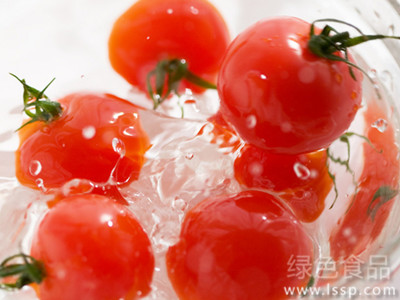
Tomato
Autumn tomatoes grow rapidly; generally they need to be transplanted within 15 days after being moved into nutrient cups for temporary planting, and it is best to transplant small (tender) seedlings. Pay attention to watering at transplanting, ensuring the soil layer is thoroughly wet with no dry soil on the surface. After transplanting, if the soil is very dry and the temperature is high, one furrow irrigation can be carried out to lower the soil temperature.
Tomato viral disease occurs frequently under high temperatures, so preventive measures should be taken several more times. The control method is to spray agents such as Virus A, Bingduling (ribavirin), and plant growth promoters.
Although bacterial wilt of tomato mostly occurs during the flowering period, seedlings are susceptible to the disease in hot and rainy weather. Its symptoms are that the leaves of the diseased plant become lighter in color and appear wilted, mostly starting from the top leaves; it is most obvious around noon, and the leaves return to normal from evening until dawn. After repeated days, the wilting intensifies and spreads from top to bottom. Finally the leaves no longer recover to their normal state, and the whole plant dies.
From the onset of the disease to the death of the whole plant generally takes 3~5 days; if there is heavy rain and dampness, it can be extended to 7~10 days. The control methods are cooling, soil disinfection, and irrigation with agricultural streptomycin, chloramphenicol or erythromycin, which are effective.
Green beans
Autumn-planted green beans have a shorter growth period and poorer growing environment conditions, so it is advisable to select excellent varieties that are relatively heat-tolerant, disease-resistant, highly adaptable, belong to the intermediate type or short-day type in photoperiod response, and have relatively concentrated pod setting, a higher pod-setting rate, and early maturity with high yield. The growth period of autumn green beans is shorter than that of spring green beans, the growth vigor is weaker, and there are fewer side branches; appropriately increasing planting density is beneficial to increasing yield.
For base fertilizer, generally apply 3000 kg/mu of decomposed organic fertilizer, 40 kg/mu of superphosphate, and 10 kg/mu of potassium sulfate. It is not advisable to apply too much nitrogen fertilizer; for acidic soil, an appropriate amount of lime should be applied. For topdressing of autumn green beans, the principle should be to apply less before flowering, more after flowering, and heavily during the peak pod-setting period, from dilute to concentrated, generally 4 times. Note that the soil should be kept moist during high temperature and drought. When green beans begin to vine, supports must be set up in time to guide the vines, with the trellis in a herringbone shape to facilitate ventilation and light penetration and promote flowering and pod setting.
Because the temperature and humidity are relatively high, pests and diseases occur seriously. The main ones are rust disease and ladybugs, stink bugs, aphids, etc. Use chlorothalonil, triadimefon, dichlorvos, and nongdile for control.
Chinese cabbage
The cultivation technique of preventing disease to achieve high yield is the key to successful Chinese cabbage cultivation.
Select good disease-resistant varieties and use high-ridge cultivation. Seed dressing with chemicals and seed disinfection can effectively control soft rot, black rot, and soft rot. The sowing period is generally 3~5 days after the Start of Autumn. Sowing should be chosen in the afternoon so that the seedlings emerge on the evening of the third day after sowing; after a night of growth, they can endure stronger sunlight.
Thinning, replanting, and final thinning should be carried out in time. Combined with thinning, intertillage and weeding should be carried out at final thinning and the mid-rosette stage respectively, according to the principle of “the first hoeing shallow, the second hoeing deep, the third hoeing without injuring roots”; for high-ridge cultivation, the principle of “deep hoeing in the furrow, shallow hoeing on the ridge” should be followed. Watering should be carried out together with topdressing; in the early heading stage, the soil should alternate between dry and wet, and during the heading stage the soil should be kept moist. 10 days before harvest, use materials such as wheat straw or rice straw to lift the outer leaves and wrap the head, to prevent frost damage or mechanical damage before harvest. For medium- and late-maturing varieties, extend the growth period as much as possible, but they must be harvested before frost.
Pay attention to the control of downy mildew, grasshoppers, crickets, underground pests and other pests and diseases.
Pepper
According to cultivation practice, implementing seedling techniques of seed soaking in chemicals, variable-temperature germination promotion, and seedling separation for temporary planting in pepper cultivation can bring peppers to market about 20 days earlier, increase yield by more than 150 kg per mu, and raise economic benefits by 30%.
For seed soaking in chemicals, first pre-soak the seeds in clean water for 5 hours, then place them successively in 1% copper sulfate solution, 10% trisodium phosphate solution, and 2% sodium hydroxide solution for 10 minutes each.
For variable-temperature germination promotion, wrap the soaked seeds in a wet cloth and place them in a warm place to germinate. Every day, control at 28°C~30°C for 18 hours and at 16°C~20°C for 6 hours. Turn and rub-wash them twice at fixed times each day so that they are heated and moistened evenly, and germinate uniformly and vigorously. Generally after 4~7 days, when germination reaches more than 80%, the temperature can be lowered to 10°C for low-temperature seedling hardening for about 7 hours, ready for sowing.
For seedling separation and temporary planting, when the seedlings grow to 4~5 true leaves, transplant them at a row and hole spacing of 10 cm square, with two plants per hole, into adjacent arched sheds for cultivation and management. When they reach 10~20 true leaves and the seedling age is 90~110 days, they can be transplanted to the field on a sunny day. Other management methods are the same as conventional ones.