How should fruit trees be cared for after a typhoon and rainstorm to reduce losses as quickly as possible?
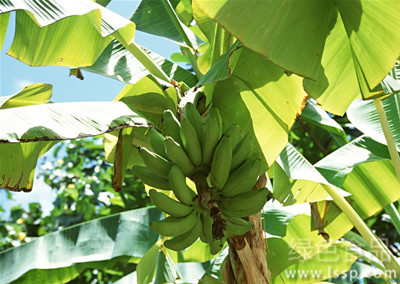
August is a season of frequent typhoons and rainstorms, which have a relatively large impact on fruit production. In the south, the main large-volume fruit, lychee, has basically finished harvest, longan is gradually coming onto the market in large quantities, and most bananas are in the stage of shooting buds and bearing fruit. In addition, the banana pseudostem (that is, the banana trunk) is soft in texture and poor in wind resistance, making it extremely vulnerable. Typhoons and rainstorms often cause fruit drop in longan, banana (including Fenjiao, Dajiao and others) and other fruits, trees being uprooted, broken plants, snapped branches, flooding damage and outbreaks of pests and diseases. Therefore, after the wind and rain, fruit tree management work must be done promptly to reduce fruit losses to the lowest possible level.
1Harvest fruit that has been blown damaged or blown down
After the wind and rain, emergency harvesting of longan, banana, huanglan and other fruits must be done promptly. Fruit that can be harvested should be harvested with enough manpower and resources organized, and sent to market for sale in time. At the same time, prepare drying ovens and other processing equipment, and after the typhoon, pick up the fallen fruit for processing, so as to reduce the direct losses caused by the typhoon to the lowest possible level.
2Handle woody fruit trees after the wind
After the typhoon, promptly handle woody fruit trees that have been blown down or blown injured. If the blown-down trees are one-year-old seedlings, the seedlings can be righted while the soil is still wet, and the soil should be earthed up and pressed firm. Other young trees can be appropriately lifted upright, with the aim of not injuring the large roots. Large trees and fruiting trees should not be righted; instead, earth should be banked up around them and pressed firm on the spot so the trees grow at a slant. Blown-injured trees should be pruned and tidied, and insecticide and fungicide should be sprayed to prevent the spread of pests and diseases.
3Handling banana trees damaged by wind
Banana trees that have been blown down but not broken should be righted in time, the soil should be earthed up and pressed firm, and banana stakes should be set up for support so they can quickly resume growth. For blown-broken banana trees bearing fruit, if the fruit can be harvested, harvest it promptly, then cut away the overly long banana trunk, leaving a banana stump of about 1 m to allow nutrients to flow back and cultivate banana shoots. If banana trees that have not fully shot their buds are blown and bent, cut them off from the break, so they can send out leaves and buds again.
4Drainage and waterlogging prevention
After the wind and rain, water often accumulates in banana fields and soaks the roots, causing waterlogging damage to bananas. Generally, waterlogging damage begins to appear after more than two days of soaking. The longer the soaking time, the more serious the waterlogging damage to bananas. Symptoms of waterlogging damage gradually appear 15 days after soaking, and banana trees in the bud-shooting stage are affected more obviously. Therefore, after the wind and rain, drainage ditches should be opened promptly, and drainage work in banana fields should be done well to prevent standing water from injuring the roots and causing waterlogging damage, or even killing the trees.
5Spray pesticides to prevent outbreaks of pests and diseases
Typhoons and rainstorms are opportunities for aphids to move between banana trees. Aphids often suck the sap of diseased bananas and then suck from healthy banana trees, transmitting various diseases. At the same time, the flow of rainwater is also a medium for transmitting pathogens. After the wind and rain stop, banana trees should be sprayed comprehensively once with insecticide and fungicide to prevent aphids and other pests and pathogens from drifting with wind and rain and causing epidemic pests and diseases. For the insecticide sprayed, options include Sidasu, Ruichongte, Biqiaoling, Chongji, Chongwushe, trichlorfon, and shachongshuang; for the fungicide, options include Dilituo, Fuxing, Zouhong, Baofusi, Feifan, Jiusheng, Baosheng, Tuoshangtuo, and Pujunte. For the ground, it is advisable to choose fungicides such as Tuoshangtuo, thiophanate-methyl, and carbendazim, mix with water, and pour over the banana heads to prevent the banana roots from being soaked and infected by pathogens and then rotting.
6Promote recovery of tree vigor
After the typhoon, while the soil is still wet, apply a quick-acting chemical fertilizer once, such as compound fertilizer, potassium chloride and others, to promote recovery of the banana tree root system and tree vigor. When spraying insecticide and fungicide, add foliar fertilizer and spray together to supplement nutrients. For foliar fertilizer, options include Shengwu Jitang, Limanglong, rare earth amino acids, Huolisu, Yandu micro-fertilizer, and nucleotide phosphorus potassium.