Which vegetables are suitable for planting in autumn? Detailed explanation of suitable varieties and planting techniques
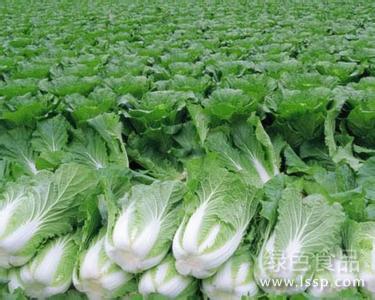
Planting techniques for autumn vegetables
Vegetable planting is generally divided into summer and autumn, and the planting techniques and points to note for vegetables in different seasons are also different. Below, the author will share the planting techniques for autumn vegetables with everyone.
1. Variety selection: Autumn-sown vegetables face high temperatures and abundant rain in the early stage, and then low temperatures and drought during the later growth stage. Therefore, autumn-sown carrots, radishes, Chinese cabbage, kidney beans, cabbage and other vegetables should choose cultivars with wide adaptability, cold tolerance, disease resistance and high yield. For carrots, Japanese Kuroda Five-inch Ginseng, Seven-inch Ginseng, Xiaodinghong, and Bianganhong can be chosen; for radishes, Dahongpao, Lu Radish No. 1, Lu Radish No. 3, Lu Radish No. 6, and Jiujinhong; for Chinese cabbage, Beijing New No. 1, Beijing Youkang No. 3, Lubai No. 2, Tianjin Qingmaye, and Fengkang 70; for kidney beans, varieties such as Lulong, Jiulibai, and Laolaishao can be chosen for cultivation.
2. Sowing time: Start planting carrots around "Major Heat"; plant radishes and Chinese cabbage around "Start of Autumn". If kidney beans are sown too early, flower drop and pod drop will occur; if sown too late, the yield will be low. When sowing, they can be directly sown between "Minor Heat" and "Start of Autumn". 3. Pay attention to drainage and waterlogging prevention: Autumn-sown vegetables are prone to rainy weather during the seedling stage, so drainage and waterlogging prevention should be noted during the seedling stage of autumn-sown vegetables. During land preparation, high beds or high ridges can be used for cultivation.
4. Pest and disease control: The seedling stage of autumn-sown vegetables is at the peak period when diamondback moths, cotton bollworms, and brown spot disease occur. For pest control, high-efficiency, low-toxicity, pollution-free pesticides can be used - Yitaibao, Lvcaibao, and Gaolvma for spray control. For disease control, agricultural streptomycin, Shuangyilike, DuPont Kexiu, etc. can be mixed and sprayed. Generally, control once every 10 days, for 2~3 consecutive treatments, and stop using pesticides 7~10 days before harvest.
Precautions
Choose suitable cultivation varieties: The early stage of vegetable seedling raising has high temperatures and large differences in moisture changes, while the later growth stage is in a low-temperature and low-light stage. Therefore, when selecting varieties, cultivation varieties with wide adaptability, disease resistance, cold tolerance, and high yield should be chosen.
Prevent damage caused by high temperatures and heavy rain during the seedling stage: High temperatures and heavy rain can inhibit vegetable growth during the seedling stage and lead to frequent outbreaks of pests and diseases. When raising seedlings, shade nets and insect-proof nets should be used, which can effectively prevent high temperatures, heavy rain washing, and pest and disease damage.