How to correctly use trace element fertilizers in vegetable cultivation
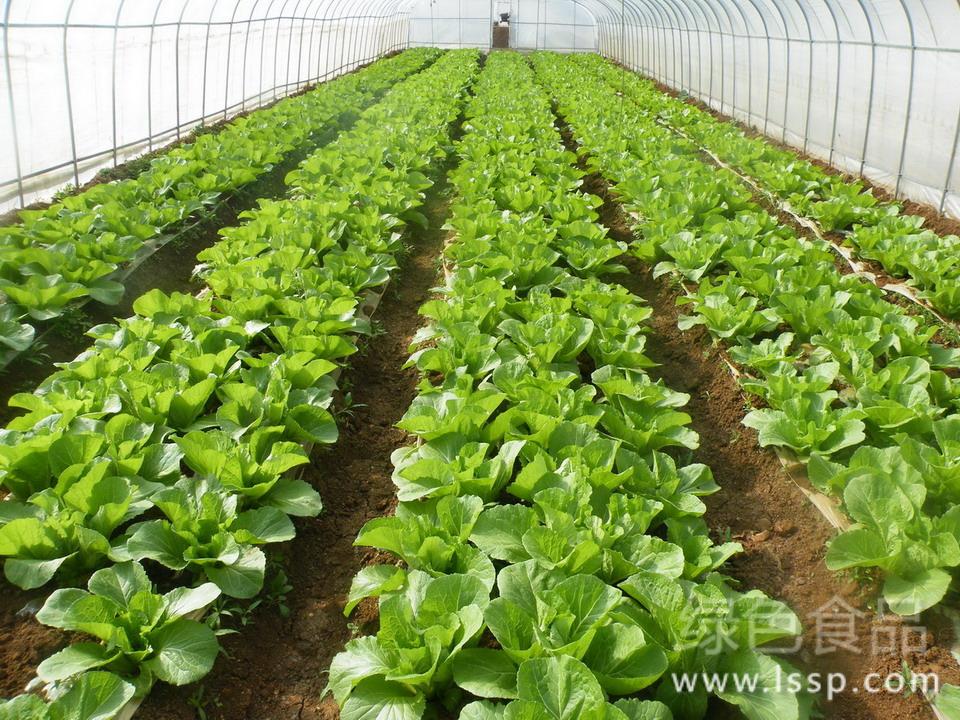
Greenhouse vegetables
The growth of vegetables requires not only macronutrients such as nitrogen, phosphorus and potassium, but also 10 kinds of medium and trace elements including calcium, iron and boron. In the past, vegetable growers often focused only on the application of macronutrients such as nitrogen, phosphorus and potassium, did not recognize the importance of applying medium and trace element fertilizers, and even less formed the habit of applying them. The lack of medium and trace elements has become a prominent problem restricting the high-quality and high-yield production of vegetables.
The growth of vegetables requires several trace elements such as iron, manganese, boron, zinc, copper, molybdenum and chlorine, but because these trace elements are used in small amounts, they are often neglected by vegetable growers. It is understood that in most areas of the north, zinc, boron and molybdenum in the soil are relatively deficient and need to be supplemented. Little leaf disease of tomatoes and the like, and flowers that fail to set fruit in cucurbits and legumes, etc., are mostly caused by a lack of trace elements. So what are the symptoms when these trace elements are deficient, and through which routes should these trace elements be supplemented?
1. Boron fertilizer: Obvious boron deficiency in vegetables is shown by the stems, leaves and petioles becoming thick, brittle and easily split, poor root development, dark green leaves, pale and deformed new leaves, damaged or necrotic growing points, abnormal flower development, and an extended growth period. Commonly used boron fertilizers in production are borax and boric acid. Boron fertilizer can be applied as a base fertilizer, a topdressing or a seed fertilizer. When used as a base fertilizer on boron-deficient soil, 0.5-1.5 kg of borax or boric acid can be applied per mu; when used as a seed fertilizer for soaking seeds, the concentration is 0.01-0.1%, and for seed dressing the average amount of fertilizer per 1 kg of seeds is 0.4-1.0 kg; for foliar spraying, a 0.1-0.2% borax or 0.05-0.1% boric acid solution should be used.
2. Molybdenum fertilizer: When vegetables are deficient in molybdenum, they grow poorly and are stunted, and the leaves lose green, wither and even die. Commonly used molybdenum fertilizers are ammonium molybdate and sodium molybdate. Molybdenum fertilizer is generally used for seed dressing, seed soaking and foliar spraying. For seed dressing, the average amount of fertilizer per 1 kg of seeds is 2-6 g; for seed soaking, use a 0.05-0.1% molybdenum fertilizer solution; the concentration for foliar topdressing is 0.01-0.1%.
3. Manganese fertilizer: Manganese deficiency in vegetables is mainly shown by chlorosis and yellowing between the veins of young leaves with small brown spots, and the plants stop growing. The manganese fertilizer commonly used in production is manganese sulfate; when used as a base fertilizer, 3-5 kg is broadcast per mu; for seed dressing, 5-7 g per 1 kg of seeds on average; the seed soaking concentration is 0.05-0.1%; when used as foliar topdressing, the concentration is 0.05-0.1%.
4. Zinc fertilizer: When vegetables are deficient in zinc, the petioles curl backward, the leaves lose green, the leaves are small and clustered, the internodes are shortened, the plants are stunted, and the yield is significantly reduced. At present in production, the most widely applied zinc fertilizer variety is zinc sulfate. For zinc fertilizer as a base fertilizer, 1.0-1.5 kg of zinc sulfate is used per mu, but it must be noted that zinc fertilizer must not be mixed with phosphate fertilizer; for seed soaking, use a 0.02-0.04% zinc sulfate solution; for seed dressing, the average amount of fertilizer per 1 kg of seeds is 2-4 g; for foliar spraying, use a 0.01-0.05% zinc sulfate solution.
5. Copper fertilizer: Copper deficiency usually causes stunting of plants, yellowing and deformity of seedlings, and necrosis of the apical meristem. The copper fertilizer commonly used in production is copper sulfate. When copper sulfate is used as a base fertilizer, 1 kg is used per mu, and it should be mixed evenly with the soil when applied; for foliar spraying, use a 0.02-0.04% solution; to avoid phytotoxicity to the leaves, a small amount of slaked lime can be added to the solution.
6. Iron fertilizer: Iron deficiency causes chlorosis between the veins of young vegetable leaves, developing until the whole leaf turns pale yellow or whitish. The iron-containing fertilizer commonly used is ferrous sulfate. Ferrous sulfate can be mixed with organic fertilizer and used as a base fertilizer. The ratio of the two is 1:20; for foliar spraying, use a 0.5-1% ferrous sulfate solution.
Greenhouse vegetables
Precautions
(1) Foliar spraying of trace element fertilizers should be carried out once at the seedling stage and once when the plants transition from vegetative growth to reproductive growth, with a water volume of 50-60 kg per mu each time.
(2) Foliar fertilization can be carried out together with pesticide spraying; adding 0.05% urea at the same time during spraying can significantly improve the fertilizer effect.
(3) The seed soaking time for trace element fertilizers is generally 6-12 hours.
(4) Trace element fertilizers used as a base fertilizer have a relatively long residual effect and can be applied once every 2-4 years, and they must be applied evenly when used to avoid local excessive concentration causing toxicity. They can be applied mixed with macronutrients or organic fertilizer.