As the Frost's Descent solar term arrives, what are the key points for vegetable management and harvesting?
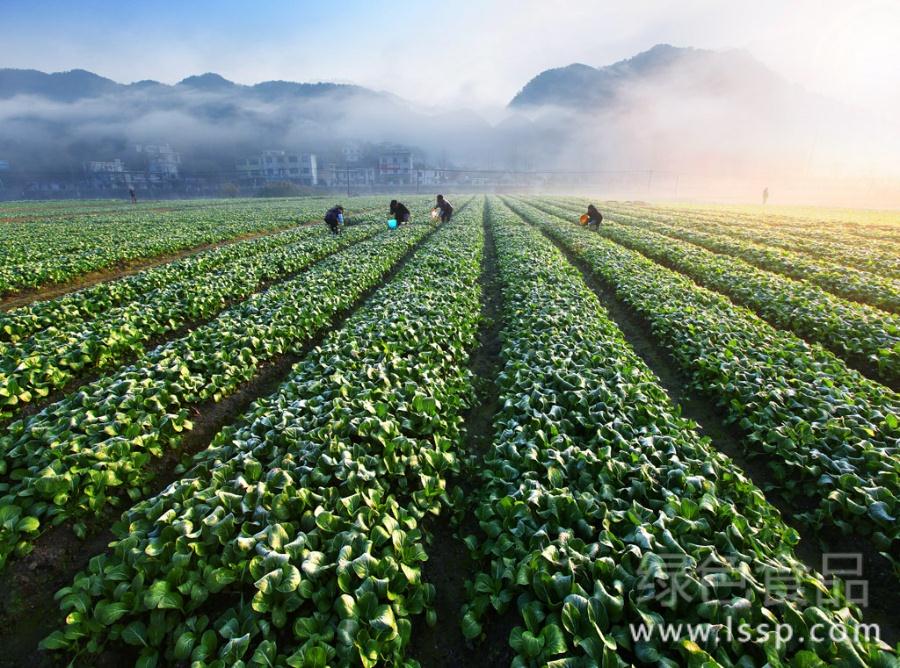
Vegetable growing
Frost's Descent is the last solar term of autumn and the transitional solar term from autumn to winter. As autumn frost arrives, cold-sensitive crops have already been pulled up or are about to stop growing, and vegetation begins to turn yellow. Open-field vegetable production is coming to an end, and protected facility production is becoming busy.
Management and harvesting of Chinese cabbage
Autumn-sown Chinese cabbage is in the late heading stage and about to be harvested. Because temperatures in September and October this year were on the low side, heading has been slower, so late-stage watering management should be strengthened to keep the soil moist. Generally water once every 5-7 days, with uniform water volume, avoiding flood irrigation, and stop watering 7-10 days before harvest. Harvest the cabbage promptly before the temperature drops to 0°C to prevent freezing damage; generally in plain areas this is from November 3 to 7, while in northern mountainous areas such as Yanqing and Huairou it should be 5-6 days earlier according to climate changes.
Autumn greenhouse vegetable management
Warm-season crops such as tomato, cucumber, eggplant and pepper need strengthened insulation and cold protection, with vents closed tightly at night and a straw curtain placed around the perimeter; water them at the proper time and harvest promptly. For tomato fruits that cannot color up, harvest them promptly when the temperature drops to above 5°C and place them in a warmer greenhouse or unused room to ripen. Cold-tolerant vegetables such as celery, lettuce, rape and radish need strengthened management of watering and pest control.
Planting and management of autumn-winter solar greenhouse vegetables
Overwintering crops such as cucumber and zucchini are at the suitable planting period. Fertilization and land preparation should be done 10 days in advance, planting should be done on a sunny day, with appropriately shallow planting and suitable density, and sufficient planting water should be applied promptly. Autumn-winter crops such as tomato, eggplant and pepper are at the flowering and fruiting stage, so management should be strengthened, including cultivating and loosening the soil, training and tying vines, pruning and removing side shoots, assisted pollination, flower and fruit thinning, watering and topdressing, to encourage more fruits with a high marketable rate.
Vegetable growing
Management of overwintering root-stubble vegetables
Overwintering root-stubble vegetables such as spinach and small scallions are at the seedling stage, so they should be watered and topdressed promptly to promote robust plant growth and help them overwinter safely.
Harvesting of radish and large scallion
During Frost's Descent, most northern regions are already wrapping up the autumn harvest. Even cold-tolerant crops such as large scallion cannot keep growing, because "if you do not pull scallions at Frost's Descent, the longer they grow, the more hollow they become"; radish and carrot also basically stop growing, so they should be harvested promptly to prevent freezing damage from affecting their market quality; if large scallion cannot be sold right away, store it in a dark, relatively cool place; after twisting off the leaves of radish, use the leaves to cover the root and stem, dig a cellar in a suitable spot, and put them into the cellar for storage when the outside temperature drops below 0°C.
Cleaning up the field and plowing the land
After harvesting open-field warm-season vegetables such as tomato, cucumber, pepper, eggplant and potato, collect the plant residues and root stubble from the field as soon as possible and carry out harmless treatment such as high-temperature composting or ozone disinfection. Plow the land before it freezes. In plots at the upwind edge of the city, overwintering root-stubble vegetables or rape can be planted to prevent the land from being bare and forming dust, avoiding pollution of urban air.