Beauty-enhancing and edible - Tips for growing aloe vera as a houseplant
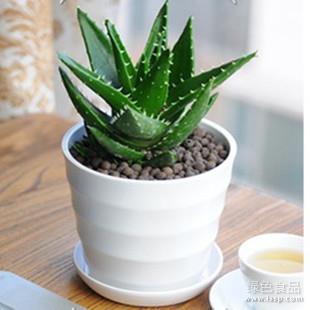
Aloe vera
Aloe vera is a magical green plant that combines beauty care, ornamental value, edibility and environmental benefits in one, and is known as a "natural beautician" and a "home health kit". Growing aloe vera as a houseplant not only provides ornamental enjoyment but also has high practical value, as fresh leaves can be provided at any time for family members to eat or use for beauty care. It is suitable for growing in pots in courtyards, on balconies, and around the front and back of the house. Small potted aloe vera can also be placed on a desk or writing table, offering ornamental value.
I. Characteristics of Aloe Vera
Aloe vera is highly resilient and easy to cultivate. During its growth, it likes sunlight but fears scorching sun, likes warmth and moisture but dislikes waterlogging, tolerates high temperatures but fears severe cold. Based on these characteristics, one must understand aloe vera's requirements for light, water, temperature and soil during its growth process, and create a suitable growing environment to cultivate aloe vera well.
II. Variety Selection
There are many varieties of aloe vera, with greatly differing shapes and forms, each with distinctive flowers and leaf types, and varying levels of usefulness. At present, both field cultivation and home potting in China commonly use Cuilei aloe (Aloe vera, also known as Curaçao aloe or American aloe), Chinese aloe (Aloe vera var. chinensis, also known as striped aloe), and tree aloe (Aloe arborescens, also known as Japanese aloe). These three types of aloe have relatively high ornamental value.
Aloe vera
III. Potting Soil Preparation
For potted aloe vera, it is best to choose a clay pot with good air permeability. If using a new pot, it should be soaked thoroughly with water; otherwise, after potting, watering will not easily penetrate the pot, and the half-dry, half-moist pot wall will damage new roots. If using an old flower pot, the residual soil debris and moss should be scrubbed clean, then dried in the sun before use, which both increases the pot's air permeability and prevents pests and diseases. Under potted conditions, aloe vera is confined to a small pot, so the suitable growing medium must have functions such as fertilizer retention, water retention and drainage, and air permeability, with a pH suitable at neutral. Materials commonly used to prepare potting soil include field mud, garden mud, humus (fermented and composted fallen leaves, rice straw, wood shavings, etc.), river sand or coal ash. The preparation method is: field (garden) mud, humus, and river sand (or coal ash) in a ratio of 4:4:2 respectively. When preparing, according to local material sources, appropriate adjustments can be made without affecting the potting soil's retention of fertilizer, water and air.
IV. Potting Method
Before potting, choose a suitable flower pot according to the variety being planted. Cuilei aloe plants are relatively large; when grown for more than a year and a half, the leaves reach 50-80 cm in length, with a single leaf weighing about 500 grams, so the pot should be larger, with a diameter of 25-30 cm. Chinese aloe and tree aloe plants are smaller, with a pot diameter of about 20 cm. Alternatively, when planting, one may first use a small pot, and when the aloe plant grows out of proportion to the pot, transplant it to a larger pot.
When potting, first fill the pot with two-thirds of the soil, place the seedling in the pot, spread out the root system, then fill in the remaining soil, gently lift the seedling slightly, and press the soil lightly, just enough so the seedling does not fall over. Then water lightly to settle the roots, and place in a shaded area. After the aloe begins to grow, move it to a sunny spot. But in summer, guard against scorching sun; aloe is quite sensitive to sunlight during the seedling stage, so appropriate shading is needed. After planting, some aloe leaves may change color; this is the aloe's slow seedling period, and once it begins normal growth, the leaf color will improve.
Aloe vera
V. Daily Care
(1) Watering
The potting soil for aloe vera should be kept moist. Too much water is harmful to the aloe's root system, because aloe is drought-tolerant and dislikes waterlogging. When watering is needed, water gently along the edge of the pot, but do not pour forcefully, to avoid the potting soil becoming compacted, which affects its air permeability. When the potting soil becomes compacted, loosen the soil at the right time, to a depth of about 1.5 cm.
(2) Fertilizing
During the growth process, aloe vera cannot rely solely on the nutrients in the potting soil; appropriate fertilizing is needed to meet its growth requirements. Organic fertilizer is better, such as peanut bran (cake), which has good fertilizer efficacy and is clean and hygienic. Before application, soak it thoroughly in water to ferment, then dilute with water and apply. If using chemical fertilizer, apply at a concentration of 0.1%. The number of fertilizer applications depends on the aloe's growth conditions; if leaves are frequently needed for use, apply more often, about once a month.
(3) Leaf Harvesting
The standard for harvesting aloe leaves is preferably when the plant has grown for one year or has more than 12 leaves. Cuilei aloe is best harvested after growing for more than a year and a half. The harvested leaves should be plump, smooth, and with clear, transparent flesh, so that the aloe's various components are at high content and the usefulness is good. When harvesting, work from bottom to top, use a small knife to cut a slit on each side of the leaf base, then gently snap it off. The amount harvested should keep the plant with 12 leaves as a baseline.
(4) Seedling Propagation
Aloe propagation is mainly through asexual reproduction. Propagation methods include division propagation and cutting propagation. The propagation season is best in spring and autumn.
① Division Propagation
When the aloe's tiller seedlings have more than 5 leaves, carefully pull up the young plants, trying not to damage the root system, and transplant them to another location or flower pot.
② Cutting Propagation
Cut about 15 cm of aloe side shoots, place them in a ventilated, shaded area for two or three days. After the cut surface shrinks and dries, plant them in another location or flower pot, then shade for one month. During this period, try not to water. When the cutting begins to grow, move it to the desired location, and at this point begin watering. Old aloe plants that have grown for many years tend to lodge after reaching a certain height, affecting their ornamental value. Therefore, cut at 7 cm from the leaf base and use the cutting method, which can make the old aloe plant rejuvenate.