How to Avoid Frost Damage in Greenhouse Apricot Trees: Detailed Cultivation and Management Techniques
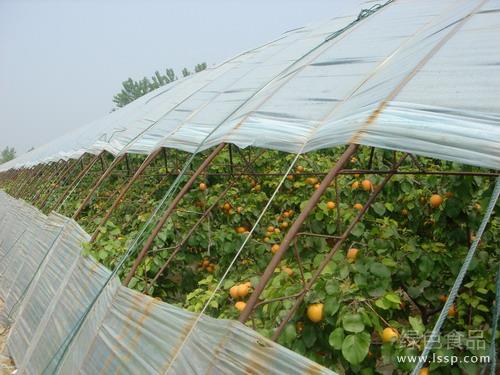
Greenhouse-grown apricot trees
Apricots originated in China and have a long history of cultivation. However, because most apricot trees are managed extensively, yields are low and unstable, and since apricots bloom early and are susceptible to late frost damage, the development of apricot growing has been affected. Today, intensive cultivation in solar greenhouses can effectively avoid frost damage. The following is a summary of solar greenhouse apricot cultivation techniques.
I. Apricot varieties suitable for solar greenhouse cultivation
Varieties should be chosen that ripen early, have large fruit, bright color, excellent quality, good storage and transport tolerance, and trees that flower early, are productive, have strong resistance, have relatively low chilling requirements and are easy to manage, such as: Kate apricot, Golden Sun, Hongfeng and Xiangbai apricot.
II. Types of solar greenhouses suitable for apricot cultivation
1. Bamboo and wood with earth wall structure
The earth wall should have a bottom width of 2-3 m and a top width of 1-1.2 m. The inner earth wall height of the greenhouse is 1.5-1.8 m. At a height of 1.2-1.5 m, embed cement pipes 25 cm in diameter, one every 4 m, as ventilation holes. The rear slope uses wooden purlins, the top posts use cement columns, and the front slope is arched with bamboo poles and bamboo strips. It is covered with long-life drip-free film. The film is made of 3 sections: the foot film 1.2-1.5 m, the top film about 1 m, and the middle film depending on the greenhouse span. The middle columns can use a cement column suspended-beam hanging-column structure. The main parameters are ridge height 2.9-3.3 m, shoulder height 1.2-1.3 m, length 50-100 m, preferably 50-80 m, span 6.5-10.5 m, preferably 7.5-8.5 m. On top of the film, cover with 3-5 cm thick straw curtains.
2. Reinforced steel bar and brick wall structure
The rear wall and east and west gable walls are 37 cm hollow or 50 cm double hollow. The wall height is 1.8 m. At a wall height of 1.2-1.5 m, leave ventilation holes of 30 cm × 40 cm, one every 4 m. The rear slope uses wooden purlins, rafters and cement columns; the front slope is welded from steel bars. Except for the rear slope, there are no columns inside the shed, reducing light-blocking conditions. Other parameters are basically similar to the bamboo and wood with earth wall structure.
Greenhouse-grown apricot trees
III. Planting methods for solar greenhouse apricot cultivation
1. Build the greenhouse first, then plant the apricot trees
① Direct planting
In early to mid-March, spread farmyard manure, then deep plow 25-30 cm, and dig planting holes at a spacing of 1 m × 1 m, with hole diameter 30 cm and depth 30 cm. Plant the apricot seedlings directly. Before planting, soak the apricot seedlings in clean water for a full day and night, dip the roots in 3-5 degree lime sulfur mixture for 5 minutes to disinfect. Then dip the roots in 1 g ABT rooting powder mixed with 20 kg water for 15 minutes to 1 hour. When planting, be careful to firm the soil, filling soil while lifting the seedling and firming it. The planting depth should be the same as the original soil surface. After planting, set the trunk height: set the trunk at 30 cm for the southernmost row, increasing by 5 cm per plant toward the north, with the northernmost plant about 60 cm tall.
② Transplanting large seedlings
When the solar greenhouse is used for vegetable production in winter and spring, this method can be chosen. The method is: use old cement bags, fertilizer bags or plastic bags (with the bottom corners cut) filled with nutrient soil; the nutrient soil ratio is 1/4 decomposed farmyard manure and 3/4 garden soil, mixed evenly. Seedling treatment is the same as for direct planting. When planting, put one seedling per bag, set the trunk after planting, arrange them neatly, and build a small arch shed on top with 4 m bamboo strips, cover with greenhouse film, and cover with straw curtains at night. The timing should be in the early local thaw period.
2. Plant the apricot trees first, then build the greenhouse
For this method, choose a site with flat terrain, convenient transportation, irrigation conditions, and no shade on the east, west and south sides for planning the orchard. The soil improvement method is to choose flat land 50-80 m long from east to west and 7-10 m wide from north to south, spread about 10,000 kg of farmyard manure per 667 sq m, and use a rotary tiller for deep plowing. Other planting methods are the same as for direct planting.
Greenhouse-grown apricot trees
IV. Management of solar greenhouse apricot trees in the first year after planting
1. Soil, fertilizer and water management
① Soil management Improve the soil and water before planting, loosen the soil after rain, increase soil permeability and weed in time.
② Fertilizer Includes base fertilizer and topdressing
Base fertilizer: In addition to the soil-improving base fertilizer before planting, from early September to the end of October of the planting year, solar greenhouse apricot trees should be given 5,000 kg of farmyard manure per mu. The method is to spread it on the surface, then use a four-tine fork to deep turn 40 cm wide and 25 cm deep.
Topdressing: Before mid-July of the planting year, topdress about once a month. For the first application, when the current year's new shoots are 10-15 cm, apply 100-fold diluted Kenyi biological organic fertilizer. Apply 1.5-2.5 kg per plant. Urea at 100-150 g per plant can also be used. For the second application, when the current year's new shoots are 25-30 cm, apply 100 g urea + 100 g Sakefu per plant. For the third application, in late June, apply 400-500 g potassium sulfate compound fertilizer per plant.
Foliar topdressing: Combined with pesticide spraying, before mid-July add 300-fold urea to each spray to promote vigorous new shoot growth; after mid-July, add 300-fold monopotassium phosphate solution to each spray to promote flower bud differentiation and branch maturation.
③ Water After the seedlings are planted, give one heavy watering, then water about once every 10 days. Water 4 times in succession to ensure seedling survival. After the seedlings survive, water about once every half month to promote vigorous new shoot growth. After mid-July, stop watering when rainfall is moderate, and water appropriately during drought. When rainfall is heavy, pay attention to drainage, and throughout the year water well for topdressing and winter freezing water.
2. Pruning
① Summer pruning For first-year apricot trees, summer pruning is mainly pinching. When the current year's new shoots are about 25 cm, pinch once; when the secondary shoots are 30 cm, pinch again; when the tertiary new shoots are 10-15 cm, thin out some upright new shoots. The rest are all pinched in early September. Around the Start of Autumn, keep two main branches per plant in an east-west direction at 60-70°, and bend other branches softly to about 90°. Careful and detailed summer pruning can promote flower formation.
② Winter pruning Carry out from before covering the shed until after heating. Thin out upright branches in the inner canopy, flowerless branches, crossing branches and weak slender branches. Leave about 40 flowering branches per plant that are over 30 cm. Control tree height to half the distance from the ground to the greenhouse film.
3. Disease and pest control
The main diseases and pests of apricot trees are shot hole disease, scab, early defoliation disease, brown rot, red spot disease, aphids, red spiders, apricot seed wasps and scale insects, etc. In production, integrated control is mainly used. For one-year-old young trees, use 600-fold mancozeb solution or 800-fold carbendazim solution to prevent disease, 1500-fold Yibianjing to control aphids, 1500-fold Saomanjing or 2500-fold Qimansu to control red spiders, 1500-fold Mieyouniao No. 3 to control caterpillars, and 1000-fold Supusha to control scale insects. Apply disease treatments once every half month, and use pest treatments only when pests are seen.
Greenhouse-grown apricot trees
V. Management of solar greenhouse apricot trees in the second year and each year thereafter
1. Temperature and humidity control
In the first week of heating, the temperature must not rise suddenly; generally, uncovering 1/2 of the straw curtains is enough. Keep the temperature below 15℃ and relative humidity at 80%-90%. From the second week, uncover all the straw curtains. During the bud break stage, the suitable temperature is controlled at 8-15℃, the minimum temperature 5℃, and humidity less than 80%; during the flowering stage, the suitable temperature is controlled at 12-18℃, the minimum temperature 7℃, and humidity less than 60%; the temperature during flowering must not exceed 22℃. During the young fruit stage, the suitable temperature is 15-20℃, the minimum temperature 8℃, and relative humidity less than 70%; during the swelling stage, the suitable temperature is 18-25℃, the minimum temperature 10℃, and humidity less than 70%; during the near-ripening stage, the suitable temperature is 22-30℃, the minimum temperature 15℃, and humidity less than 60%. In the second week after heating, cover with plastic film to help preserve moisture and raise soil temperature.
2. Fertilizer and water management
① Base fertilizer From early September to the end of October, apply 5,000 kg of farmyard manure per 667 sq m, spread and deep plowed.
② Topdressing Topdress within the first week of heating. Apply 200 g urea per plant in furrows; 2 weeks after flowering, apply 300 g Sakefu compound fertilizer per plant; during fruit swelling, apply 300 g potassium sulfate compound fertilizer per plant; after fruit harvest, apply 300 g urea per plant.
③ Water Water well for bud break water, pre- and post-flowering water, each topdressing water, fruit swelling water, and winter freezing water.
3. Flower and fruit management
① Artificial pollination: During the flowering period of apricot trees, artificial pollination can be done by collecting flowers to make pollen and hand-pollinating, or by using a brush or a cigarette filter tip to pollinate flower by flower. During full bloom, rolling a feather duster over the whole tree also gives good pollination results. Where conditions permit, bees or mason bees can also be used for pollination.
② Spray hormones to promote fruit set During full bloom, spray 500-fold borax + 300-fold urea; within 2 weeks after flowering, spray 25 mg/L gibberellin (GA3) plus 0.3% monopotassium phosphate plus glucose and 300-fold anti-drop coloring agent to increase fruit set rate.
③ Girdling After flowering, girdle vigorous trees and vigorous branches, 2-3 cuts per branch, at intervals of 3-5 cm.
④ Artificial fruit thinning Fruit thinning can be done in 2 rounds. The first fruit thinning should be completed within 2 weeks after flowering, removing small fruits at the base of fruit branches, deformed fruits, twin fruits, and diseased and insect-damaged fruits. The second fruit thinning is carried out during the pit-hardening stage. Generally, leave 1 fruit on flower bouquet fruit branches, 1-2 fruits on short fruit branches, 3-4 fruits on medium fruit branches, and 6-8 fruits on long fruit branches.
4. Pruning
① Summer pruning Mainly bud removal, pinching, branch thinning, leaf removal, and post-harvest row thinning or heavy renewal pruning.
When leaf buds sprout after flowering, remove buds in improper positions; pinch in time when new shoots are 20-25 cm, and pinch or thin out when secondary new shoots grow to 20 cm. When scaffold branches grow to about 50 cm, pull branches to open the angle, girdle some new shoots, twist shoots, and promptly thin out vigorous shoots on the back and densely growing branches to open the light path and increase light to promote flower bud differentiation.
When the fruit is near ripening, remove the leaves around the fruit to promote fruit coloring.
After fruit harvest, carry out alternate-row thinning to change to a 1 × 2 plant and row spacing. For retained trees, thin out drooping branches, renew fruiting branches, and cut back scaffold branches to promote new shoots for fruiting the following year.
② Winter pruning The principle is still to thin out flowerless branches, diseased and insect-damaged branches, crossing branches, overlapping branches and drooping branches. At a 1 × 2 plant and row spacing, leave 60-80 medium and long fruit branches per tree.
5. Disease and pest control Apart from spraying 3° lime sulfur once in the first week after heating, other disease and pest control is the same as in the first year.