How to Correctly Diagnose Phytotoxicity in Vegetables and Prevent and Control It in Time
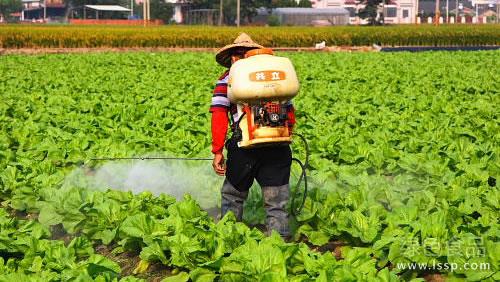
Spraying pesticides on vegetables
The widespread application of pesticides in vegetable production has played a very important role in helping vegetable growers achieve high efficiency, but cases of phytotoxicity are common, thus bringing some unnecessary losses to vegetable growers. Therefore, mastering the types and symptoms of vegetable phytotoxicity and taking timely prevention and control measures is a problem that cannot be ignored in the safe use of pesticides. After consulting relevant experts, the author summarizes vegetable phytotoxicity into the following three types.
Residual-type phytotoxicity
The characteristic of this type of phytotoxicity is that after application, the crop of the current season does not suffer phytotoxicity, but the pesticide residue in the soil causes phytotoxicity to the more sensitive crop of the next rotation. For example, after using the herbicide simazine in a corn field, it often causes phytotoxicity to the next rotation of crops such as rapeseed and beans. This type of phytotoxicity mostly appears at the seed germination stage of the next rotation crop. In mild cases, parts such as the root tip and bud tip turn brown or rot, affecting normal growth; in severe cases, seeds and buds rot, reducing the emergence rate or resulting in complete failure to emerge. This type of phytotoxicity is relatively difficult to diagnose and is easily confused with fertilizer damage and the like. Measures such as understanding the cultivation and management situation of the previous crop, the pesticide use situation, and soil testing can be used for diagnosis to prevent losses caused by misdiagnosis.
Chronic-type phytotoxicity
The symptoms of this type of phytotoxicity do not appear immediately after application and have a certain latency, causing vegetable growth to be inhibited, fruit flavor to become poorer, and so on. This type of phytotoxicity is often very difficult to diagnose and is easily confused with other physiological diseases. When diagnosing, methods such as understanding the occurrence of pests and diseases, the type, amount, and area of pesticide application, and plant comparison can be used for diagnosis.
Acute-type phytotoxicity
This type of phytotoxicity has the characteristics of rapid occurrence and obvious symptoms. Symptoms generally appear within a few hours to a few days after application, generally manifesting as spots, perforations, scorching, curling, deformity, wilting, yellowing, loss of green color, or whitening on vegetable leaves. Root damage manifests as short, thick, and enlarged roots, sparse root hairs, and yellowing or thickening, brittleness, and rotting of the root bark. Seed damage manifests as failure to germinate or slow germination. Plant damage manifests as flower drop, bud drop, deformed and smaller fruits, spots, brown fruits, rusty fruits, fruit drop, and so on. This type of phytotoxicity is mostly caused by excessive use of pesticides or improper use of pesticides for seed treatment.