How do you identify the phytotoxicity of different types of herbicides?
What growth regulators can be used for growing peppers? Here is an introduction. The growth regulators that can be used on peppers include the following: growth regulators are the general term for substances that regulate plant metabolism, growth and development. Proper use of growth regulators can promote or inhibit the growth of peppers, enhance their stress resistance, ...
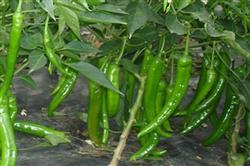 How do you identify the phytotoxicity of different types of herbicides? Please advise.
Herbicides can effectively and quickly control farmland weeds. In recent years, the application rate and application area have continued to expand, with remarkable results. However, when they are used, various types of phytotoxicity often occur in crops due to improper application, causing serious losses. To prevent and overcome phytotoxicity, attention should be paid to the diagnosis and use methods of herbicides.
1. Symptoms of phytotoxicity. The symptoms of phytotoxicity caused by herbicides are variable and diverse, and are similar to certain disease symptoms, often leading to mistaken judgments in diagnosis. Generally, phytotoxicity symptoms appear faster than disease symptoms, and no pathogens are present. In production, the identification of herbicide phytotoxicity should be strengthened.
(1) Phenoxycarboxylic acids: common agents include 2,4-D, MCPA, 2,4-D butyl ester, etc.
The symptoms are deformed leaves, flowers, and ears. The leaves are thick, dark green, curled, chicken-claw-shaped or onion-tube-shaped; the stems are brittle and easy to break, and the stem base is swollen; the roots are short and thick, without root hairs, and the plant is stunted; in severe cases, growth stops, the cortex cracks, flowers and fruits drop, and finally the plant dies.
(2) Aryloxyphenoxypropionates: common agents include fluazifop-P-butyl, quizalofop, haloxyfop, fenoxaprop-P-ethyl, etc.
The symptoms are mainly plant deformity, the growing point turning yellow-brown, and the young leaves turning purple or yellow.
(3) Diphenyl ethers: common agents include nitrofen, oxyfluorfen, fomesafen, etc.
The symptoms are brown necrotic spots on the leaves; in severe cases, the leaves become deformed, scorched, and no new leaves appear.
(4) Amides: common agents include alachlor, metolachlor, propanil, butachlor, etc.
The symptoms are yellowing of the leaves in mild cases, and in severe cases spots appear on the leaves, which curl and shrivel, and finally die.
(5) Carbamates: common agents include thiobencarb, molinate, and triallate, etc.
The symptoms are curled leaves, many tillers, short and thick stem base and new roots, and stunted plants.
(6) Substituted ureas and trichlorobenzenes: mainly include chlorotoluron, prometryn, simazine, etc.
Mainly chlorosis, starting from the young leaves and leaf tips, turning yellow as if scorched, with short plants and slow growth.
(7) Heterocyclics: mainly include paraquat, glyphosate, chloramben, oxadiazon, bentazone, etc.
The symptoms are leaf discoloration, yellowing and withering, and finally the plant dies.
2. Prevention of phytotoxicity. To prevent phytotoxicity caused by improper use of herbicides, the use technology must be strictly followed and operations must be standardized.
(1) Pay attention to herbicides and sensitive crops. Different crops have different degrees of sensitivity to different herbicides. Herbicides that control broadleaf weeds are sensitive to grass-family crops, while broadleaf crops are sensitive to herbicides that control grass-family weeds. For example, 2,4-D and MCPA are sensitive to cotton, cucurbits, beans, fruit trees, etc.; haloxyfop and fluazifop-P-butyl are sensitive to wheat, rice, corn, etc. Therefore, when using them, read the instructions carefully, clearly understand the characteristics and properties of the herbicide, pay attention to sensitive crops, and beware of misuse or spray drift.
(2) Pay attention to the sensitive period of crops. Under normal conditions, crops are particularly sensitive to herbicides at germination, before the three-leaf stage, and during the flowering and grain-filling stages, and are prone to phytotoxicity.
(3) Strictly control the dosage and concentration of herbicides. To prevent local phytotoxicity caused by excessive dosage and concentration of herbicides, when using herbicides, the spray solution should be sprayed evenly, and the walking speed, the width controlled manually, and the speed should also be uniform, and the working time should not be too long.
(4) Master the key technical operating points for herbicide use
1. "One level": the land must be level. The field to be treated must be finely cultivated to ensure a level surface, with no large clods and no pits or hollows.
2. "Two uniformities": the pesticide must be mixed evenly on the carrier, and spraying or spreading poisoned soil must be uniform.
3. "Three accuracies": accurate application time, accurate application amount, and accurate application plot area. For example, 40% triallate for controlling wild oats is applied before sowing at 3 kg/ha.
4. "Four observations": observe seedling condition, weed condition, weather, and soil texture. It is not easy to apply pesticide to seedlings that have not yet rooted or are weak: apply according to the type and growth of weeds; when the temperature is low, the application amount should be at the upper limit of the dosage; heavier clay soil should receive a higher dosage, and sandy soil should receive a lower dosage; do not apply when the soil is dry.
5. "Five no applications": do not apply when seedlings are weak or lodging; do not apply in paddy fields when the water is less than 3 cm deep or when the water depth submerges the young leaves; do not apply when the field soil is too dry; do not apply during heavy rain or when there is dew on the leaves; do not apply in leaking paddy fields.
(5) Master the properties of the pesticide. Understand whether the pesticide is prone to volatilization or photolysis, and whether it is prone to physical or chemical reactions in the soil.
(6) Clarify the "main target site." Generally, the "main target site" for soil-applied herbicides is the newly germinated weed and young tender stems and leaves, that is, before the three-leaf stage. However, asulam is applied as a foliar treatment at the peak growth stage of weeds, and after being absorbed by stems and leaves, it is translocated to other tissues.
(7) Reasonable timing of application. For example, propanil at the two-leaf stage, butachlor 2-3 days before sowing, and paraquat and glyphosate increase in effectiveness as the weed leaf area increases.
(8) Give play to the role of water. After applying simetryn, oxyfluorfen, molinate, and bensulfuron-methyl, maintaining a water layer of 4-6 cm can exert the pesticide effect without causing phytotoxicity; however, thiobencarb and nitrofen are prone to causing phytotoxicity when the field is waterlogged.
(9) Do not mix or use indiscriminately. Mixing herbicides can improve efficacy and broaden the weed-killing spectrum, but blind mixing can easily cause phytotoxicity. For example, propanil cannot be mixed with organophosphorus or carbamate; MCPA cannot be mixed with acidic pesticides, etc.
(10) Clean the sprayer equipment. Sprayers that have been used for herbicides must be cleaned thoroughly. They can first be rinsed with clean water, then washed repeatedly several times with soapy water or 2-3% alkaline water, and finally rinsed again with clean water.
3. Overcoming phytotoxicity. Once phytotoxicity occurs from herbicide use, effective measures should be actively taken for remediation to reduce possible losses to a minimum.
(1) Detoxification: (1) When the dosage is at its maximum, the field irrigation water should be drained immediately, and fresh water should be used to flush and irrigate several times, and lime, etc., should be applied to neutralize acidic herbicides. (2) If there is a lot of herbicide on the plants, sprinkler irrigation machinery can be used to wash them with water to reduce the toxic substances adhering to the leaves. (3) When phytotoxicity occurs locally in a field, first drain water to rinse and plow, then replant seedlings, and then apply additional quick-acting chemical fertilizer. (4) If the field is severely poisoned, the plot should be exposed to the sun, rinsed, and then deep-plowed. Plant only after there is no effect; otherwise, flush and irrigate again. Or plant a small amount of sensitive crops and observe for 10-15 days.
(2) Strengthen field management. When phytotoxicity is mild, promptly top the plants or remove the affected parts, apply additional quick-acting fertilizer, and irrigate reasonably; when severe, plow the land and replant or change crops; for grasses, when tube-shaped leaves are found, more tillering fertilizer and organic matter fertilizer can be applied, and dilute ammonia water or 1% lime water can also be sprayed, along with hormone pesticides.
(3) Apply plant growth regulators. Spray 4% gibberellin emulsifiable concentrate to promote crop growth.
(4) Apply safeners. Safeners, also called antidotes, can protect crops and detoxify a variety of herbicides. For example, coating seeds with activated carbon or dipping roots and stems, or evenly spreading it on the soil surface, can prevent simazine phytotoxicity to soybean and wheat; naphthalic anhydride can prevent the phytotoxicity of thiocarbamates such as prosulfocarb to corn.
Click to get a large amount of herbicide application technology
Click to get a large amount of pesticide application technology