What precautions should be taken when using herbicides in farmland?
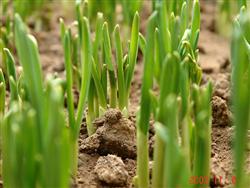
How should herbicides be applied to chive seedlings? Please advise. Chives are relatively sensitive to acetochlor, so acetochlor should not be used for soil-closure treatment. After sowing chives and before emergence, prometryn, pendimethalin, and butralin can be used for soil-closure treatment. Among them, prometryn is mainly used to control broadleaf weeds, while pendimethalin and butralin...
 What should be noted when using herbicides in farmland? Asking for advice.
Chemical herbicides have the characteristics of strong selectivity and strong specificity. Their application requirements are stricter than those for insecticides and fungicides, and improper use often causes phytotoxicity. To give full play to the role of herbicides in agricultural production, the following seven points should be noted during use.
(1) Choose the correct herbicide. First, choose the herbicide according to the target to be controlled: whichever weeds predominate in the field, choose a herbicide whose weed-control spectrum corresponds to them. Second, choose a suitable herbicide according to the crop in the field. Third, choose the herbicide according to the application period: those for pre-emergence after sowing cannot be used for post-emergence application, and those suitable for soil treatment cannot be used for stem and leaf treatment.
(2) Strict dosage. The dosage of herbicides must strictly follow the standards specified in the instructions, and the dosage must not be increased at will. When 2 or more herbicides are mixed for application, the dosage of each herbicide should be 1/3-1/2 of the conventional dosage of that herbicide. For herbicide use on film-mulched land, the dosage should be 3/4-2/3 of the conventional dosage. The amount of spray liquid per 667 sq m (after diluting the concentrate with water) is generally about 3 kg for soil treatment, and generally no less than 40 kg for stem and leaf treatment.
(3) Scientific preparation. First, scientifically mix herbicides. When using 2 or more herbicides at the same time to kill multiple weeds, the mixed herbicides must have different weed-control spectra, but the applicable crops, applicable periods, and application methods must match. Second, scientifically prepare the spray liquid. First dissolve the wettable herbicide in a small amount of water to make a mother liquor, then fill the sprayer halfway with water, pour the mother liquor into the sprayer, finally add enough water as required, shake well, and spray. If a wettable powder is mixed with an emulsifiable concentrate, first make the wettable powder into a mother liquor, then pour in the emulsifiable concentrate, and add enough water for application according to the above method.
(4) Apply at the appropriate time. Strictly apply the herbicide at the specified period according to the instructions. If it is suitable for pre-sowing treatment, treat the soil before sowing; if it is suitable for post-sowing pre-emergence, apply it after sowing and before emergence. For herbicides used for stem and leaf treatment, it is essential, on the basis of clearly understanding the crop growth period, to avoid its sensitive period and apply it at the 2-4 leaf stage of the weeds, so as to achieve effective weed control and prevent phytotoxicity.
(5) Choose the right time to spray. When spraying herbicides, try to avoid high-temperature, high-humidity, or windy weather, to prevent phytotoxicity or reduced efficacy. Generally, it is best to choose clear, windless weather at 20°C-30°C. In hot seasons, it is best to carry out the application before 10 a.m. or after 4 p.m.
(6) Scientific operation. When spraying herbicides, operate carefully and scientifically: keep walking speed uniform and appropriate, keep the sprayer working pressure stable and moderate, make field passes accurate with proper overlap, do not miss spraying or spray twice, and keep the nozzle as low as possible. When there is wind, first spray the downwind side, then the upwind side; the nozzle direction should be consistent with the wind direction, and the walking direction should be perpendicular to the wind direction. If there are other sensitive crops around the treated field, leave a certain buffer zone. During stem and leaf treatment, try to moisten the stems and leaves with the spray liquid but do not let the liquid drip onto the ground. In short, application should be uniform and consistent.
(7) Clean the equipment. After use, the sprayer and other equipment used for spraying herbicides must be thoroughly cleaned with alkaline water before they can be used in fields of other crops, to prevent phytotoxicity.
Click to get a large amount of herbicide application technology
Click to get a large amount of pesticide application technology