What to Do About Corn Herbicide Injury? Detailed Remedial Methods
What to do about corn herbicide injury? Please advise. A farmer, having missed the pre-emergence soil-applied weed control for corn, resorted to post-emergence weed control at the 3-4 leaf stage using atrazine, acetochlor and 2,4-D butyl ester. After application, on June 22, when the plants were about 1 m tall with 10-12 leaves and topdressing was being prepared, the corn was found to have...
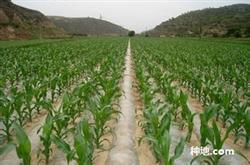
What to do about corn herbicide injury? Please advise.
A farmer, having missed the pre-emergence soil-applied weed control for corn, resorted to post-emergence weed control at the 3-4 leaf stage using atrazine, acetochlor and 2,4-D butyl ester. After application, on June 22, when the plants were about 1 m tall with 10-12 leaves and topdressing was being prepared, the corn was found to have herbicide injury. The symptoms of the affected plants at this time were: the heart leaf rolled up like a long whip, hard, and the leaf immediately next to the whip leaf was also shrunken and longitudinally rolled, unable to flatten out completely; in severe cases the roots had begun to swell. The affected area reached more than 60%. Because the farmer discovered the corn herbicide injury too late, it was already impossible to save the plants with chemicals. So the next day he immediately adopted two methods - removing the growing tip and cutting off at the base - to salvage the crop, with good results. An investigation after autumn showed that plants grown by the tip-removal method developed normal ears and produced a fairly good yield, making it a practical method. The procedure and results are summarized below.
Procedure for removing the growing tip: feel downward with the hand along the affected part; the central part of the plant feels either soft or hard to the touch; cut off everything above the hard-feeling part. The next day new leaves grow from the cut, and after unfolding they no longer shrink or roll longitudinally, forming normal plants. On July 18 topdressing was carried out, applying 10 kg of urea per mu. On July 22 an investigation showed that the tip-removed plants had already entered the tasseling and pollen-shedding stage, with tassels of normal size, and plant height and stalk thickness showing no difference compared with normal plants; only at the root near the ground, where the wound had been, regenerated shoots showed cut traces from the original main stalk, and the edge of the original main stalk at the junction was swollen and slightly thicker than the later-developed main stalk. About 1000 plants were cut off at the base; the plants formed from tillers, growing among the vigorous plants and suppressed, were thin and weak, with 90% having no ears and 10% having ears but very small ones. At the maturity investigation on September 20, the base-cut plants had small ears and were late-maturing, only reaching the stage just barely suitable for fresh eating. The tip-removed and normal plants had white husk leaves, and the kernels showed mature kernel color; the only difference was that the kernels of the tip-removed plants matured slightly later than those of the normal plants, and the number of kernels per ear ranged from 560 to 800; the number of kernels per ear of normal eared plants ranged from 480 to 740. On October 26 the 100-kernel weight was measured: normal eared plants had a 100-kernel weight of 33.2 g, and tip-removed eared plants had a 100-kernel weight of 34.5 g.
From the above results it can be seen that this method of removing the growing tip to salvage losses from corn herbicide injury works very well, greatly reducing the farmer's losses.
Click to get a massive amount of herbicide application techniques
Click to get a massive amount of pesticide application techniques
Click to get a massive amount of corn planting techniques